
1911 Gold Corporation (TSXV: AUMB; OTCQX: AUMBF)
1911 Gold is Manitoba’s Gold Standard - Ready, Permitted and High-Grade 1911 Gold is an Emerging Gold Producer, with Significant Cash Flow Generation and District-Scale Growth Potential
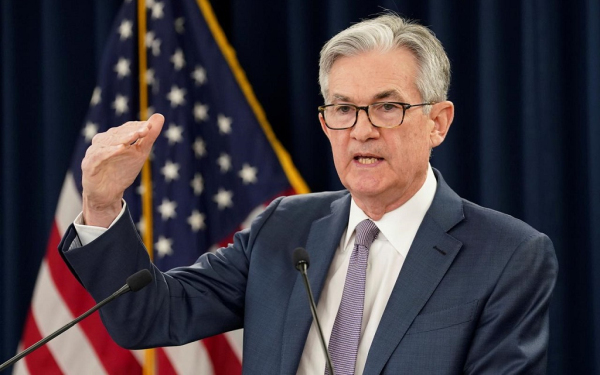
The Federal Reserve announced a 25-basis-point rate cut as widely expected on October 29, while the gold market closed lower after sharp fluctuations. Cautious remarks from Federal Reserve Chair Jerome Powell following the policy meeting dampened market expectations for consecutive rate cuts, becoming a key factor pressuring gold performance.
Concluding its two-day policy meeting on Wednesday, the Fed implemented its second rate cut in three months, lowering the federal funds rate target range by 25 basis points. While the decision itself aligned perfectly with broad market expectations, Powell’s subsequent press conference comments triggered significant market volatility.
Powell explicitly stated that during the committee’s discussions, members held “strongly differing views” about how to proceed in December. “A further reduction in the policy rate at the December meeting is not a forgone conclusion. Far from it. Policy is not on a preset course.” These remarks caused market expectations for a December rate cut to cool sharply. According to the CME FedWatch Tool, investors’ probability forecast for a December rate cut plummeted from nearly 90% before the meeting to 60%.
Gold’s Roller Coaster Ride, Dollar’s Abnormal Strength
The gold market experienced a classic “buy the rumor, sell the fact” pattern during the meeting. In the first four hours of overseas trading, gold prices rose by $61 at one point. However, a sharp reversal occurred in the final four-hour trading session following Powell’s comments, ultimately closing down $26.40 or 0.67% at $3,941.70.
More unusually, the U.S. Dollar Index strengthened despite the accommodative monetary policy. The dollar index rose 0.41% on the day, with intraday gains reaching 0.6% immediately after the Fed’s statement. This counterintuitive movement, defying traditional monetary theory, reflects the market repricing the Fed’s policy path based on Powell’s cautious language.
Key Factors Determining Gold Price Trends
Looking ahead, the following factors will be core variables affecting gold prices in the short term:
Uncertainty in Fed Policy Path: Powell emphasized a cautious approach using a “driving in the fog” metaphor: “What do you do if you are driving in the fog? You slow down.” This indicates that future interest rate decisions will be highly data-dependent, and the current lack of economic data due to the government shutdown further increases policy path uncertainty.
Real Interest Rate Direction: Although nominal rates are falling, the dollar’s unusual strength and sticky inflation will jointly determine the direction of real interest rates. Analysts point out that “while inflation remains elevated, falling interest rates will continue to push down real interest rates – which typically reduces the opportunity cost of holding non-yielding gold.” However, dollar strength may partially offset this effect.
Market Assessment of Economic Outlook: Powell acknowledged the central bank faces a “no risk-free path” dilemma in balancing its employment and inflation goals. The market needs to assess whether the Fed’s caution stems from inflation concerns or a more complex judgment of the economic outlook. Any significant deterioration in the labor market could reignite expectations for aggressive rate cuts.
Technical Levels and Market Sentiment: The technical chart formed after gold’s surge and subsequent retreat shows significant overhead resistance. In the short term, the market needs to digest the expectation reset caused by Powell’s comments, with the $3,900 level becoming a key support level.
Notably, silver demonstrated relative strength during the market volatility, with spot prices rising $0.50 to $47.54. Silver’s outperformance may suggest market optimism about industrial demand prospects, especially against the backdrop of upcoming bilateral talks between U.S. and Chinese leaders. Concurrently, the need for mean reversion in the gold-silver ratio could provide additional support for the precious metals market.
In summary, while the Fed’s rate cut should theoretically benefit gold, Powell’s hawkish stance altered the market narrative. In the coming weeks, gold investors will closely watch economic data – particularly employment indicators – and dollar movements, as these factors will collectively determine whether gold can break out of its current range. Until the December policy meeting, the market’s repricing of the Fed’s path will continue to be the primary source of gold price volatility.