Opponents in disarray, allies in line, followers enthralled — that looks like strength. It also looks like a single point of failure. What markets label supremacy, systems engineers call an undistributed load. In politics, centralization has a way of lifting returns and compressing fragility — until the stress test arrives.
The case for a dominant executive is simple: coordination. One person can set direction, align incentives, and cut through gridlock. Investors like that because policy becomes legible and execution fast. But markets have a history of mistaking legibility for durability. Fixed exchange pegs looked orderly until they snapped. Commodity cartels looked coherent until member incentives fractured. A truss does not fail under average load; it fails when a hidden weak joint takes the strain for the whole. When authority, policy, and narrative concentrate in one office, the fragility is not obvious in the quiet phase. It hides in the assumptions about what other players will tolerate, how institutions will bend, and how long the public will accept the bill.
Tariffs are presented as a lever to re-shore industry and reset bargaining power. The lever works — but like hydraulic jacks, it shifts pressure elsewhere. Investors saw the second-order effects early: sharp sell-offs as the tariff schedule expanded and countermeasures followed. Inflation ticked higher; July’s consumer price index ran 2.7 percent above a year earlier. Average car prices rose 4.8 percent, a clean read of how a tax on inputs becomes a tax on households. The Federal Reserve’s dual mandate turns into a trilemma: full employment, low inflation, and financial stability under political heat. Tariffs lift the price level and bruise growth at the same time. That traps the central bank between credibility and accommodation. Rate cuts look less likely when headline inflation is firm. Yet tighter policy into supply shocks can expose leverage built for a lower-vol regime. This is the link most investors underweight. Policy-driven volatility is not transitory noise; it is regime information. The structure of payoffs changes. Duration, inventories, and capex plans all hinge on whether the tariff war remains a tactic or becomes an ideology.
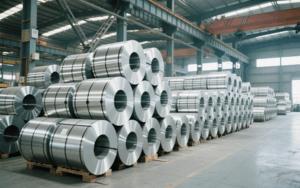
Dominance can extract concessions in a one-shot game. But trade is repeated play with long memory. In repeated prisoner’s dilemmas, credible threats extract short-run compliance while accumulating long-run resistance. Partners learn to hedge, diversify suppliers, and form lateral alliances. They comply in public and defect at the margins. You see it in procurement shifts and currency policy, not in speeches. A tariff spiral is not linear. Retaliation is lumpy, arrives through regulatory friction, and moves at the speed of bureaucracy. The White House can publish a tariff formula overnight; the world reconfigures supply chains over years. That lag is where fragility grows. Scale-free networks like global trade are robust to random shocks but highly sensitive to targeted interventions. When policy targets key nodes — chips, critical minerals, autos, ports — the network props up short-term metrics while hidden slack disappears. The automotive sector is the case study. Tariffs raise sticker prices, compress dealer margins, and complicate parts flow. The immediate revenue might look stable; the deferred maintenance is systemic. When one node fails — a semiconductor ban, a port strike, an export license — the entire network exposes its lack of redundancy.
The market impulse is to price the policy and move on. A 10 percent tariff invites tidy spreadsheets—pass-through assumptions, elasticity, margin offsets. That works in a narrow band. It fails when the distribution of outcomes fattens. Tariffs are not just price changes; they are catalyst risk. You do not only price the tariff; you price the retaliation plus currency moves plus legal challenges plus election recalibration. Option theory is useful. Selling volatility worked when shocks were exogenous and mean-reverting. It breaks when policy is the volatility. The variance is not random; it is chosen. Observers warn that recent tariff constructs read like outputs from generic algorithms: simple rates, broad lists, little nuance. That predictability is double-edged. It speeds compliance but invites arbitrage by counterparties. Policy that can be gamed will be gamed. The market will mistake front-loaded certainty for long-term clarity. Meanwhile, the Fed’s reaction function becomes a public spectacle. Independence strains, forward guidance loses its anchor, and the feedback loop tightens. Goodhart’s law bites: target inflation via tariffs and your inflation readings become less informative about underlying slack.
Supremacy attracts capital. That is the point. If Washington chooses national-champion strategies and visible barriers, money chases the protected moats. But crowded moats are not deep moats. Crowds amplify policy risk because everyone is leaning the same direction. The more markets price in a stable tariff regime, the more fragile they are to a passage in a speech, a court injunction, or a joint communiqué from a coalition of the unwilling. History’s reminder is stark. The Smoot-Hawley regime did not just raise tariffs; it persuaded others to do the same, shrinking the pie and reshaping political coalitions. Today’s world is different, but the mechanism rhymes. Fragmentation is a feature, not a bug, of prolonged assertion. Investors should recognize the asymmetry: gains from negotiated leverage are linear; losses from coordination breakdowns are nonlinear.
Headline inflation at 2.7 percent is not crisis territory. But its composition matters. Tariff-driven inflation is sticky where supply is concentrated and demand is inelastic. Autos, appliances, machinery — these are not latte categories. Median inflation bleeds into wage demands, and the Phillips curve steepens just where managements hoped it would stay flat. The Fed can try to look through supply shocks. It cannot ignore expectations. And it cannot both underwrite asset prices and punish price setters without credibility cost. This is where investors underestimate governance risk. The longer policy leans on tariffs to achieve strategic goals, the more the central bank must decide whether to tolerate higher inflation, crush growth, or fight the fiscal with the rate tool. None of those is a free option. All three raise tail risk.
Systems that benefit from disorder invest in slack and modularity. That is not a slogan; it is cold design. Nature burns underbrush so forests do not explode. Engineers add fail-safes so a bridge resonates without collapsing. Global supply chains learned this lesson the hard way and then forgot during the easy decade. Reshoring can be stabilizing if it builds redundancy rather than mere proximity. If supremacy is used to coerce single-source dependence, the system grows fragile. If it encourages distributed capacity, transparent inventories, and alternative routing, it can be antifragile. The temptation of policy is to chase visible outputs — factories opened, shipments tallied, prices labeled. The strength of a system is in the invisible margin — time to recover, substitutions available, bargaining flexibility retained. That is what markets should discount, but narratives crowd it out.
Allies falling in line is efficient until they are not. Compliance secured by tariff threats often produces silent carve-outs, shadow subsidies, and retaliatory non-tariff barriers. The scoreboard reads cooperation; the field shows strategic drift. Game theory predicts it. So does public choice theory. Domestic lobbies that win under a tariff regime harden; those that lose reorganize and seek relief elsewhere. Over time, the coalition becomes brittle because it must police exceptions while maintaining the story of uniformity. The costs show up as administrative burden, legal complexity, and diplomatic bandwidth spent on maintenance rather than strategy. Markets should pay attention to that budget of attention. When policy is forced to micromanage exceptions, it loses leverage at the macro level.
Supremacy compresses variance in the short run and expands it in the long run. It makes systems look controlled until control fails. That is why investors should distrust smooth lines in rough terrain. The lesson is not partisan; it is structural. Concentrated power and simple levers can be useful in crisis. As a permanent operating model, they degrade the option set. The stoic frame is clear: control what you can, accept what you cannot, and know the difference. Policy can set terms; it cannot repeal second-order effects. When the bill for coordination comes due — in inflation prints, central bank credibility, supply-chain gaps, and alliance fatigue — the market will see that supremacy was never free. It was a trade: clarity today for fragility tomorrow.