McEwen Copper’s feasibility study for Los Azules in San Juan, Argentina, signals a push toward lower-cost, lower-carbon copper via heap leaching and on-site cathode production. The bigger swing is in the options list: new leach chemistry for primary sulfides, trolley assist haulage, in-pit crushing and conveying, and battery-electric fleets. None of that is in the base case, but if even one lands, it could shift costs and extend life. If they miss, the project still stands on conventional fundamentals, but the path to first copper in 2030 remains long and execution heavy.
The base case outlines a 21-year open-pit producing an average of 148,200 tonnes per year of LME Grade A copper cathode through solvent extraction-electrowinning. Initial capital sits at 3.17 billion dollars with a post-tax IRR of 19.8 percent. On-site cathode production is a tangible advantage for stranded Andean porphyries. It removes smelter and shipping penalties tied to concentrates and avoids arsenic or deleterious element penalties that can show up in some Andean ores. The plan leans on leaching rather than milling, which cuts energy and water intensity and eliminates a conventional tailings dam. The company cites 74 percent less water use than milling and a 72 percent lower mine-to-metal carbon intensity than the industry average. These claims align with heap leach dynamics: lower grinding power draw, simpler flowsheet, and no thickened tailings handling. The trade-off is leach kinetics, especially in cold climates, and the sensitivity of cathode quality to solution management.
Los Azules is a large Andean porphyry copper system. That matters because ore type dictates metallurgy. Oxide and secondary enriched copper minerals near surface are amenable to acid heap leaching and SX-EW. Primary hypogene sulfides at depth, typically chalcopyrite, are far harder to leach at ambient temperatures. The study’s base case is designed around the leachable portion of the deposit, producing cathodes on site. The optionality comes from two non-modeled paths: deploying advanced leach chemistry like Nuton to tackle primary sulfides, or building a concentrator to process those sulfides and capture gold and silver byproducts. The company points to indicative primary sulfide recoveries above 76 percent under Nuton in conceptual work and notes both this and a concentrator could extend mine life by 30-plus years. The market should treat that as high-value contingent upside. Sulfide leaching at scale remains unproven across a wide range of porphyry ores, and a concentrator means a different capital profile and different infrastructure and permitting demands.
Heap leaching in the high Andes adds two technical constraints: temperature and solution management. Leach rates drop in cold conditions, extending cycle times and pad inventory. Solution heating, insulation, or seasonal stacking strategies can mitigate this, but each adds cost or complexity. Freezing risks drive design choices for ponds, pipelines, and drip systems. Also, acid consumption and gangue chemistry can swing economics. Carbonate content, clay behavior, and permeability under load determine whether a pad performs. The study’s cited water and carbon intensity benefits are credible for a leach route, but investors should ask for pilot and column test data across ore domains, winter operating plans, and acid balance details. Cathode projects live or die on consistent solution grade and flow; variability can force higher rehandle or reagent costs.
The electrification strategy has three elements with real operating leverage. Trolley assist can lift haul truck productivity and cut diesel use on pit ramps if gradients and ramp geometry are stable. It shifts energy to grid power, which is cheaper and cleaner if reliable supply exists. In-pit crushing and conveying removes haul cycles for ore or waste, lowering unit mining costs and emissions, but it trades flexibility for fixed infrastructure and requires stable pit walls and well-sequenced pushbacks. Battery-electric equipment reduces Scope 1 emissions and can cut maintenance, but in open pits the heavy haul class is still early-stage. Light vehicles and ancillary fleets are more mature. McEwen says timing is under final analysis, which is prudent. The best practice is to prove the base case, then phase in trolley or IPCC when pit geometry and power are ready. Front-loading these systems without firm power or final pit designs can create downtime and capex creep.
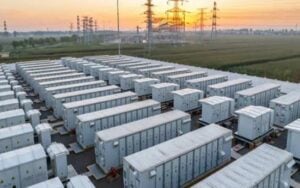
The study targets exclusively renewable power and carbon-neutral Scope 1 and 2 by 2038. SX-EW plants and trolley assist require steady power quality. Intermittent wind or solar typically need storage or firming contracts. San Juan has growing renewable build-out, but firm capacity and transmission to a remote site are not trivial. A hybrid approach with grid tie-in, on-site renewables, and potential storage is the likely path. Investors should focus on power purchase agreements, interconnection timelines, and any contingency for thermal backup during commissioning. A credible power plan lowers cost volatility and underwrites the emissions targets. A weak plan turns into delays, curtailments, or diesel gensets that erase the carbon advantage.
An agreement with IFC to potentially lead debt financing is a strong signal on environmental and social standards and on bankability. Early proposals from Tier-1 OEMs for more than 1.1 billion dollars of equipment and infrastructure financing could narrow the equity check and smooth supply. Both are helpful but typically come with conditions: technical milestones, offtake structures, or sovereign risk mitigants. Argentina’s macro environment matters here. Capital controls, import restrictions, and inflation can delay equipment deliveries and repatriation of returns. San Juan is a pro-mining province with major porphyry projects in the pipeline, but federal policy and logistics still set pace and cost. A 2026 construction start, 2029 SX-EW start-up, and 2030 first copper puts a lot of policy and market risk between now and cash flow.
A 19.8 percent post-tax IRR on 3.17 billion dollars of initial capital is competitive for a large-scale copper project if the schedule holds and inflation is contained. Returns are sensitive to unit costs and copper price at first production. A one-year delay can compress NPV and IRR materially because cash inflows are back-ended. If new technology options are added later, they must clear a higher hurdle on incremental IRR, not just strategic benefits. Producing cathodes rather than concentrate can lift netbacks and reduce working capital once ramped, but ramp-up for heap leach plants often takes longer than milling due to pad inventory buildup. The market is positioned for tighter copper supply into the 2030s, but cyclical demand and new supply surprises can swing prices in the build window. Balance-sheet flexibility and phased spend can protect the curve.
Three deliverables will separate promise from proof. First, metallurgical programs across ore domains, including winter leach kinetics and any Nuton pilot work, to confirm recoveries and cycle times. Second, the power and electrification execution plan: interconnection agreements, renewable PPAs, storage strategy, and the sequencing of trolley or IPCC after initial production. Third, the financing stack and risk allocation: IFC-led debt terms, OEM package conditions, and any equity or offtake arrangements that cap dilution while preserving upside. Permitting and community agreements in San Juan remain gating with long lead times for infrastructure. If the team can hit these marks while holding capex guidance, Los Azules keeps its place among the most credible near-term new cathode projects in the Andes. If not, the base case is still viable, but timing and returns will pivot to cost control rather than technology-led step change.