
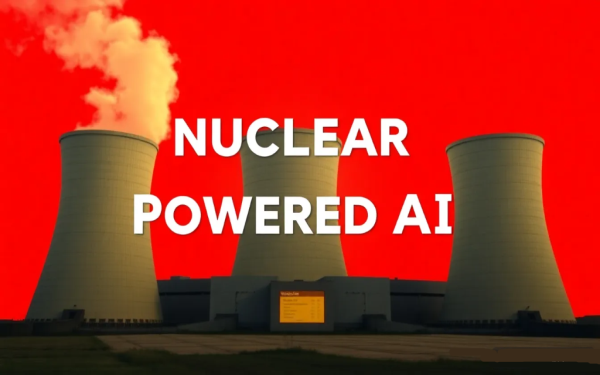
As the world marvels at the computing power behind generative AI, a silent energy crisis is brewing. Soaring electricity demand from power-hungry data centers is propelling nuclear energy—long stagnant—into what could be the next major tech trend. At the forefront is Oklo (NYSE: OKLO), a nuclear energy startup whose shares have skyrocketed more than 900% in the past 12 months, briefly pushing its market capitalization above $24 billion and creating one of 2025’s most spectacular wealth stories.
Yet, despite high-profile backing from OpenAI founder Sam Altman and strategic support from the U.S. government, Oklo has yet to generate any revenue. The stark contrast between its towering valuation and the absence of sales raises a critical question: Is Oklo a future millionaire-maker, or merely the latest speculative bubble?
Oklo’s ascent is rooted in a fundamental shift in energy supply and demand. After more than a decade of stagnation, U.S. electricity consumption is rebounding sharply, driven largely by commercial demand from generative AI. According to Goldman Sachs analysis, a single query on a large language model like ChatGPT consumes about ten times more energy than a traditional Google search—and that doesn’t even include the vast resources required for model training. Global data center energy consumption is projected to surge 160% by 2030, with carbon emissions doubling over the same period.
This presents a dual challenge for governments and tech giants alike: scaling computing power while advancing decarbonization goals. In this context, nuclear power, with its ability to deliver steady, carbon-free electricity, has reemerged as a critical solution.
At the heart of Oklo’s strategy is its innovative reactor technology. The company is developing a new generation of fast-neutron reactors capable of running on nuclear waste, or “spent fuel.” In September 2024, Oklo announced a $1.68 billion advanced fuel recycling facility designed to convert nuclear waste into clean energy. While a spent-fuel supply chain may seem inherently limited, the company points to a staggering resource base: U.S. nuclear power plants currently store approximately 94,000 metric tons of nuclear waste. Oklo estimates this holds energy potential equivalent to 1.3 trillion barrels of oil—five times Saudi Arabia’s proven reserves. This approach could simultaneously address nuclear waste disposal and create a unique low-cost fuel source.
Oklo has also built notable commercial and policy advantages. Its Aurora modular reactor is designed for flexibility, capable of running on enriched uranium, downblended uranium, and even plutonium-based fuels. Through a partnership with newcleo, Oklo aims to repurpose surplus plutonium into reactor fuel, creating a bridge until large-scale uranium enrichment capacity is established. Although several companies are developing modular reactors, Oklo has gained an early lead thanks to a fuel supply agreement with the U.S. Department of Energy and inclusion in its reactor pilot program. The company also enjoys backing from investors like Sam Altman (who recently stepped down as chairman due to potential conflicts of interest) and stands to benefit from U.S. government policy efforts to accelerate nuclear development.
Despite early investors reaping spectacular returns, Oklo’s current valuation poses clear risks for new entrants. In the second quarter, the company reported no revenue and burned through approximately $28 million in operational costs—a stark reminder that its promising technology has yet to be commercialized.
Even the recent announcement of a $2 billion transatlantic partnership with newcleo—which may include co-investment from Sweden’s Blykalla—failed to sustainably lift the stock. Oklo’s share price rose just 6% intraday before retreating, signaling investor caution about its rich valuation.
While Oklo has signed several agreements with AI data center operators, it remains years away from its first revenue. Investors should note: although the company is well-positioned in a sector boosted by favorable policies and rising demand, the combination of hyper-growth expectations and zero revenue could foreshadow significant volatility ahead.