
American Tungsten Corp. (TSXV: TUNG, OTCQB: DEMRF)
Building America’s Defense Critical Metals Supply
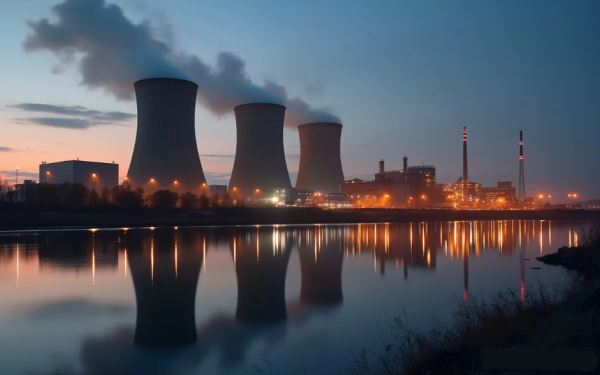
As of October 31, 2025, shares of Cameco (CCJ), the world’s largest uranium supplier, stunned the market with a remarkable 16% weekly surge, even hitting a technical limit-up of 20% in a single day. The market capitalization of this Canadian uranium giant expanded rapidly within just five trading days, with year-to-date gains approaching 100%.
Cameco, in partnership with Brookfield Asset Management, jointly announced a strategic framework agreement this week with the U.S. government to co-invest $80 billion in building a new generation of Westinghouse nuclear reactors. This agreement not only secured $10 billion in supporting funds from the Japanese government but also formed a key part of the $550 billion energy cooperation package signed during the U.S. President’s recent Asia tour.
Notably, this collaboration explicitly identified high-energy-consumption facilities like AI data centers as targets for nuclear power supply for the first time. An analyst at RBC Capital Markets noted, “This agreement breaks through the application boundaries of traditional nuclear projects, opening a new growth dimension for uranium fuel demand.” Goldman Sachs subsequently issued a research report maintaining its “Buy” rating on Cameco, emphasizing the unique advantages of its integrated industry chain.
Driven by the dual forces of energy transition and exploding AI computing demand, the nuclear energy industry is undergoing a structural recovery. Data shows that only three nuclear reactors have been built in the U.S. since 2000, and this batch construction plan will significantly alter the supply and demand dynamics for uranium fuel. As a co-owner of Westinghouse and a major global uranium supplier, Cameco stands to benefit across the entire value chain—from equipment manufacturing and fuel supply to long-term servicing.
A Brookfield Energy partner revealed in an interview, “The financing guarantees and regulatory support provided by the government will significantly shorten the project approval cycle. This kind of policy certainty is precisely the valuation foundation most valued by capital markets.” It is worth noting that this cooperation model innovatively adopts a tripartite “government-capital-technology” collaboration mechanism, providing a replicable commercial template for capital-intensive nuclear projects.
Demand Transformation: AI Energy Revolution Spurs New Growth Poles
With the surging energy consumption of large models like ChatGPT, traditional energy structures face severe challenges. Industry research indicates that the annual electricity consumption of a single AI data center is equivalent to the power needs of 500,000 households. Due to its stable baseload power characteristics and zero-carbon emissions, nuclear energy is becoming the preferred solution in the energy strategies of tech giants.
Cameco’s CEO disclosed during an earnings call, “Several technology companies have already approached us regarding long-term nuclear power purchase agreements. This direct demand from end-users will help us establish more precise capacity planning models.” This structural shift on the demand side is transforming uranium fuel from a traditional commodity into a strategic resource with technological attributes.
Future Catalysts: Multiple Drivers Building an Upward Trajectory
Global Nuclear Policy Coordination: Besides the U.S., countries like Japan and the UK have successively adjusted their energy policies to incorporate nuclear power into national security strategies. The EU’s newly passed Net-Zero Industry Act explicitly lists nuclear energy as a strategic net-zero technology.
Continued Tightening of Supply: Kazatomprom recently announced production cuts, and global uranium inventory levels have fallen to a ten-year low. Citigroup predicts a 15% supply shortfall in the uranium market by 2026.
Accelerating Technological Iteration: The commercialization of small modular reactor technology is exceeding expectations. Westinghouse’s latest AP300 model design has received preliminary design certification from the U.S. Nuclear Regulatory Commission.
Strengthening Financial Attributes: Several global commodity traders are building physical uranium reserves, and institutional investors’ demand for allocating to uranium assets continues to heat up.
Cameco’s recent rally essentially represents a market-driven reassessment of the nuclear energy industry’s value. Driven by the triple forces of energy security, AI computing demands, and zero-carbon goals, uranium resources are being upgraded from a marginalized energy option to a core strategic asset. Although the short-term gains are already considerable, considering the global nuclear revival is just beginning, coupled with the company’s monopolistic advantages in technology, resources, and channels, this capital feast may have only just began.