In a landmark agreement aimed at resetting federal-provincial relations, Canadian Prime Minister Mark Carney and Alberta Premier Danielle Smith have unveiled an ambitious energy cooperation framework that ties approval of a new Pacific-bound oil pipeline to stringent climate commitments. Yet, despite the fanfare, the plan’s feasibility remains clouded by political, environmental, and Indigenous opposition.
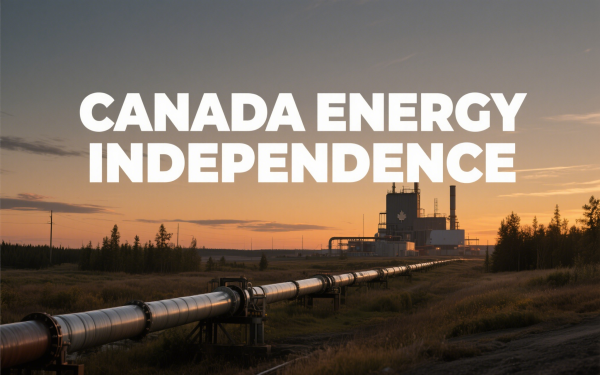
Signed Thursday in Calgary, a new memorandum of understanding (MOU) outlines a path forward for a proposed pipeline to transport at least one million barrels per day of Alberta bitumen to Asian markets. In return for federal support—including fast-tracking the project through the Major Projects Office, suspending clean electricity regulations, and potentially granting an exemption to the federal tanker ban—Alberta has committed to an industrial carbon price of $130 per tonne and a 75% reduction in methane emissions over the next decade.
Carney hailed the deal as “a great day for cooperative federalism,” while Smith described it as a pivot from confrontation to collaboration. The MOU also includes plans for the Pathways carbon capture project, large-scale AI computing infrastructure, and interprovincial transmission lines, all tied to a series of deadlines extending into 2027.
The proposal has already encountered fierce resistance, notably from British Columbia. Premier David Eby labeled the pipeline an “energy vampire,” warning it distracts from tangible, near-term energy projects. B.C. Energy Minister Adrian Dix dismissed the initiative as “performative politics.”
Indigenous groups, whose support could prove decisive, have voiced unequivocal opposition. “We will never allow our coast to be put at risk of a catastrophic oil spill,” said Marilyn Slett, President of Coastal First Nations. Jason Alsop of the Haida Nation echoed the sentiment, stating, “The ocean is what looks after us, and we have a responsibility to uphold that.”
Environmental organizations also reacted sharply. The Canadian Climate Institute warned that the deal risks making climate standards “negotiable,” while the Canadian Association of Physicians for the Environment called it a “dangerous step backward.”
A critical uncertainty remains whether private sector backers will step forward. Carney himself underscored that “if there’s not a private sector component, there won’t be a pipeline”—a point he reiterated with a light-hearted plea to potential investors at the Calgary Chamber of Commerce.
Meanwhile, Conservative Leader Pierre Poilievre criticized the agreement’s timeline as unrealistic, suggesting the ultimate veto may rest with B.C.’s premier. Political scientist Andy Hira noted that obtaining Indigenous consent represents a likely “poison pill,” citing the precedent of failed projects like Northern Gateway.
While the Carney-Smith agreement represents a bold attempt to align energy expansion with climate ambition, it enters a landscape where similar ventures—Keystone XL, Energy East, and Northern Gateway—have foundered. Whether this new blueprint can navigate the complex terrain of interprovincial rivalry, Indigenous rights, and environmental accountability remains an open question. For now, the pipeline exists more in principle than in practice—a vision awaiting validation.