
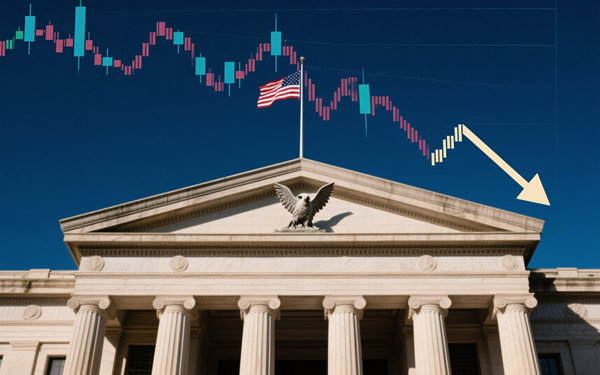
As the Federal Reserve’s pivotal rate decision approaches, global markets are gripped by a striking imbalance. While U.S. equities and gold prices sit at historic highs—perched atop what analysts call a “dual bubble”—the cryptocurrency market has already sounded an alarm. Bitcoin, often viewed as a leading indicator for risk appetite, has tumbled sharply since October, suggesting turbulence may lie ahead for broader markets.
Among major asset classes, Bitcoin has been the first to buckle. After peaking on October 6, 2025, it has formed a clear “double top” pattern on weekly charts and remains in a sustained downtrend. Technical analysis suggests it could test a key support level near $69,143 by January 2026. The retreat is not occurring in isolation. Ratings agency Fitch warned earlier this week that U.S. banks with sizable exposure to cryptocurrencies face growing risks. Bitcoin’s weakness may be an early sign of impending sell-offs in risk assets.
In stark contrast, traditional safe-haven gold—along with the S&P 500—is trading at overheated levels. Gold futures are struggling in overbought territory, testing October highs and also showing signs of a potential double-top formation. Meanwhile, the S&P 500 has hovered near all-time highs for the past two months, teetering between extending its bull run and triggering a major reversal.
This lofty positioning is built almost entirely on the market’s firm expectation that the Fed will cut rates by 25 basis points. Investors have fully priced in future easing, overlooking a critical risk: if even gold is caught in a bubble, there may be nowhere to hide when the tide turns.
This sets the stage for a high-stakes policy meeting. Chair Jerome Powell and his colleagues face a severe dilemma: recent weak economic data and lingering trade-policy effects call for stimulus, while persistent worries about resurgent inflation discourage aggressive easing.
The most likely—and most dangerous—outcome, analysts say, could be a “hawkish cut”: a rate reduction paired with strong guidance that further cuts are unlikely. Such a move would shatter the market’s assumption of a prolonged easing cycle, potentially triggering profit-taking and sell-offs across equities and gold. The recent sharp sell-off in U.S. Treasuries—which sent yields soaring—reflects growing unease over this scenario.
Tomorrow’s Fed decision is more than a debate over 25 basis points. It will serve as an official verdict on extreme market expectations and test the resilience of today’s dual bubbles. Bitcoin has already cast its vote of no confidence. If the Fed fails to satisfy the market’s hunger for sustained accommodation, a fierce repricing across stocks, bonds, and precious metals could follow. With traditional hedges looking inflated, investors may find little shelter—only the imperative to fasten their seatbelts ahead of what could become a defining turning point for the year.