
1911 Gold Corporation (TSXV: AUMB; OTCQX: AUMBF)
1911 Gold is Manitoba’s Gold Standard - Ready, Permitted and High-Grade 1911 Gold is an Emerging Gold Producer, with Significant Cash Flow Generation and District-Scale Growth Potential
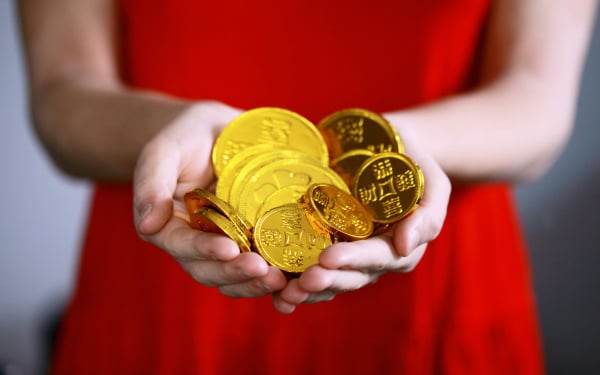
While the People’s Bank of China reported adding roughly 40 tonnes to its reserves in the first half of 2026, including 15 tonnes in June, tracking by multiple institutions indicates actual purchases through over-the-counter channels are vastly larger, making the true scale of China’s gold hoard one of the market’s deepest puzzles.
Willem Middelkoop, founder of the Commodity Discovery Fund and author of The Big Reset, argues that Beijing welcomes lower gold prices precisely because it is still accumulating. He estimates total Chinese gold demand surpassed 150 tonnes in June alone. Official data compiled by the World Gold Council put PBoC buying for that month at approximately 15 tonnes. Middelkoop revealed that at a 2015 event in Beijing, a former central banker told him the PBoC is not the only state institution purchasing gold, identifying the State Administration of Foreign Exchange as one of the other buyers. He also noted that Silk Road countries, including China and India, have accumulated more than 50,000 tonnes since the 2008 financial crisis.
Analysis from BMO Capital Markets suggests China has accumulated roughly 30,000 tonnes of above-ground gold, well above official figures, and is now driving about one-third of global demand flows. BMO estimates the PBoC holds around 5,200 tonnes, with the remainder held in jewelry and investment bullion. China’s stockpile now represents about 13% of the world’s above-ground gold, approaching the 15% share held by the United States. To match the U.S. level of Treasury reserves, BMO calculates China would need another 2,500 to 3,000 tonnes of purchases. Using the benchmark of gold equaling 5% of M2 money supply — the current U.S. ratio — the PBoC would need to hold roughly 18,000 tonnes, compared with about 5,222 tonnes at the end of last year.
Goldman Sachs’ tracking of the London over-the-counter market shows China bought more than 48 tonnes in May, while the PBoC reported only a 10-tonne reserve increase, implying purchases at 4.8 times the official figure. On that basis, Goldman projects full-year 2026 accumulation could reach 192 tonnes; even applying a conservative 2.0 times multiplier, the estimate would be closer to 80 tonnes. Separate analysis for 2024 identified 570 tonnes of covert purchases versus a reported increase of 41 tonnes, implying monetary gold holdings above 5,000 tonnes — more than double the disclosed number. The 2015 mid-year revaluation that added 604 tonnes to reserves came with claims that several thousand tonnes sit off-book via SAFE.
As its stockpile quietly expands, China is also laying the groundwork for price-discovery influence. BMO points to Hong Kong’s emergence as an international gold hub and growing liquidity in Shanghai Gold Exchange futures and over-the-counter markets. Goldman Sachs has a $4,900 per troy ounce end-2026 forecast. Multiple institutions see this vast opaque demand building a solid floor under the market, with the potential for gold pricing power to gradually shift eastward.