

SLAM Exploration Ltd. (TSXV: SXL)
‘Exploring for critical elements and precious metals in New Brunswick, Canada.’
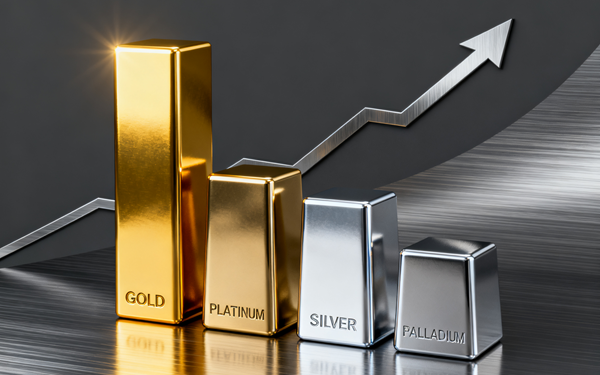
Spot gold price touched US$4,690.41 per ounce in early trade on Monday, approaching the US$4,700 threshold. The silver price also set a new record, reaching US$94.88 per ounce. Platinum prices climbed higher as well, trading near US$2,397.
Market analysis widely suggests that, driven by multiple structural factors, the current precious metals bull market is far from over. Gold breaking through US$5,000 and silver challenging US$100 have become a consensus view among several authoritative institutions.
The immediate catalyst for this price surge stems from a sharp escalation in geopolitical tensions. US President Donald Trump’s trade dispute with several European nations over Greenland has intensified. He announced tariffs on eight European countries, including France and Germany, effective February 1st, threatening to raise rates significantly by June if a deal to secure Greenland for the US is not reached. This move has sparked deep concerns about a full-blown US-Europe trade war, a weakening of the NATO alliance, and a deteriorating outlook for the global economy.
Linh Tran, Senior Market Analyst at XS.com, noted: “Gold’s sharp response to tariff-related headlines highlights how market sentiment has shifted away from a narrow focus on growth or inflation, towards policy uncertainty as a primary driver. Tariffs do not only disrupt trade flows; they also pose spillover risks to supply chains, corporate margins, and medium-term growth expectations.” In this environment, gold’s function as a traditional safe-haven asset and a portfolio risk-balancing tool is highlighted, prompting funds to position themselves preemptively.
Analysts at UBS pointed out two weeks ago that the gold price is expected to break through US$5,000 per ounce in the first quarter of 2026, setting new historical highs.
Beyond short-term event-driven factors, more profound underlying macro forces are building a long-term upward channel for precious metals. The Federal Reserve has cut interest rates multiple times and resumed quantitative easing despite persistently elevated inflation, a move viewed by the market as a reluctant balancing act between a “giant debt black hole” and inflation suppression.
Mike Maharrey, a commentator at Money Metals, noted that decades of easy monetary policy and massive fiscal deficits have left the economy exceptionally fragile, making normalized interest rates nearly impossible. Market expectations are that Trump will nominate a new Federal Reserve Chair within the year, potentially leading to an even more accommodative policy stance.
Data from the World Gold Council shows that global central banks have been net buyers of gold for three consecutive years, exceeding 1,000 tonnes annually, with 2025 likely to extend this trend. This structural buying is not only a hedge against risks associated with US dollar assets but also reflects the long-term trend of global reserve asset diversification, providing a solid floor for gold prices.
Meanwhile, the silver market has experienced a supply deficit for four consecutive years, with the Silver Institute projecting 2025 to be the fifth year. Estimates suggest the cumulative deficit over the past five years is roughly equivalent to about one year of global mine supply. At the same time, industrial demand from sectors like solar remains robust, while substitution efforts progress slowly. Institutions like Metals Focus point out that tight physical liquidity, combined with investment demand, makes silver prices highly elastic in the face of supply shocks.
The strategist team at Citi has raised its 0-3 month target price for gold to US$5,000 per ounce and for silver to US$100 per ounce. Their rationale includes “heightened geopolitical risks, ongoing physical market shortages, and renewed uncertainty on Fed independence.” The bank also expects silver to continue outperforming gold and anticipates that the industrial metals bull market will subsequently take center stage.
However, Citi also issued a warning. Once clarity is achieved regarding the US Section 232 tariff decisions on critical minerals, it could lead to a reversal of metal inventories that previously flowed into the US, temporarily easing tightness in other regions and putting downward pressure on prices. Additionally, the bank believes geopolitical tensions may ease after the first quarter, at which point gold, with its stronger financial attributes, could be more vulnerable to a correction than silver, which has industrial support.
For investors, the current market consensus is that any price pullback triggered by short-term factors could present a buying opportunity within the broader trend bull market. However, high volatility is expected to become the norm, particularly in the silver market. Investors need to monitor key signals such as the progress of US-Europe trade conflicts, Federal Reserve personnel and policy shifts, and changes in physical market inventories. While embracing the long-term trend, managing the risks associated with short-term fluctuations remains crucial.