
1911 Gold Corporation (TSXV: AUMB; OTCQX: AUMBF)
1911 Gold is Manitoba’s Gold Standard - Ready, Permitted and High-Grade 1911 Gold is an Emerging Gold Producer, with Significant Cash Flow Generation and District-Scale Growth Potential
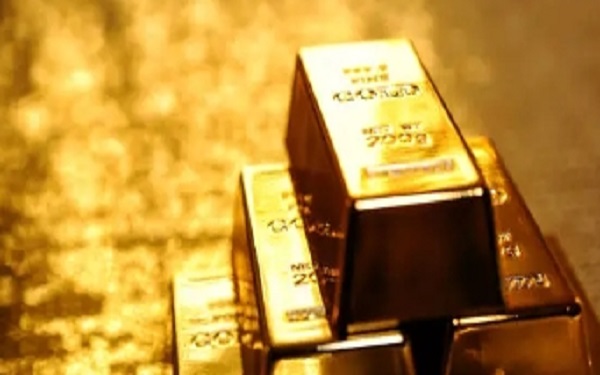
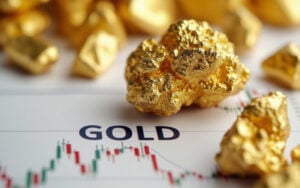
The first full trading week of 2026 has concluded, with spot gold prices decisively breaking through and firmly holding above the key threshold of $4,500 per ounce. Earlier in the day, official U.S. data revealed that December nonfarm payrolls significantly undershot expectations, adding only 50,000 jobs—far below the market forecast of 66,000.
Although the unemployment rate edged down to 4.4% and wages saw modest growth, the data overall confirmed that the labor market is “cooling as scheduled.” This has reinforced market expectations that the Federal Reserve (Fed) will initiate rate cuts in early 2026, serving as the core catalyst driving gold prices higher.
This rally in gold is not merely reliant on a predetermined path to rate cuts but reflects a critical shift in market logic. Gina Bolvin, President of Bolvin Wealth Management Group, noted that the current data mix gives the Fed greater confidence in the cooling labor market while providing investors with grounds for early rate cuts. Neil Welsh, Head of Metals at Britannia Global Markets, further elaborated that the market is gradually adapting to a macroeconomic landscape characterized by “a Federal Reserve that does not need to tighten further” coexisting with “a steadily cooling labor market.” Although sticky inflation may slow the pace of rate cuts, pressure on gold from real yields is expected to continue easing.
Aaron Hill, Chief Market Analyst at FP Markets, highlighted near-term risks: if next week’s CPI data shows inflation persisting above 2.8%, it could dampen rate-cut expectations and trigger a technical pullback of 1–2% in gold prices. However, he also emphasized that following the nonfarm payrolls report, the Fed now has more leeway to prioritize labor market weakness over mild inflationary pressures. Coupled with geopolitical and debt concerns, the overall environment remains supportive for gold.
Notably, the current precious metals market is exhibiting a weakening correlation with traditional interest rate dynamics. Michael Brown, Senior Market Analyst at Peppestone, pointed out that the negative correlation between precious metals and interest rates has significantly diminished. With no fundamental shift in the policy outlook, gold’s movements are increasingly driven by its own momentum.
David Morrison, Senior Market Analyst at Trade Nation, observed that gold maintained its strength even as the dollar subsequently strengthened, indicating that its upward momentum has become self-sustaining. Lukman Otunuga, Senior Market Analyst at FXTM, believes that with gold solidly above $4,500, the path is open to test the all-time high of $4,549.92 and beyond.
Silver also delivered a standout performance this week, approaching $80 per ounce with a weekly gain of nearly 10%. Its strength is underpinned by industrial consumption and investment demand competing for increasingly tight physical supplies. Market consensus holds that no new mines can alleviate the supply shortage in the short term, providing silver with robust structural support and even opening the possibility of challenging $100 per ounce in the future.
In the near term, next week’s U.S. CPI data will be the focal point for the market, with retail sales and manufacturing data also likely to induce volatility. Although gold and silver face technical selling pressure of approximately $5 billion due to annual index rebalancing, this impact is expected to conclude next week. Moreover, most analysts believe any price dips will quickly attract buying interest.
Against the backdrop of rising expectations for a Fed policy shift and long-term structural challenges to the U.S. dollar’s credibility, the bullish rationale for precious metals has become increasingly independent and deeply rooted. The dramatic start to 2026 suggests that this year’s precious metals market is poised to be anything but uneventful.