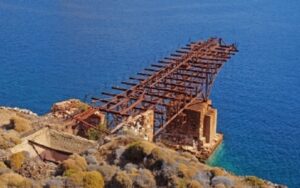

Sibanye-Stillwater is aiming to make a final investment decision on the Burnstone gold project by the end of June, positioning a long-shelved Witwatersrand asset for potential restart while its platinum group metals exposure benefits from firmer prices. The decision window matters beyond one company. It tests whether late-cycle South African gold projects with existing shafts and plants can deliver acceptable returns in a volatile power, labor, and currency environment. It also signals capital discipline at a time when juniors are ramping drilling meters across the Americas and Greenland, trying to turn momentum into resources before the funding window narrows.
The timing is logical. Burnstone is largely built, with sunk infrastructure reducing lead time and capital intensity compared with a greenfield underground mine. Meanwhile, platinum and rhodium have rebounded from multi-year lows as supply cuts, smelting bottlenecks, and a tighter autocatalyst market improved realized basket prices, stabilizing cash generation from the PGM portfolio. A stronger PGM cash engine lowers funding risk for a gold restart, provided management maintains capital allocation discipline and avoids overextending into multiple builds. Investors should focus on how the company sequences spend between South African gold, US and South African PGMs, and battery metals options. A clear gating of Burnstone capex against project milestones would be a positive signal.
Burnstone sits on the South Rand of the Witwatersrand Basin, targeting narrow, laterally continuous quartz pebble reef horizons historically mined across the Basin. The geological endowment is not in question. The operational challenge is. Prior ownership attempted a largely mechanized approach on thin reefs and struggled with grade control, dilution, and ground conditions, culminating in bankruptcy a decade ago. Sibanye acquired the asset with the explicit thesis that conventional, disciplined narrow-reef mining, tied to realistic development rates and support regimes, could unlock value. The presence of shafts, a processing plant, and some underground access reduces schedule risk. The red flags remain inherent to narrow-reef underground mining: sensitivity to stope width, dilution, development-to-stoping ratios, and seismic ground response. Investors should not assume a straight-line ramp to nameplate. Grade reconciliation versus the block model and early stoping performance will be key.
A partially built mine can still be a capital trap if scope creep sets in. The watch items are the quantum of refurbishment, required secondary escape-ways, ventilation upgrades, and any plant reconfiguration to match final metallurgical flow-sheet. Dewatering and refrigeration add to power draw and working cost. On timing, a well-infrastructured Witwatersrand restart can typically move from FID to first ore in 9 to 12 months and to commercial production 12 to 24 months thereafter, subject to development advance and labor availability. Unit costs will hinge on mining width control and stoping productivity. Sub-5 g/t head grades are workable if dilution is contained and availability of critical equipment, explosives, and support packs is reliable. A weak rand lowers dollar-denominated operating costs, but tariff inflation from Eskom and imported consumables can erode that benefit. A transparent cost curve position versus the South African peer set would help frame margin resilience at different gold prices.
Power reliability has improved from the worst load-shedding periods, but tariff escalations remain above inflation and unplanned outages are not eliminated. Any Burnstone restart plan should include built-in redundancy, demand management, and, ideally, on-site or wheeled renewable power to stabilize costs. Labor productivity and safety performance are also material to both margin and schedule risk; narrow-reef mining in the Basin carries an entrenched safety culture requirement and regulators are less tolerant of repeat incidents. On permitting, Burnstone benefits from legacy approvals, but environmental compliance, water management, and social performance commitments can still affect timelines. The Mining Charter has evolved, yet ownership and procurement obligations persist and need to be reflected in contracts and community compacts. Investors should watch for clarity on power supply agreements, updated environmental management plans, and any resettlement or community investment frameworks tied to the ramp-up.
A firmer PGM basket provides breathing room, but it also competes for capital. Stillwater and the South African PGM assets require sustaining capital, and recent price volatility underscores the risk of leaning too hard on a single commodity upturn. The prudent case for Burnstone is that gold offers portfolio diversification, counter-cyclical cash flow, and a hedge against PGM swings. The risk case is that a prolonged PGM rally diverts capital toward quick-payback PGM projects and defers a gold restart yet again. A balanced plan would emphasize phased capital at Burnstone, early stoping in the best-understood panels to validate the model, and strict hurdle rates that assume mid-cycle prices rather than spot. Any hedging strategy on gold or PGMs will telegraph how management views price risk into the ramp-up window.
The sector backdrop is busy. Val-D’Or Mining has started 8,000 meters on the Perestroika Prospect in Quebec to test stacked quartz-ankerite vein arrays, a geologic model that can add ounces quickly if vein continuity and thickness hold. Emergent Metals reported gold, silver, and base metal hits at West Santa Fe in Nevada, pointing to a multi-commodity system that could widen optionality. Sitka Gold commenced a 60,000-meter program at RC Gold in Yukon to grow continuity at Rhosgobel and probe satellite targets, while Gold Hart Copper pushed its deepest hole at Tolita in Chile and tagged multiple mineralized intervals. On the development side, Bunker Hill closed 31 million in equity and debt settlements to stabilize its restart, and Selkirk Copper kicked off 50,000 meters at Minto to underpin a 12 to 15 year mine plan ahead of restart. Prime Mining outlined 40,000 meters at Los Reyes in Mexico with 38 million cash on hand, and Brunswick Exploration expanded lithium ground in Greenland into prospective terranes. The throughline: capital is available for coherent plans with clear geologic theses, but investors are rewarding funded, milestone-based programs over open-ended drilling. Red flags include serial step-outs without a resource update, complex capital structures, or development timelines that ignore power and water constraints.
For Burnstone, the next data points that matter are specific: the FID date, the disclosed capex envelope and contingency, confirmation of mining method and stoping width assumptions, updated reserves and mine plan, procurement approach for power and refrigeration, and a detailed ramp-up schedule with productivity benchmarks. Early contractor selection and shaft or decline refurbishment status will indicate schedule credibility. On the balance sheet, look for funding mix between internal cash, project debt, and potential streaming or offtake arrangements; each has implications for cost of capital and flexibility. Across the juniors, watch whether aggressive drill meters convert into resource growth with credible metallurgy, whether financing remains non-dilutive relative to asset stage, and whether projects move from targets to scoping-level economics with clear infrastructure solutions. The sector is opening a window to create value, but the bar for capital remains grounded in geology, cost control, and executable timelines. Burnstone’s June call will be a meaningful test of that discipline.