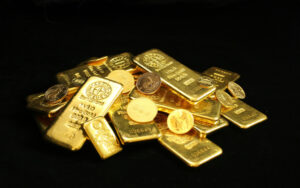

Heightened geopolitical risk in the Middle East is set to jolt gold markets when trading resumes in Asia, with strategists predicting a sharp upside gap but cautioning that sustainability will depend on whether buyers treat bullion as a structural hedge or a short-term trade.
Following the weekend’s US and Israeli strikes on Iran, investors are bracing for heightened volatility across asset classes. Gold, the traditional safe haven, has taken center stage as market participants reassess portfolio protection. Several strategists said that the initial reaction is likely to be a gap higher, though the durability of the move will be tested in the sessions ahead.
Mohanad Yakout, senior market analyst at Scope Markets, said the opening tone is likely to be strong, with a specific level acting as the tell on whether markets are shifting beyond short-term hedging.
“Gold is very likely to open with a strong upside gap when Asian markets begin trading, given the intensity of the geopolitical escalation,” Yakout said. “The key level to watch is $5,600, which represents the previous all-time high and serves as an important psychological barrier.”
He emphasized that price action around that threshold will matter more than the headline move itself. “If gold briefly trades above that level and then pulls back, it would suggest short-term hedging activity. However, if prices break above $5,600 and remain above it with sustained buying interest, it would signal a more structural shift toward a ‘haven-first’ positioning.”
Edward Meir, analyst at Marex, expects a knee-jerk spike across commodity markets, including gold and oil. “This will be a natural response to the outbreak of hostilities, which was rather unexpected in terms of scale and scope,” he said. Meir projected an opening jump of around $200 per ounce, but cautioned that the rally could fade. “The markets are rather dispassionate when it comes to military conflicts; the only thing investors are ultimately focused on is whether the oil flows will be interrupted. Once the initial spike is over, the rally tends to fade.”
Tim Waterer, chief market analyst at KCM Trade, said gold is likely to be in higher demand than usual when markets open. “Given the risks regarding how long the conflict may last, which other nations could be dragged in, and inflation fears, gold is expected to assume its mantle as the safe-haven asset of choice,” Waterer said. He added that stock markets and other risk assets will probably be sold off, with investors seeking safe parking for their funds—and gold likely atop that list.
However, the interplay between gold and the US dollar—both traditional safe havens—adds complexity. Fawad Razaqzada, market analyst at City Index and forex.com, sees potential for gold to rise toward $5,500 and possibly breach January’s peak around $5,600 to set a new record high. But he warned of headwinds: “Gold’s gains beyond that level could be capped by a potential rebound in the US dollar, especially if crude oil stays sharply higher.”
Beyond spot price action, strategists said flows into exchange-traded funds may provide a cleaner read on whether this turns into a broader reallocation. Yakout noted that institutional investors are likely to use ETFs to move quickly at the start of the week. “Immediate inflows into gold ETFs are highly probable as institutional investors rebalance portfolios in response to heightened risk.”
Charu Chanana, chief investment strategist at Saxo Bank, expects a similar pattern, particularly from portfolios that adjust risk based on volatility and macro stress. “Yes, gold ETFs will probably see quick inflows when markets reopen, especially from tactical investors and risk-parity strategies seeking fast exposure to defensive assets.”
Chanana added that a larger shift tends to come when the narrative moves from pure risk-off into oil-driven inflation anxiety. “That raises the appeal of gold as a hedge against policy uncertainty and longer-lasting inflation risk, not just market volatility.”
Several experts agreed that the ultimate impact on gold prices will depend on how the situation evolves—particularly regarding oil supplies and broader macroeconomic implications.
Soni Kumari, analyst at ANZ, said: “Tomorrow, the price reaction will be positive initially, though there could be some retracement later in the session depending on how events unfold. After this attack, there could also be macro implications, especially if oil prices rise sharply.”
Independent metals trader Tai Wong offered a contrarian view, suggesting gold and silver could sell off “on the fact” at the open. However, he added that “any significant sell-off will find buyers as the picture in Iran will unlikely be clear for weeks to months.” Wong noted that the attack was partially priced in, particularly in oil markets, and pointed to strength in crypto as a potential harbinger.
Hugo Pascal, precious metals trader at Inproved, observed that tokenized gold was already trading at a premium over the weekend while traditional exchanges were closed. “PAX Gold is currently trading at $5,344/oz (+2.2% since Friday), while Tether Gold has climbed to $5,292/oz (+1.2%).” He cautioned, however, that weekend proxy premiums often overstate the initial gap but accurately reflect the direction.
Ole Hansen, head of commodity strategy at Saxo Bank, summed up the market mood: “There is no doubt this is a worrying escalation and one that will drive investors into precious metals and the energy sector. Given last week’s momentum, I would not be surprised if gold prints a fresh record high.”
As markets prepare to open, all eyes will be on the $5,600 level. Whether gold holds above that threshold or retreats will likely determine whether this is a fleeting hedging move or the start of a more profound shift in investor positioning.