

Banyan Gold Corp. (TSXV: BYN, OTCQB: BYAGF)
The New Yukon Gold Rush - TARGETING 5 MILLION OZ. AT 1+ G/T
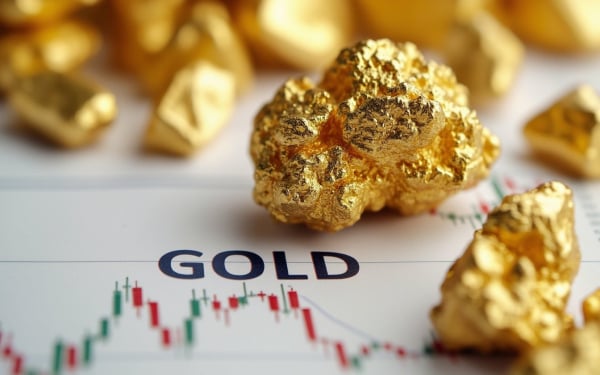
Gold has posted back-to-back weekly losses, yet safe-haven demand remains intact. A rare divergence is taking shape: bullion prices are under pressure, while gold mining stocks are quietly building momentum. One portfolio manager argues that the real move in gold equities hasn’t even started.
Gold fell nearly 3% last week, marking its second consecutive weekly decline. While the metal managed to cling to the $5,000 level, the price action told a clearer story—a tentative bounce faded quickly, and although the selloff lacked the intensity of late January’s rout, it was enough to force markets to reassess the near-term outlook.
The pressure came from an unexpected corner: energy markets. Iran’s new leader Mojtaba Khamenei recently signaled that closing the Strait of Hormuz remains a strategic tool against adversaries, warning that additional fronts could open if conflict escalates. Oil prices surged in response, pushing US Treasury yields and the dollar higher. For a non-yielding asset like gold, this created a classic double squeeze—rising real rates undermined its holding appeal, while a stronger dollar compressed its pricing space.
But here’s the paradox: as gold retreated, gold stocks began accumulating momentum.
Nawojka Wachowiak, Senior Portfolio Manager at Ninepoint Partners, offered a counterintuitive take in a recent interview: for equity investors, this precious metals bull market remains in its early innings.
“The most common reaction we hear is that people think they missed it,” Wachowiak said. “They see stocks up 100% or 150% and assume the trade is over. But this is actually how these cycles begin.”
She explained that the current gold rally has unfolded along an entirely different path from past cycles. The initial catalyst wasn’t equity investors at all—it was central bank buying of physical gold, a trend that began in 2022 and continues today. Neither institutional nor retail investors participated in that first phase. It wasn’t until 2025, as geopolitical tensions, trade disputes, and economic uncertainty intensified, that capital began revisiting gold’s safe-haven appeal.
From an equities perspective, the move is less than a year old. “Gold ran for a long time before the stocks really came to life,” Wachowiak noted.
This lag has created the central contradiction in today’s market: gold prices remain elevated, but the companies producing it are trading at historically cheap valuations.
Relative to both the gold price itself and broader equity markets, mining stocks look unusually inexpensive. Most large-cap producers boast strong cash flows, healthy balance sheets, and are even returning capital to shareholders through buybacks—fundamentals that stand in stark contrast to their depressed valuations. If those valuations simply revert to historical averages, the upside could be substantial.
Wachowiak doesn’t need gold to push significantly higher for this to play out. “I can easily see equities doubling—or more—from here,” she said. “Gold doesn’t need to double for that to happen.”
Wachowiak sees a clear progression in how capital moves through a bull market. The first wave typically targets the largest, most liquid producers, driven by ETF inflows and institutional allocations.
But the next phase—capital rotating further down the market-cap spectrum—has yet to unfold. “The large-cap producers are getting attention, but the developers and explorers haven’t really moved yet,” she said. “That’s usually where you see the biggest upside once investors become more comfortable with the sector.”
Ninepoint Partners is positioning accordingly: roughly half its portfolio in producers, the other half in developers and exploration companies that could become the next generation of mines.
This strategy has another layer of support: large miners face a growth challenge. “The average reserve life for producers is about 12 years, and many of them don’t have strong pipelines,” Wachowiak pointed out. That means they will eventually need to replenish reserves through acquisitions or investments further down the development chain—a dynamic that should benefit junior mining companies.
Looking further ahead, Wachowiak believes the entire metals and mining sector is undergoing a structural transformation. Beyond traditional economic cycles, three powerful forces—geopolitics, technological growth, and the global energy transition—are driving long-term demand for metals.
“This isn’t a six-month opportunity,” she said. “It’s a decade-long opportunity. There will be ups and downs, but the world needs more investment in metals and mining.” For investors convinced the gold bull market is already over, Wachowiak’s message is clear: the equity phase of this cycle is only just beginning.