American Tungsten Corp. (TSXV: TUNG, OTCQB: DEMRF)
Building America’s Defense Critical Metals Supply
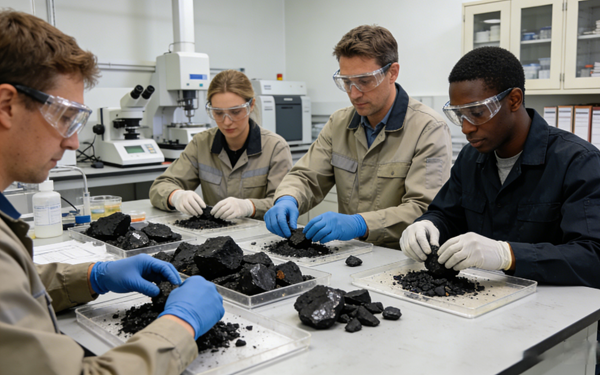
In its latest bid to secure critical mineral supply chains and reduce reliance on China, the U.S. government is moving to take a direct equity stake in one of the world’s largest natural graphite deposits—the Balama mine in Mozambique.
The U.S. International Development Finance Corporation (DFC) plans to convert an existing $31 million loan to Australian miner Syrah Resources into equity, a two-tranche transaction that will give the agency a roughly 20% stake and make it the company’s second-largest shareholder. The DFC will also provide an additional $15 million to the subsidiary operating the Balama project, pending due diligence and government approvals.
The move reflects a broader U.S. strategy to embed itself directly into allied supply chains for critical minerals. “In today’s era of global competition, economic security is national security,” DFC CEO Scott Nathan said in a statement, adding that the investment would secure U.S. access to a major graphite resource while supporting jobs in allied markets and economic activity in Mozambique.
Those “allied markets” include the United States itself. Syrah owns the Vidalia Active Anode Material facility in Louisiana, which processes graphite into battery components—a facility considered central to U.S. ambitions of building a domestic EV battery supply chain.
The Syrah transaction is part of a clear pattern. The DFC has recently committed $600 million to a consortium targeting Glencore’s copper-cobalt assets in the Democratic Republic of Congo, is considering $700 million for a tungsten project in Kazakhstan, and has approved a $565 million loan for rare earths development in Brazil. From African copper and graphite to Central Asian tungsten and South American rare earths, a supply network backed by U.S. capital and diplomatic influence is steadily taking shape—designed to operate outside China’s orbit.
Yet the Balama mine and its backers face significant headwinds. Graphite is a core component of lithium-ion battery anodes, but China dominates the sector: according to the U.S. Geological Survey, it produced 78% of mined graphite last year and controls an even larger share of battery-grade processing capacity. The market is also oversupplied with lower-cost synthetic graphite from Chinese producers, putting sustained pressure on natural graphite miners like Syrah.
Syrah’s challenges extend to its U.S. operations. The Vidalia facility has faced repeated delays in finalizing a long-anticipated offtake agreement with Tesla, stalling progress at a plant critical to the administration’s domestic supply chain goals.
Against this backdrop, the DFC’s shift from creditor to major equity holder represents a qualitative escalation. By taking a direct ownership stake, the agency gains a seat at the table—positioning itself to help navigate operational bottlenecks and accelerate development, rather than simply providing capital from a distance.
The move signals a new phase in Washington’s approach to critical minerals: one that moves beyond project finance toward active equity participation. For a U.S. government increasingly focused on supply chain security, this model—using development finance tools to secure direct ownership in strategic assets—is likely to become a standard instrument in the competition for the resources powering the next generation of clean energy and defense technologies.