
1911 Gold Corporation (TSXV: AUMB; OTCQX: AUMBF)
1911 Gold is Manitoba’s Gold Standard - Ready, Permitted and High-Grade 1911 Gold is an Emerging Gold Producer, with Significant Cash Flow Generation and District-Scale Growth Potential
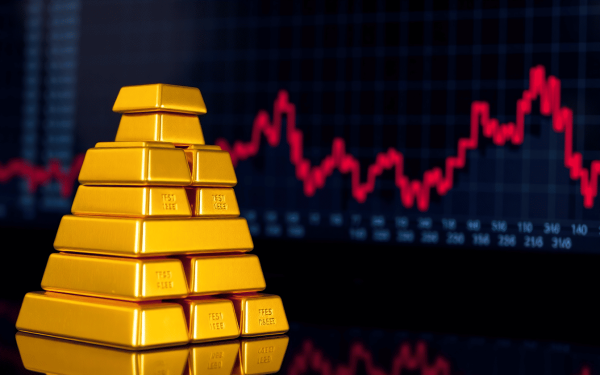
Gold markets endured a dramatic reversal on Tuesday, with prices slumping 6% at one point in a selloff driven by the very same geopolitical tensions that had propelled the metal to multi-week highs just a day earlier.
Spot gold fell as much as 6% to nearly $5,018 an ounce, its lowest since February 20, before paring losses to trade down 3.3% at $5,150.89 by 1156 GMT. The plunge came just 24 hours after bullion touched a one-month peak above $5,400. Silver suffered even steeper losses, tumbling nearly 12% to briefly trade below $80 an ounce.
The violent reversal left investors scrambling to understand what had shifted market sentiment so dramatically in such a short timeframe.
The answer, analysts say, lies in the paradoxical nature of geopolitical risk itself.
Monday’s saber-rattling from Tehran initially appeared to set the stage for further gold gains. An official from Iran’s Revolutionary Guards announced that the Strait of Hormuz had been closed to marine traffic, threatening to fire on any vessel attempting passage. The declaration sent global oil and gas shipping rates soaring and stoked fresh inflation fears—typically a supportive environment for gold as a hedge against rising prices and geopolitical uncertainty.
Indeed, escalating Middle East tensions had been the primary driver behind gold’s ascent from lower levels to breach $5,400 in recent weeks, as investors rushed to the traditional safe haven.
Yet this time, markets responded differently.
“The dollar is absolutely roaring away, as are U.S. Treasuries, and that’s providing a strong headwind to gold and particularly silver,” said independent analyst Ross Norman.
The numbers bore him out. The U.S. dollar index surged 0.9% to a more-than-one-month high, while Treasury yields shot sharply higher. A stronger greenback makes dollar-priced bullion more expensive for holders of other currencies, and higher yields raise the opportunity cost of holding non-yielding assets like gold.
Beneath the surface, Monday’s geopolitical escalation triggered two distinct and ultimately bearish chain reactions for gold.
First, the dollar’s safe-haven credentials trumped gold’s. When crisis truly intensifies, investors have historically gravitated toward the deep liquidity of U.S. dollars and Treasuries. “Tuesday’s move lower only appears to be driven by a flight to liquidity due to a strong dollar and bond yields trading higher,” said Bob Haberkorn, senior market strategist at RJO Futures.
Second, inflation expectations complicated the rate outlook. Surging energy prices tied to the Strait of Hormuz closure added to inflation concerns, which in turn suggested the Federal Reserve might need to keep interest rates elevated for longer to cool price pressures.
That second factor proved particularly damaging to gold.
According to CME Group’s FedWatch tool, traders now overwhelmingly expect the Fed to hold rates steady at the conclusion of its two-day meeting on March 18. More significantly, the probability of a rate cut in June—previously hovering below 45%—has now fallen to just over 60% odds of a hold.
Higher rates for longer increase the opportunity cost of holding gold, which offers no yield, especially when bonds provide attractive returns.
“In an environment where geopolitical risks intersect with inflationary pressures and monetary policy complexities, gold becomes a tool for reallocating risk within investment portfolios,” said Rania Gule, senior market analyst at XS.com.
Despite Tuesday’s sharp reversal, most analysts remain bullish on gold’s longer-term prospects.
BMI, a unit of Fitch Solutions, suggested the metal could still challenge record highs above $5,600 this week unless there are clear signs of de-escalation in the Middle East conflict. Major banks including BNP Paribas and JPMorgan are forecasting prices to rally beyond $6,000 by year-end.
Haberkorn views the pullback as potentially short-lived. “This dip in prices is likely to be short-lived, and flight-to-safety flows driven by geopolitical risk should support higher gold and silver prices,” he told Reuters.
Gule offered a nuanced perspective on the market’s conflicting dynamics. “Historically, gold has benefited from low-interest rate environments, but the current situation is different; we are witnessing gold rising despite lower expectations for rate cuts,” she said. “In my opinion, this confirms that the geopolitical factor temporarily outweighs the monetary factor, and investors prefer hedging against systemic risks even if the cost of holding a non-yielding metal rises.”
The selloff has erased all of gold’s gains from last week, though bullion remains up more than 17% year-to-date. Silver has posted similar annual gains despite Tuesday’s steep decline. As Middle East tensions show no immediate signs of abating and monetary policy expectations remain in flux, the competing forces acting on gold prices appear far from resolution.