

SLAM Exploration Ltd. (TSXV: SXL)
‘Exploring for critical elements and precious metals in New Brunswick, Canada.’
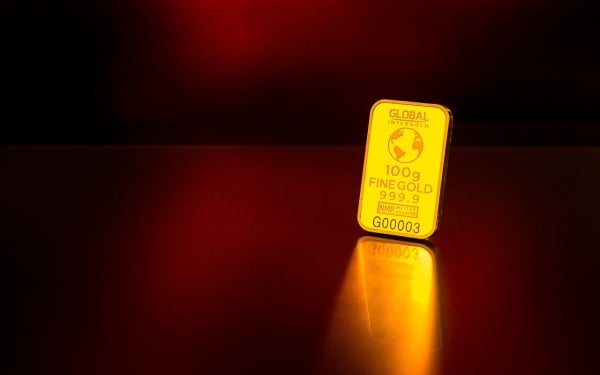
Spot gold recaptured the $4,400 level in late New York trading on Tuesday, trading at $4,412.50 an ounce for a 0.56% session gain, while silver edged up 0.13% to $65.680. The move came despite a stronger U.S. dollar and the 10-year Treasury yield hovering near 4.7%, as safe-haven flows tied to the Strait of Hormuz standoff put a floor under precious metals.
Trading reflected a cautious two-way positioning ahead of Wednesday’s U.S. consumer price index and Thursday’s producer price data. Last week’s surprisingly weak jobs report lent support to rate-sensitive gold, but recovering crude oil and a still-elevated inflation path have pulled expectations for a September Federal Reserve rate cut back to roughly a coin toss. The firmer dollar capped follow-through above the session high, while defensive demand kept gold near its recently recovered levels.
Geopolitical risk remains the dominant variable across metals and energy. Iran’s newly appointed Supreme National Security Council secretary said the Strait of Hormuz would stay closed unless Washington accepts Tehran’s conditions, and President Donald Trump added a fresh demand for compensation. Earlier hopes of a diplomatic arrangement, raised by Pakistan, faded as Tuesday’s price action showed the market was not yet prepared to price a near-term reopening. Brent crude settled at $88.91 a barrel, up 1.4 percent, and WTI at $83.20, up 1.3 percent, keeping inflation risk in the tape and providing stronger support to gold than to silver.
Bullion has recovered every dollar lost during a brief dip below $4,000 a fortnight ago, helped by the jobs shock and sustained central bank buying. Ole Hansen, head of commodity strategy at Saxo Bank, noted that gold needs to hold the $4,360 to $4,370 zone—an area of multiple local peaks set in June—to extend its rally. Spot prices are barely $25 above that band. A break below, he said, could trigger consolidation as headwinds from oil, yields and the dollar build, while longer-term players are waiting for a move back above the 200-day moving average before committing.
RBC Capital Markets’ latest forecasts offer ample room for both bulls and bears, with an unusually wide spread between scenarios. The high case sees gold averaging $5,296 an ounce in 2027, with quarterly estimates reaching $5,321 in the third quarter. The central, or base, scenario is much more restrained—$4,577 for 2026, easing to $4,225 in 2027—implying gold can remain expensive by historical standards without immediately revisiting the extremes of early this year. The bear case, by contrast, slumps to an average of just $3,661 in 2027, with quarterly prints of $3,729 and $3,757 in the third and fourth quarters.
The forecasts draw on both macroeconomic models and physical supply-and-demand balances. RBC expects the market to loosen materially, projecting a surplus of 301 tonnes in 2026, widening to 589 tonnes in 2027 as total demand falls from 5,104 tonnes to 4,728 tonnes. That softening physical backdrop explains why the middle scenario does not chase gold back to early-2026 highs. At the same time, the high scenario shows how quickly the picture could change if macro conditions turn strongly supportive again. From current levels near $4,380, the 2027 high-case average implies roughly 20 percent upside.
Gold remains lower over a three-month horizon despite its latest bounce, but has reclaimed both the 20-day and 50-day moving averages. With key inflation data straight ahead, the market appears content to position across the wide forecast range rather than bet on a single outcome.