
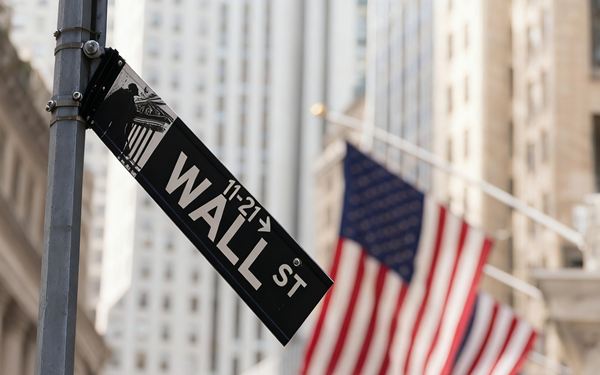
U.S. stocks closed out March with a powerful rally — and a sobering reminder of just how volatile the past month has been.
The S&P 500 jumped 2.9% on Tuesday, the Nasdaq climbed 3.8%, and the Dow surged 1,125 points. But the sharp rebound masked a grim monthly performance: the S&P 500 still fell 5.09% in March, while the Nasdaq dropped 4.75%.
The whiplash has become a hallmark of equity markets in Donald Trump’s second term: big swings, shifting sentiment, and a growing disconnect from the president’s own bullish predictions.
During his 2024 campaign, Trump warned on Truth Social that failing to reelect him would trigger a market crash “of similar proportions to 1929.” After winning, he told CNBC he viewed stock indexes as “very important” measures of his performance.
Two years into his second term, the picture looks different.
In February and March, the administration’s sweeping tariff policies rattled investors, pushing the S&P 500 into its seventh fastest correction on record — a 10% drop from a recent high. As of Tuesday’s close, the index sat 6.7% below its January peak, putting it within striking distance of another correction.
Two near-corrections in just over a year have tested the narrative that Trump’s return would be a clear positive for U.S. equities.
What weighed more heavily on March performance, however, was geopolitics.
The U.S.-Iran military confrontation and the near-total blockade of the Strait of Hormuz — a narrow waterway controlled by Iran that carries roughly one-fifth of the world’s daily crude oil supply — sent energy markets into overdrive.
Brent crude posted its largest monthly percentage gain on record, soaring more than 60%. West Texas Intermediate jumped over 50%, its biggest one-month increase since 2020. At the pump, the average price of regular gasoline hit $4 a gallon, up 34% in just four weeks.
“Stocks have been following the lead of oil prices at an unprecedented rate over the last several weeks,” analysts at Bespoke Investment Group wrote Tuesday. “The longer prices are high and supplies are limited, the worse it’s going to be for the global economy and ultimately stock prices.”
Despite the turbulence, Trump sought to highlight his record last week, noting that the Dow had hit 50,000 and the S&P 500 had reached 7,000. “People said that wouldn’t be possible within four years,” he said at an investment conference in Florida.
Since then, the Dow has fallen more than 3,600 points from that milestone — a drop of nearly 7.5%.
The first-quarter numbers tell a broader story. The S&P 500 fell 4.6% and the Nasdaq declined 7.1%, their worst starts to a year since 2022. Meanwhile, global stocks — measured by the MSCI ACWI ex USA index — rose nearly 30% over the same period, far outpacing the 16% gain for U.S. equities. According to Bloomberg, global markets haven’t outperformed American stocks by that much in the first year of a presidential term since 1993.
Trump once framed the stock market as a key barometer of his success. At the close of his first full quarter back in office, U.S. stocks have posted their weakest annual start in three years — while markets across the rest of the world are leaving them behind by a margin not seen in nearly three decades.