South Africa’s state-owned development financier has agreed to convert its Orion Minerals loan into equity, shifting a key government stakeholder from creditor to shareholder just as Orion advances the restart of the fully permitted Prieska copper zinc mine. The move trims balance-sheet risk for an underground mine that last operated in 1991 and hosts a reported 31 million tonnes at 1.2 percent copper and 3.6 percent zinc. It also lands amid a flurry of junior mining updates, from standout drill assays in Nevada to modest provincial grants in Ontario. The thread common to all: capital structure matters as much as geology, and today’s funding choices will set the cost curve for tomorrow’s production.
The Industrial Development Corporation, South Africa’s state-backed development finance institution, is converting its Orion Minerals loan into equity. Practically, that reduces Orion’s leverage, removes interest and refinancing risk tied to that facility, and aligns a domestic strategic investor with long-term project outcomes. Equity conversion is not a free lunch for existing shareholders—share count rises and per-share ownership falls. But for a capital-intensive restart, stronger equity improves the probability of securing senior project debt and offtake-linked financing on workable terms. Lenders typically require a minimum equity contribution and look for government support in higher-risk jurisdictions. The conversion suggests a vote of confidence in Prieska’s path to a construction decision. Missing from today’s headlines are the conversion price and resulting ownership—both matter for dilution and governance. Watch for board representation shifts, lock-ups, and any conditions attached to the conversion.
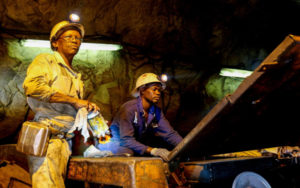
Prieska is a classic volcanogenic massive sulphide system with copper and zinc in separate sulphide phases—well understood mineralogy that is generally amenable to conventional crush-grind-flotation flowsheets. The resource grade profile, 1.2 percent copper and 3.6 percent zinc over 31 million tonnes, is competitive for an underground operation if mining widths and dilution can be controlled. Typical VMS recoveries can be strong, though penalties for deleterious elements and moisture in concentrate need to be managed through test work and reagent optimization. The restart plan must confront decades of care-and-maintenance: dewatering, rehabilitation of underground workings, geotechnical support, and new tailings capacity. Cost inflation across shaft refurbishment, electrical reticulation, and steel-intensive plant components remains a live risk. On the positive side, the South African rand cost base can cushion USD-denominated revenue volatility. Key documents to look for: an updated feasibility study with current capex, a detailed mine schedule, and signed contracts with EPCM and mining contractors that cap cost risk.
Project economics will ride the copper curve. Market fundamentals point to a tight mid-decade setup driven by declining grades at mature operations, limited new large-scale greenfield supply, and steady electrification demand. Inventories at visible exchanges have been volatile but remain modest relative to consumption. Zinc is more cyclical and sensitive to construction demand; recent mine closures have tightened concentrate supply at times, compressing smelter treatment charges and supporting prices. For Prieska, copper is the margin driver, with zinc as a material byproduct credit that can stabilize cash flow. Concentrate payabilities, quality, and freight to smelters will matter because South Africa lacks substantial domestic copper and zinc smelting capacity. Investors should model a range of copper and zinc price decks, vary treatment and refining terms, and test sensitivity to a stronger rand. Pay particular attention to potential byproduct recoveries of silver or other credits that can move the needle at the margin if present in saleable form.
Jurisdiction risk is neither binary nor static. Orion benefits from a fully permitted project in a province with a mining workforce and established supply chains. However, grid reliability remains a watch item. Any restart plan should detail power supply arrangements, backup generation, and demand management to mitigate outages. Water availability in the Northern Cape is another constraint; clear disclosure on sourcing, recycling rates, and community impact is essential. Logistics add cost and complexity: most copper and zinc concentrates will move overland to ports and then to overseas smelters, exposing the project to rail and port performance. On the regulatory side, consistent compliance with environmental and social commitments is as important as the underlying mineral economics, especially with a state investor on the register. None of these risks are new, but they are execution risks likely to drive schedule and cost variance if not actively managed.
With the IDC conversion, Orion’s equity cushion should improve, making the capital stack more bankable. Expect the company to pursue a three-part solution: senior secured project debt sized off cash flows at conservative metals prices, an equity top-up to meet lender ratios, and either an offtake prepayment or a royalty or stream to bridge any gap. Each comes with trade-offs. Of the non-dilutive options, streams and royalties permanently carve out a share of future revenue or metal, increasing all-in sustaining costs at the bottom of the cycle. Offtake prepayments lower headline interest cost but can introduce pricing and delivery obligations that reduce flexibility. Balance-sheet health is not just about quantum but also about covenants and encumbrances; investors should read intercreditor terms once disclosed. Watch for conditions precedent around dewatering milestones, long-lead procurement, and power agreements—these can be pacing items for a final investment decision.
Hycroft Mining reported a standout intercept at Vortex in Nevada, including 53.4 meters at 304.14 g t silver and 1.33 g t gold, with an ultra-high-grade 0.9 meter subinterval at 2,890 g t silver and 33.70 g t gold. Those numbers will attract attention, but the market will quickly focus on continuity, true widths, and whether the high-grade domain is volumetrically meaningful to the overall resource. Hycroft’s broader challenge remains metallurgy and capital scale for processing sulphide mineralization; isolated bonanza assays do not resolve flowsheet risk. In Ontario, Athena Gold mobilized for a fully funded 5,000 meter drill program at Laird Lake targeting geophysical anomalies—an appropriate next step in a prolific district, but still binary at this stage. Thunder Gold’s 215,000 dollar grant from the Ontario Junior Exploration Program is a useful validation and budget extender, not a balance-sheet transformation. Casa Minerals’ acquisition of an extensive historic drill database for the Congress project in Arizona is an efficiency gain; the value depends on data quality and how it sharpens drill targeting. Across these updates, the common red flag is dilution—most juniors fund by issuing equity—and the common opportunity is catalyst density when capital and geology line up.
For Orion, the next value inflection points are tangible. An updated feasibility study reflecting current costs, a dewatering and rehabilitation progress report with measurable percent complete, and signed term sheets for power and logistics will clarify execution risk. On financing, track the equity raise size and price post-conversion, the mix of project debt and alternative capital, and any changes in IDC’s or other strategic holders’ stakes. On marketing, preliminary offtake discussions and indicative terms on concentrate specifications will help investors model netbacks. For peers, Hycroft’s follow-up drilling density and metallurgical test work are more important than a single headline intercept. For Athena and Casa, first-pass drilling results with clear structural context beat any number of geophysical targets. For Thunder Gold, incremental funding should translate into meters drilled and new data, not just runway. Across the board, investors should prioritize projects with clean capital structures, transparent technical work, and catalysts that reduce uncertainty rather than simply extend timelines.