A war far from the paddies can decide the price of your next meal. Rice is reminding markets that we still live in a world of bottlenecks, not boundless buffers. When fertilizer and fuel jump because tankers choke at a strait, a Thai field becomes a balance sheet. Some farmers now leave ripened crop unharvested because diesel and labor cost more than the grain is worth. That is not a harvest problem. It is a systems problem.
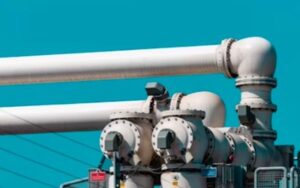
The Strait of Hormuz is a narrow valve on a global machine that assumed cheap, constant flows of energy and fertilizer. Close or constrain that valve and the pressure moves everywhere. Ammonia and urea out of the Gulf become unpredictable, bunker fuel and diesel climb, and the cost structure of Asian rice production moves in lockstep. The geographic distance between Iran and a Thai rice mill does not matter. The network distance is one edge. In complex systems, a single edge can carry most of the load. Break it, and you discover who was relying on it.
Rice is an energy derivative masquerading as a staple. Nitrogen fertilizer is made from natural gas. Tractors, pumps, and dryers run on diesel and electricity. When input costs spike, marginal fields become uneconomic overnight. Reports of Thai farmers leaving crops in the ground are an efficient market signal disguised as waste. It says variable costs now exceed expected revenue. In India, wholesale prices jumped on a rush of export orders, a classic scramble for deliverable supply rather than paper comfort. The lesson is simple: if your investment thesis ignores fuel and fertilizer, you are not investing in agriculture. You are betting that a supply chain will not blink.
When food prices rise, governments default to bans and quotas. This is not a moral failure. It is game theory. In a prisoners dilemma of scarcity, the dominant strategy is to defect first and secure domestic supply, even if the global outcome is worse. India’s recent restrictions on rice exports were a warning shot. If Hormuz friction endures, expect more guardrails on grain, from informal inspections to formal embargoes. Each unilateral move triggers mirror responses. Liquidity disappears, basis risk widens, and price becomes a poor tool to clear the market because the real constraint is policy, not willingness to pay. Investors who model demand elasticity but ignore political reflexes are long a fantasy.
We have seen this movie. In 2008, energy spikes and export controls cascaded into a food crisis. The narrative then was weather, biofuel mandates, speculation. Underneath was the same structure: a few critical inputs, a few chokepoints, and a herd of actors optimizing for the last basis point of cost. The system produced efficiency under calm but cracked under stress. The post-2008 reforms focused on financial plumbing, not physical redundancy. Today, shipping restrictions, insurance premia, and rerouted cargoes add friction on top of higher input prices. The IMF’s downgrade of growth is not a forecast; it is an acknowledgment that real constraints are binding. We forgot that globalization is a leverage trade on peace and cheap energy. When that collateral is questioned, the margin call shows up in supermarket aisles.
Food inflation is usually modeled as a second-order effect of oil. That is neat and often wrong. The relationship is lumpy, with thresholds and lags. Consider a farmer facing a 20 percent rise in diesel and a doubling of urea. If harvest proceeds, profit collapses; if harvest pauses, supply tightens later. The decision is rational either way given local cash flow and credit. Portfolio models that treat agriculture as a smooth proxy for headline CPI miss these threshold dynamics. More worrying is basis risk. The spread between benchmark food indexes and the actual grains consumers buy can explode when export bans, shipping queues, and quality differentials kick in. If you think you own exposure to food security through a futures contract, check the fine print. Deliverable supply is a different beast from notional exposure. In a stress, correlation matrices go poetic and stop doing math.
Nature punishes monoculture. Engineering punishes single points of failure. We built food systems that love both. Asian rice depends on a narrow set of fertilizers from a narrow set of producers shipped through a narrow set of routes, financed by a narrow set of risk takers. It worked until it did not. A suspension bridge can lose one cable, sometimes two, and still stand if redundancy exists. Our food bridge lost one cable in weather, another in policy, and is now testing the cable labeled energy logistics. No surprise that prices swing the most in two years. Volatility is information. It is the markets way of saying that redundancy is underpriced.
Bureaucracies fight the last crisis. The impulse now will be to subsidize harvests, cap retail prices, or draw down public stocks. Some of that will help. But subsidies without input security are bandages on leaks upstream. Price caps distort signals and widen black markets. Stock draws buy time but not resilience. The second order effects matter more. High fertilizer costs reduce application rates, lowering yields next season. Export bans slow cross-border arbitrage, so shortages in one country persist even when regional supply is ample. Farmers delay planting or switch crops, adding noise to next years supply curve. Investors focus on the visible shock and miss the lagged wave.
An antifragile food system gains from disorder. That means modular inputs, optional routes, and incentives aligned with buffers. On the input side, more local ammonia and urea capacity near demand centers, tied to diverse gas or green hydrogen sources, would cut reliance on maritime chokepoints. On logistics, dual routing and pre-negotiated charters that activate when straits are constrained would turn detours into options rather than emergencies. On policy, rule-based export regimes with transparent triggers would beat ad hoc bans that spook markets. And at the farm gate, financing that rewards storage and staggered sales would distribute supply over time, reducing the temptation to leave crops unharvested when diesel spikes. None of this is glamorous. All of it prices resilience as an asset, not a cost center.
Rice jumping on war fallout is not a surprise. The surprise is our capacity to be surprised. Markets still price smooth seas in a decade of rough water. The bet embedded in many portfolios is that supply chains revert to mean faster than conflict regresses to peace. That is not a hedge. That is hope. The more honest position is to assume chokepoints will be tested, policies will become parochial under stress, and basis risk will turn tidy models into messes. Price is a carrier of information, but only if you listen to what it implies about structure, not just demand. A field left unharvested is a message. It says the system that carried fertilizer in and grain out stopped making sense on the ground. Ignore that signal and the next shock will not be a headline. It will be a habit.