
Ghana’s Minerals Commission has sent formal notices to Newmont, AngloGold Ashanti and Chinese-owned Zijin Mining, demanding they hand over all mining operations to local contractors by December 2026 or face sanctions. As Africa’s largest gold producer tightens its grip, resource nationalism is being dragged from rhetoric into reality.
The ultimatum follows Ghana’s revised local ownership rules in January 2025, which require all miners to switch to contract mining. Under the new regulations, surface mining must be carried out by fully Ghanaian-owned firms, while underground operations require at least 50% Ghanaian ownership. Almost all large-scale miners have already complied—except Newmont, Zijin and AngloGold Ashanti’s smaller Iduapriem mine, which still operate with in-house teams.
At VRIC 2026, METALS 100 spoke with #Scottie Resources Corp. (TSXV: SCOT,OTCQB: SCTSF) CEO, Bradley Rourke, who elaborated on these recent company updates and next steps. Scottie Resources Corp. is an exploration stage company engaged in the exploration and evaluation of gold and silver properties located in the “Golden Triangle” of British Columbia, Canada, an area which has shown great potential to host high grade gold and silver deposits.
Newmont, which runs the Ahafo North and Ahafo South mines, sought to extend its full compliance deadline to 2027, but regulators swiftly rejected the request, noting that fellow listed miner Gold Fields had already completed its transition. Zijin’s Ghana unit said it has been engaging with the commission since November 2025, preparing tenders and technical frameworks, with full tendering to begin once initial benchmarks for new technology are set. A government official warned that the first step would be “a huge fine,” adding, “If they still don’t comply, we have the right to shut down the mine.”
Accra has made no secret of its goal: to build local mining service capacity and retain more value inside the country. Officials have singled out Ghanaian companies such as Rocksure and Engineers & Planners as capable of taking on expanded roles, promising that the regulator will “hold their hands” through execution.
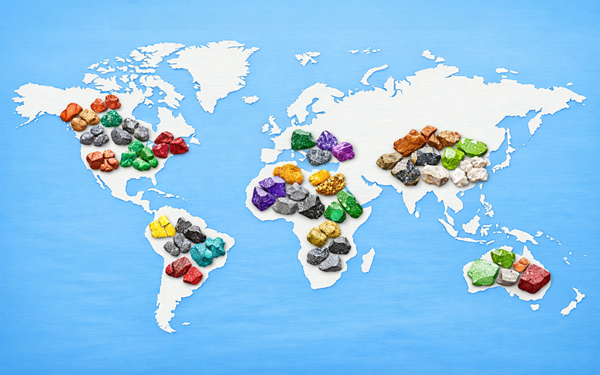
Yet Ghana is far from alone. A broader scramble for resource control—framed around national security and industrial policy—is unfolding globally. The United States has proposed “Project Vault,” a $12 billion strategic mineral reserve. Australia in January formalized an $800 million critical minerals stockpiling strategy, prioritizing antimony, gallium and rare earths. The European Union is advancing a joint critical raw materials reserve under its “RESourceEU” framework, while India and Brazil recently agreed to deepen critical mineral cooperation in a bid to reduce reliance on China.
Patrick Schröder, senior research fellow at Chatham House, said many nations are shifting toward a more resource-nationalist mindset. “At this point, it’s a slippery slope and strategic stockpiling could become hoarding when measures become coercive, lack transparency and become weaponized,” he said. Natalie Scott-Gray, senior metals analyst at StoneX, labelled the trend “resource nationalism and catching up time,” noting that governments now treat supply chains as national security infrastructure rather than purely commercial flows. Ewa Manthey, commodities strategist at ING, highlighted a departure from past cycles: high prices should have spurred supply, but new output remains slow and uncertain, making inventories “part of the supply strategy” with distinctly nationalist elements.
For Chinese miners such as Zijin, Ghana’s 2026 deadline represents more than an operational compliance test. As host governments adopt a step-by-step playbook—hefty fines followed by mine closures—the rules of global mining are being rewritten. From Ghana to Mali, resource-rich nations are leveraging policy to redraw the distribution of benefits, a desire supercharged by rising metals prices. Resource nationalism, it appears, has evolved from isolated moves into a systemic force.