
Americore Resources (TSXV: AMCO)
Drilling Value in the Silver State
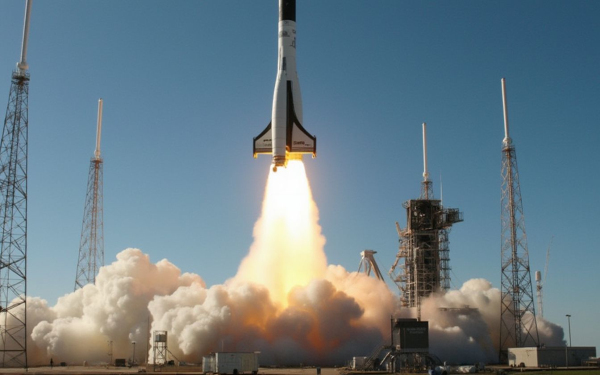
In May 2026, the eyes of global capital markets are fixed on Texas. According to The Wall Street Journal, Elon Musk’s SpaceX has confirmed it will list on Nasdaq on June 12, with an expected fundraising size of up to $80 billion or more, targeting a valuation range of $1.75 trillion to $2 trillion. If the plan proceeds smoothly, it will be the largest IPO in capital markets history.
Three business engines: Launch, Starlink, and Space AI
The reason SpaceX can support such a sky-high valuation lies in the fact that it is no longer just a rocket company. Its business landscape has expanded into three pillars:
Launch services are SpaceX’s foundation. With reusable rocket technology, the company has dramatically reduced space transportation costs. In 2025, it completed 165 orbital launches and is the sole provider for NASA astronaut missions to the International Space Station. On the government side, SpaceX has been included as a contractor for Trump’s “Golden Dome” missile defense plan, and the US Space Force has awarded SpaceX and other companies $3.2 billion for prototype interceptor contracts, further solidifying its defence supplier status.
However, the real cash cow supporting the high valuation is Starlink. According to The Information, Starlink generated $11.4 billion in revenue in 2025, accounting for 61% of revenue, adjusted EBITDA of 7.2 billion and a 63% margin. The number of users has surpassed 10 million. Musk himself emphasised on social media: “The vast majority of SpaceX’s revenue comes from the commercial Starlink system,” with NASA accounting for only 5% of expected 2026 sales.
The third growth engine is space-based AI infrastructure. In February of this year, SpaceX completed the acquisition of Musk’s AI company xAI at an overall valuation of $1.25 trillion, with xAI valued at $250 billion, bringing the AI large language model Grok and computing power into the corporate fold. At the same time, SpaceX has applied to regulators to deploy up to 1 million satellites, planning to build “space data centres” in low Earth orbit, and is in deep discussions with Google about sending orbital data centre equipment into space. Musk’s explanation is quite blunt: “In two to three years, doing AI computing in space will be the cheapest way.”
Use of proceeds and unique liquidity structure
According to disclosures, the IPO proceeds will be used primarily in two directions: fully accelerating the large-scale routine launch of the next-generation Starship programme, and heavily investing in the construction and deployment of a low-Earth-orbit “space data centre” network.
Notably, SpaceX has made a number of special arrangements in its IPO structure. Musk has made it clear that he will not sell a single share, aiming to dispel market concerns about founder cashing out. In terms of share allocation, the proportion reserved for retail investors is expected to be significantly increased to more than 20%, far above the typical IPO level of around 10%. In addition, the company is not expected to adopt the standard six-month lock-up period for insiders; instead, it may adopt a “phased lock-up” arrangement, allowing early investors to gradually sell their shares over several months to mitigate the impact of a large sell-off. Moreover, with Musk’s extremely high ownership, the tradable float may only be around 5%. Once passive index funds quickly include the stock after listing, this could trigger a rare “structural short squeeze.”
Three major risks to watch beneath the boom
However, beneath the IPO feast, there are many hidden risks that cannot be ignored.
First, the stark contrast between valuation and financial data. According to media reports, SpaceX’s total revenue in 2025 was pproximately $18.5 billion, but due to the xAI integration and high capital expenditures (reaching $20.7 billion), the company posted a net loss of nearly $5 billion. Even based on revenue, a $2 trillion valuation implies a price-to-sales ratio of more than 100x, well above the average for traditional defence, communications, or cloud service companies. This means the market is essentially paying for an extremely aggressive long-term growth forecast.
Second, governance risk tied to Musk personally. SpaceX plans to adopt a dual-class share structure, giving Musk effective absolute control. Some analysts point out that Musk simultaneously leads SpaceX, Tesla, and engages in political activities, which may prompt caution among institutional investors under ESG investment frameworks and corporate governance assessments. Additionally, part of the executive compensation package is linked to the multi-decade goal of “establishing a million-person colony on Mars,” adding further governance uncertainty.
Third, intensifying competition and regulatory pressure. Amazon’s Project Kuiper launched its first internet satellites in April 2025, directly competing with Starlink. In the launch market, SpaceX already holds about an 80% share of the US market, raising the risk of antitrust scrutiny. At the same time, escalating conflict in the Middle East has driven up international oil prices, adding systemic risk to the already highly valued IPO.
How should investors approach this?
For investors considering participating in this IPO of the century, institutional advice is quite cautious: do not blindly chase the stock on day one. Look at the Cerebras IPO example – the stock more than doubled on its first trading day to over $385 per share, before falling back below $297. Those who bought at the peak on day one faced considerable short-term losses. Given SpaceX’s high valuation pricing, extremely low float, and non-standard lock-up arrangements, the initial volatility is likely to be far beyond that of typical new listings.
A more rational strategy might be: wait for the official prospectus to carefully review the company’s financial details and lock-up provisions, observe a few quarters of earnings results, and look for better entry points during the stock’s first few months of trading, rather than buying on day one.