Tesla (TSLA) has recently received positive news. Goldman Sachs has raised its estimate for the company’s second-quarter electric vehicle deliveries from 405,000 units to 420,000 units, citing particularly strong performance in the European market. If this adjustment proves accurate, it would mean that Tesla’s actual sales for the quarter have achieved significant growth. Since Tesla adopts a direct-sales model, its delivery data is equivalent to sales data, so this forecast carries considerable reference value.
According to Goldman Sachs’ latest projection, deliveries of 420,000 units would represent a 9.3% increase compared to the same period last year, despite the fact that Tesla has ceased production of the Model S and Model X during this quarter. At the same time, this figure also represents a 17.3% sequential increase from the first quarter. Calculated on a half-year basis, Tesla’s first-half deliveries are expected to reach approximately 778,000 units, an increase of 7.9% compared to the same period in 2025. From any perspective, Tesla demonstrates a continued growth momentum in electric vehicle deliveries in 2026.
Over the past year, there have been numerous voices in the market suggesting that Chief Executive Officer Elon Musk’s political involvement, including his statements attempting to reduce the U.S. debt burden, has damaged the Tesla brand. However, this argument has always been weak, because U.S. Model 3 sales remained consistently solid throughout 2025, while Model Y underperformed. If consumers truly linked political stances to specific vehicle models, it would be difficult to explain why different models under the same brand would show divergent trends. Coupled with the particularly strong performance of the European market in 2026, this further confirms that the extent of brand damage is extremely limited.
A more reasonable explanation lies in the product cycle itself. In the first half of 2025, the facelift update of the Model Y significantly dragged down sales at that time, but now sales of this model, one of the world’s best-selling vehicles, are returning to a normalizing trajectory.
Just as there was no need to panic prematurely when Tesla’s deliveries declined last year, there is likewise no reason to become overly excited now in the face of a substantial rebound in deliveries. Long-term bullish investors in Tesla have consistently emphasized that Tesla is not merely an automobile manufacturer; its true long-term growth engines come from the robotaxi service and the Optimus humanoid robot project.
Therefore, progress on these two businesses is what needs to be closely tracked in 2026. In the most recent earnings call, Musk expressed his hope to delay the release of the latest version of Optimus (v3) until mass production begins, with the timing estimated to be “around the end of July to August.” It is already June, and investors should pay attention to official announcements that may be released in the coming months.
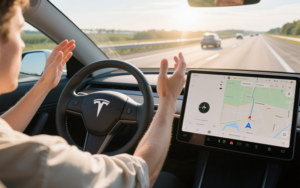
As for robotaxis, the pace of their rollout has already caused anxiety among many investors, with progress seeming to have stalled. But the key lies in understanding management’s true statements. Musk made it clear in the previous quarter’s earnings conference that Tesla will not deploy “unsupervised FSD robotaxis” on a large scale until new improvements are made to the full self-driving software, and those improvements need to go through the processes of coding, validation, and release. These improvements are likely to be introduced with the FSD v15 version, with a timeline around late 2026 or early 2027. Therefore, it is unrealistic to expect a handful of robotaxis operating sporadically on the roads to boost the stock price in 2026, and large-scale deployment is more likely to be postponed until 2027.