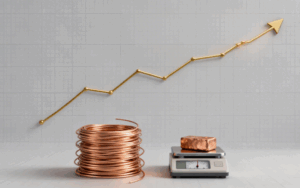
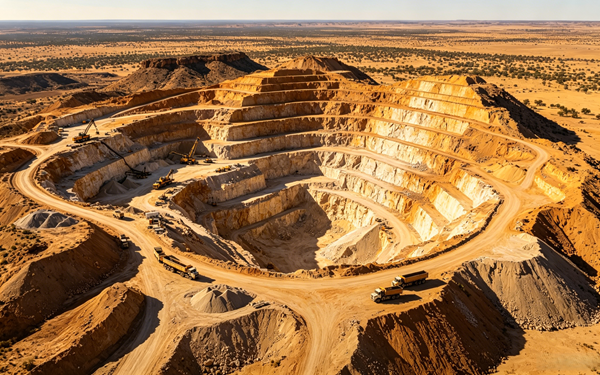
USA Rare Earth (USAR) has secured landmark federal financing under the U.S. CHIPS and Science Act while greenlighting a $1.2-billion rare earth refining and magnet manufacturing base in South Carolina, fueling its global vertical supply chain rollout anchored in Washington’s push to cut U.S. reliance on imported critical minerals. Even with unprecedented policy and capital tailwinds, steep operational losses, sky-high valuation and multi-front legal and regulatory headwinds leave investors sharply divided over the stock’s long-term investment prospects.
The company inked definitive funding pacts with the U.S. Department of Commerce for nearly $1.6 billion in total federal incentives, split into a $277 million outright federal grant and up to $1.3 billion in senior secured loans. Originally unveiled in January under the Trump administration’s critical mineral supply chain revitalization agenda, disbursement of government capital is pegged to pre-set construction and production milestones across USAR’s project portfolio. Combined with a $1.5 billion private capital raise announced the same January plus prior financing rounds, USAR has amassed $3.5 billion in total capital to bankroll its domestic and overseas capacity buildout.
Its flagship $1.2 billion manufacturing complex is sited in Blacksburg of South Carolina’s Cherokee County, the firm’s third major U.S. production hub following existing separation facilities in Wheat Ridge, Colorado and a magnet factory under construction in Stillwater, Oklahoma. Upon full commissioning, the South Carolina plant is slated to turn out 6,400 tonnes of sintered NdFeB permanent magnets and 5,000 tonnes of rare earth strip-cast metals and alloys annually. Coupled with planned capacity expansion at the Stillwater site, USAR’s total annual U.S. output will reach 10,000 tonnes each of finished rare earth magnets and heavy rare earth metal-alloy products, completing a full domestic mine-to-magnet integrated industrial loop spanning ore extraction, separation, metallurgy and final magnet fabrication.
Domestically, USAR’s entire U.S. industrial layout centers on Texas’ Round Top heavy rare earth deposit, scheduled to kick off commercial mining in 2028. Beyond U.S. borders, the miner is building out a sprawling cross-continental footprint: it plans to sink over €175 million into metal and alloy production lines in France and unveiled a $2.8-billion takeover proposal for Brazil’s sole operational rare earth mine. Its UK-based subsidiary recently achieved commercial-grade yttrium output, a high-value heavy rare earth indispensable for aerospace thermal barrier coatings and advanced semiconductor raw materials, steadily solidifying USAR’s worldwide rare earth supply network.
Industry officials specializing in semiconductor investment highlighted USAR’s expanding domestic rare earth capacity as a core CHIPS Act implementation milestone, which will plug critical raw material gaps for U.S. domestic chip production and ease longstanding supply chain choke points for strategic minerals relied on by the domestic semiconductor ecosystem.
Counterintuitively, the raft of positive policy and project developments triggered an 8% intraday slump in USAR’s share price on the funding announcement date. While the stock still boasts more than 50% year-to-date gains and carries a market cap of $1.37 billion, sharp divergences have emerged across Wall Street regarding the firm’s long-run commercial viability.
Still stuck in the pre-production development phase without revenue-generating large-scale mine output, USAR posted just $1.6 million in full fiscal-year 2025 top line against a staggering $297.6 million net loss, with negative $86.3 million free cash flow from ongoing massive construction spending that keeps dragging down bottom-line results. From a balance sheet perspective, the firm sports a zero debt-to-equity ratio alongside a robust current ratio of 10.2, leaving it well-positioned to cover short-term liabilities. However, sustained hefty capital outlays required for its multi-country factory construction and cross-border acquisitions introduce persistent uncertainty over future fundraising costs and financing terms.
Lofty valuation plus layered compliance risks further cap investor enthusiasm. Compared with peer MP Materials (NYSE: MP) and the XLB sector benchmark, USAR trades at an inflated forward P/E of 148.7x and an extreme price-to-sales ratio of 1,661.9x, sitting far above industry average multiples with substantial valuation premium baked into its stock price. On regulatory and legal fronts, Brazil’s antitrust watchdog has launched a formal probe into USAR’s $2.8-billion Brazilian mine acquisition, putting the landmark takeover’s completion in limbo. Domestic rival MP Materials has also filed litigation accusing USAR of stealing proprietary magnet manufacturing technology via former employees; USAR has formally refuted all allegations yet pending court rulings remain unresolved. Separately, U.S. congressional lawmakers have raised objections over the structural design of federal CHIPS funding, warning potential government equity control and undisclosed interest conflicts embedded in subsidy clauses, with ongoing legislative scrutiny poised to delay project execution timelines.
All told, USAR’s unmatched federal policy backing and end-to-end global rare earth expansion strategy align closely with the global secular shift toward critical mineral supply chain localization, forming its core bullish investment driver. Nevertheless, prolonged mine commission timelines, persistent deep operating losses, frothy stock valuation plus overlapping litigation, antitrust and political uncertainties make near-term investment returns highly unpredictable. The stock is only suitable for high-risk-tolerance long-term institutional investors, while retail investors ought to guard against sharp valuation pullbacks should project delivery fall short of market expectations.