

1911 Gold Corporation (TSXV: AUMB; OTCQX: AUMBF)
1911 Gold is Manitoba’s Gold Standard - Ready, Permitted and High-Grade 1911 Gold is an Emerging Gold Producer, with Significant Cash Flow Generation and District-Scale Growth Potential
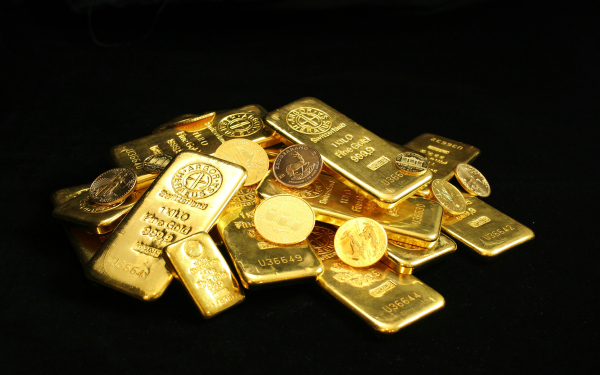
Spot gold has pulled back sharply after a strong start to 2026, hitting an intraday low of $4,170 an ounce and hovering around $4,320 in recent sessions. Despite cooling investor sentiment and softening investment demand, JPMorgan Global Research has reaffirmed its bullish long-term outlook for the precious metal, advising clients to accumulate positions gradually on sustained pullbacks and projecting prices could reach $6,000 an ounce by year-end.
The downturn has been fueled by renewed expectations of Federal Reserve rate hikes. Concerns that energy-driven inflation will prompt the central bank to keep interest rates elevated — or even restart tightening cycles — have weighed heavily on non-yielding gold. First-quarter investment demand for the metal declined notably from the prior quarter, per World Gold Council data, acting as a direct drag on prices.
METALS 100 is glad to have Brian Miller, CEO of Astra Exploration Inc. (TSXV: ASTR) , to elaborate on these recent company updates and next steps. Astra implements decades of Latin American exploration and discovery experience to identify highly prospective projects that have the potential to host world-class deposits. The Paleocene Region of northern Chile and the Deseado Massif of southern Argentina are two of the most prolific epithermal regions in the world, hosting numerous world-class precious metals deposits.
Technically, gold is trapped in a clear trading range, caught in what JPMorgan calls a “technical no-man’s-land.” It has held support near its 200-day moving average at roughly $4,340 an ounce but has failed to break above its 50-day moving average around $4,730 an ounce, leaving most investors on the sidelines amid listless trading activity.
While JPMorgan has trimmed its 2026 full-year average gold price forecast to $5,243 an ounce from $5,708, the revised figure still points to roughly 21% upside from current levels. Its quarterly projections are even more striking: under the base case, gold will climb to $5,000 an ounce in the fourth quarter, marking a 39% gain from today’s prices. In an upside scenario, the metal could touch $6,000 an ounce by the end of 2026, and advance further to $6,300 an ounce by the fourth quarter of 2027.
The bank’s conviction rests on the view that the structural drivers supporting gold remain intact, even amid short-term volatility. Persistent inflation eroding fiat currency purchasing power, widening U.S. fiscal deficits, deepening geopolitical fragmentation, and rising U.S. policy unpredictability are all seen as long-term tailwinds unlikely to dissipate soon.
Central bank buying continues to serve as a stabilizing anchor for the market. Though official net purchase figures for the first quarter appeared muted, JPMorgan estimates actual buying reached 244 tonnes based on over-the-counter market data and Swiss refinery flow metrics, up from 208 tonnes in the previous quarter. China has emerged as the primary source of incremental demand: its net gold imports surged nearly threefold to 317 tonnes in Q1, and the People’s Bank of China has accelerated its official purchases, stepping up from a monthly pace of about 1 tonne over the six months through February to 5 tonnes in March and 8 tonnes in April. The trend is part of a long-term reserve diversification strategy to strengthen the renminbi’s global position, the report noted.
On strategy, JPMorgan’s guidance is unambiguous: buy on dips. While near-term prices may face further pressure if rate hike fears persist, gold’s portfolio diversification value will remain solid as long as core geopolitical and fiscal headwinds go unaddressed. The bank recommends building positions incrementally rather than chasing short-term moves, framing gold as a medium- to long-term allocation. It also cautioned that its forecasts are tied closely to geopolitical developments and the Fed’s policy trajectory, and would be revised in the event of material shifts to either factor.