American Tungsten Corp. (TSXV: TUNG, OTCQB: DEMRF)
Building America’s Defense Critical Metals Supply
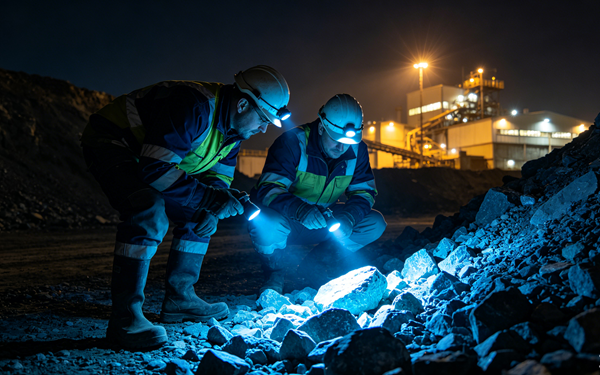
In a milestone moment for critical mineral supply chains, Almonty Industries (NASDAQ: ALM,TSX: AII) has commenced processing operations at its Sangdong tungsten mine in South Korea, officially transitioning the historic site from development into revenue-generating production. The move comes as tungsten prices remain elevated and Western nations scramble to reduce their overwhelming dependence on Chinese supply.
The Montana-based company, listed on the Nasdaq, TSX and ASX, announced that its newly commissioned processing plant began feeding stockpiled run-of-mine ore in June, producing saleable tungsten concentrate for the first time since the mine was shuttered in the early 1990s.
With approximately 139,700 tonnes of ore already stockpiled at a blended grade of 0.25% tungsten trioxide (WO₃), Almonty estimates the contained metal holds an in-process value of around $68 million at current prices — enough to feed Phase I operations for roughly 2.6 months. The company is using lower-grade material during the initial ramp-up, but notes that Sangdong’s life-of-mine average grade of 0.51% WO₃ is triple the global average, with a reserve base supporting more than 45 years of production. Once fully ramped, the mine is expected to supply roughly 40% of global tungsten demand outside China.
The strategic significance of Sangdong’s revival is hard to overstate. Tungsten is an essential “industrial tooth” — a critical input for armour-piercing munitions, tank armour, high-speed cutting tools and other defence and advanced manufacturing applications. Yet the global supply chain has long been dominated by China, a dependency that has rapidly morphed into a geopolitical vulnerability. In December 2024, China imposed export restrictions on a range of dual-use materials, including tungsten, gallium and germanium, explicitly targeting the United States for the first time. Months earlier, the Biden administration had slapped a 25% tariff on Chinese tungsten imports, effective August 2024. These moves jolted Western policymakers and industrial users alike, exposing the fragility of a supply chain that decades of cost-driven sourcing had allowed to atrophy.
It is against this tense backdrop that Sangdong’s processing plant is roaring to life. “After decades in which the West allowed its tungsten supply chain to atrophy, the Sangdong mine is once again producing one of the most strategically critical metals on earth,” said Lewis Black, President and CEO of Almonty. The company has invested more than $100 million since acquiring the project in 2015 to rebuild it into a modern underground operation. The commissioning arrives at an opportune moment: robust tungsten prices, fuelled by supply diversification efforts, amplify both the commercial returns and the strategic premium of non-Chinese production.
Beyond the corporate milestone, Sangdong’s start-up validates the economic and technical feasibility of rebuilding a tungsten supply chain outside China’s orbit. European precision-tool manufacturers have already demonstrated a willingness to pay above-market rates to sustain alternative sources, while some American industrial users — historically wedded to a “cheap rules” mentality — are now forced to recalculate the true cost of overreliance on Chinese supply in an era of tariffs and export controls. For Washington and its allies, Sangdong offers a tangible and reliable tungsten anchor beyond their own borders.
The hum of machinery at Sangdong reverberates far beyond the hills of Gangwon province. In a global critical minerals landscape undergoing rapid realignment, the mine’s transition from dormant relic to revenue generator signals that the West’s quest for tungsten security is finally moving from strategic anxiety to on-the-ground production.