More than a year into the global artificial intelligence frenzy, a notable divergence is quietly unfolding within the sector. Chip manufacturers and infrastructure providers—the “picks-and-shovels” players—have seen their stock prices continue to climb, while the hyperscale cloud computing giants that have made massive bets on AI compute capacity have largely stalled. JPMorgan’s strategy team recently issued a warning on this front, noting that the current configuration bears a striking resemblance to the late-stage internet bubble of the 1990s, and that the price action over the coming weeks will be a critical window for determining whether this divergence represents a healthy rotation or a precursor to systemic risk.
As Alphabet and Tesla released their quarterly earnings this week, the two tech behemoths both announced plans to further expand AI-related capital expenditures, yet the market’s response was notably tepid. This reaction has further cemented the core narrative that has run through AI investment themes since the start of the year: semiconductor manufacturers and infrastructure suppliers at the upstream end of the industrial chain continue to capture the equipment-demand dividends from AI expansion, while cloud platform operators that procure compute resources at scale have been met with punitive pricing from investors. The contrast in data is stark—the Roundhill Magnificent Seven ETF has gained only about 1.5% year-to-date, while the Philadelphia Semiconductor Index has surged more than 70% over the same period, marking the widest performance gap of the current AI cycle.
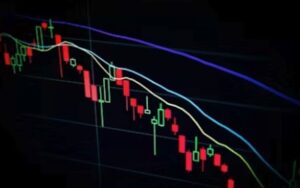
In a research note released on Wednesday, JPMorgan strategist Jason Hunter explicitly cautioned clients that if hyperscale cloud giants fail to break through key technical resistance levels while the semiconductor sector simultaneously hovers below critical resistance, the capital rotation initially confined to the AI theme could evolve into a broader market breakdown. This assessment has once again turned market attention to historical parallels.
Regarding the current divergence, Hunter offered two diametrically opposed interpretive frameworks, both with technical merit. The bullish camp argues that the hyperscale cloud giants are finding support within their 2026 wide-range trading bands, suggesting that capital is rotating out of crowded hardware names and into hyperscale players—a rotation that could ultimately lend greater sustainability to the entire AI theme over the coming months to quarters. The bearish camp, by contrast, points out that similar sector price convergence occurred in the second quarter of 2000, which precisely marked the final top of the entire market cycle at that time. Hunter conceded that from a technical analysis perspective, both arguments have reasonable support, which is precisely why the price evolution over the next few weeks will be decisive.
On the specific technical levels, Hunter outlined key thresholds that investors should closely track. For the semiconductor index, the SOX must break through the short-term resistance range of 12,769 to 13,333; if the upside attempt fails, the index could retreat to the support zone of 9,975 to 10,554, which would imply a deeper pullback of 28% to 32% from the June high. Hunter also noted, however, that should the SOX decline toward that lower support zone in the coming weeks, it could be viewed as a buying opportunity with tradable value.