
1911 Gold Corporation (TSXV: AUMB; OTCQX: AUMBF)
1911 Gold is Manitoba’s Gold Standard - Ready, Permitted and High-Grade 1911 Gold is an Emerging Gold Producer, with Significant Cash Flow Generation and District-Scale Growth Potential
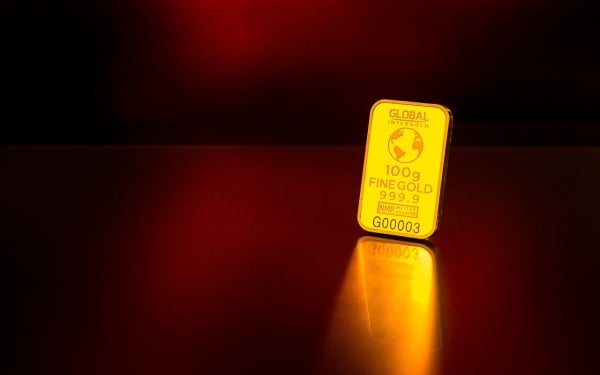
Spot gold posted a brutal $532.24 decline in June, tumbling nearly 12% to settle at $4,008 per ounce — the steepest monthly drop since October 2008. For the second quarter, bullion cratered 14.14%, marking its worst quarterly performance since Q2 2013. Yet behind the historic sell-off, seasoned market strategists are delivering a unified message: the price action is merely a sideshow. The real story is gold’s shifting role in the global financial architecture.
Paul Wong, managing partner and market strategist at Sprott Inc., attributed the sell-off to a cascade of short-term shocks in his latest monthly report. The signing of a memorandum between the U.S. and Iran sent oil prices plunging and the dollar higher. Then, hawkishly interpreted remarks from new Federal Reserve Chair Kevin Warsh following the June FOMC meeting pushed short-end yields up and added further fuel to the greenback’s rally. Quantitative funds, commodity trading advisors and algorithmic traders piled on, liquidating longs and even establishing short positions, which amplified the downward momentum. Gold sliced through its 200-day moving average, plunging into deeply oversold territory with a drawdown of 26% — a level unseen in a decade.
But Wong stressed that the gold price decline “appears to be much more significant than the actual moves in the U.S. dollar and federal funds rates,” suggesting that the negative effects of a stronger-dollar, higher-rate combination have already been largely discounted. More importantly, he pointed to a defining paradox: a muscular U.S. dollar can pressure gold in the short run, yet that very strength is reinforcing gold’s long-term investment case.
“The stronger the U.S. dollar becomes, the greater the incentive for countries to find alternatives to it,” Wong wrote. As de-dollarization gradually reshapes the reserve landscape, gold is stepping into a historic new role — no longer simply an inflation hedge, but a neutral reserve asset for a multipolar world. Unlike sovereign currencies, gold carries no political allegiance. Unlike government bonds, it bears no counterparty risk. Held domestically, it cannot be frozen or sanctioned. It is “outside money,” pure and simple.
The data backs up this transformation. Wong noted that gold reserves averaged roughly 12% of total global reserves between 2000 and the period before the Russia-Ukraine conflict. After the freezing of Russia’s foreign exchange reserves rattled confidence, that ratio skyrocketed to around 34% before recently settling at 27%. The long-term trend is unmistakable: central banks are repositioning gold as a strategic reserve asset, with its function evolving from an inflation hedge to a monetary hedge, a reserve anchor and potentially a form of monetary collateral.
Robert Minter, director of investment strategy at Abrdn, echoed that view, arguing the correction has done little to dent gold’s structural appeal. Instead, it flushed out speculative froth. “The removal of length is a positive,” Minter said. He revealed that China’s central bank took advantage of the pullback to add another 15 tonnes of gold to its reserves — exactly the type of buying one would expect from official institutions. Many professional investors, he noted, are now eyeing the $4,000 neighborhood as an opportunity to raise allocations.
Minter’s deeper concern revolves around currency risk. “Gold continues to be the only currency that isn’t somebody else’s debt,” he said, adding that no government anywhere is genuinely committed to getting its debt under control. Against a backdrop of swelling sovereign obligations and persistent central bank reserve diversification, gold’s role has moved well beyond traditional inflation protection and is becoming a core asset of the global monetary system. As for the Fed’s hawkish rhetoric, Minter was dismissive: “Warsh is the boy who cried hawk. He’s not a hawk.” Many institutional investors remain unconvinced that significantly tighter monetary policy is truly on the way.
As price swings gradually cede the spotlight to this ongoing role reset, the gold market is undergoing a paradigm shift. For investors, what truly deserves scrutiny is no longer the next inflation report or the precise timing of the next rate move, but the quiet, determined repricing of the world’s reserve assets.