
Southern Silver Exploration Corp. (TSXV: SSV, SSEV: SSVCL, OTCQX: SSVFF)
Southern Silver, a low-risk junior development company with substantial upside potential that is emerging as one of the premier Ag-Pb-Zn companies in Mexico
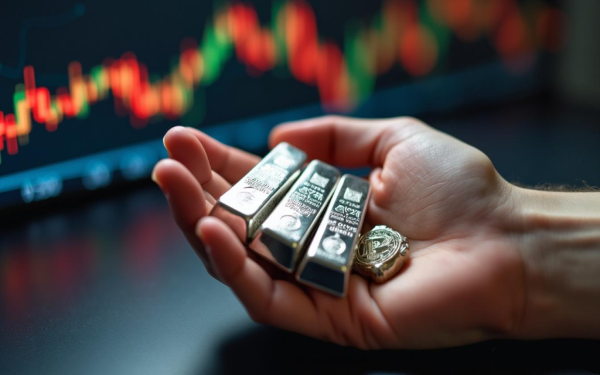
As of July 21, 2026, the precious metals market staged a strong rebound after two weeks of deep correction. Following a 4% jump in the previous session, silver prices held steady around $59 per ounce in early Asian trading on Wednesday (July 22), while spot silver in New York trading on Tuesday surged as much as 5% intraday – its largest single-day gain in more than five weeks – and helped push gold back above the key psychological level of $4,000 per ounce. Whether this rebound is driven by short-term bargain-hunting or signals a trend reversal remains a subject of sharp market divergence.
Geopolitical Premium and Rate Policy Tug-of-War
The macro backdrop for this rebound has not seen a material shift. The U.S.-Iran conflict has entered its tenth consecutive day of exchanges, with President Trump downplaying the prospects for near-term negotiations with Iran and warning of further strikes, keeping oil prices elevated. At the same time, Iran-backed Houthi rebels in Yemen have threatened to attack Saudi ports, while a series of strikes on the Caspian Pipeline Consortium terminal along Russia’s Black Sea coast have exacerbated energy supply concerns. Rising geopolitical risks have directly lifted inflation expectations, but have also reinforced the Federal Reserve’s commitment to maintaining a tightening bias – federal funds futures now price in a 64% probability of a rate hike in September, up sharply from 55% just a week ago.
Technically Driven Rebound, Institutions Warn of Remaining Bearish Bias
ING commodity strategist Ewa Manthey noted that Tuesday’s rally was more reflective of “dip-buying” than a response to fresh headlines. Silver outperformed gold partly due to safe-haven demand and partly due to strengthening sentiment across industrial metals, as copper prices rallied – with approximately 50% of silver demand coming from industrial applications. Since falling to an eight-month low near $55.50 per ounce earlier this month, silver has now rebounded more than 6%, while gold has repeatedly found support at the $4,000 level.
However, Rhona O’Connell, head of market analysis at StoneX, cautioned that the technical picture remains decidedly bearish. “After 18 days of sideways movement, there has almost certainly been some fresh buying interest,” she said, “but it would be premature to conclude that a breakout to the upside is underway.”
Divergence Between Official and Retail Demand
From a supply-demand fundamentals perspective, official-sector demand has offered little support. Russia’s central bank sold 43.5 tonnes of gold in the first half of 2026 – its largest six-month sell-off in at least 25 years – with reserves falling to their lowest level since February 2020. This marks the sixth consecutive monthly decline since the bank began drawing down its bullion stockpile in November 2025 to plug a widening budget deficit. In China, the world’s largest physical gold buyer, wholesale demand hovered near decade lows in June, while local gold ETFs recorded record monthly outflows, according to the World Gold Council. The only bright spot remains the central bank’s 20-month consecutive buying streak.
In contrast, physical silver market conditions are considerably tighter. Import restrictions in India have created local shortages, pushing dealer premiums to $6.50 per ounce this month – a six-month high – and the global silver market is on track for its sixth consecutive annual supply deficit. Platinum and palladium also posted gains on Tuesday.
Deep Year-to-Date Losses Persist, Outlook Remains Divided
Despite the sharp rebound, precious metals have suffered significant losses since the start of the year – silver is down approximately 17% year-to-date, while gold has fallen about 6%. Gold is still more than a quarter below its January peak near $5,600, and silver has been more than halved from its record high above $120. The market widely expects the Federal Reserve to hold rates steady at next week’s meeting, but whether a September rate hike ultimately materializes will depend on incoming inflation data and the evolution of geopolitical conditions. In the near term, $4,000 for gold and $55 for silver represent key support levels, while the sustainability of the rebound will require clearer macro catalysts to emerge.