
GR Silver Mining Ltd. (TSXV: GRSL, OTCQB: GRSLF)
Advancing a World-class Silver Resource in Mexico amongst a $80+ / oz Ag Market
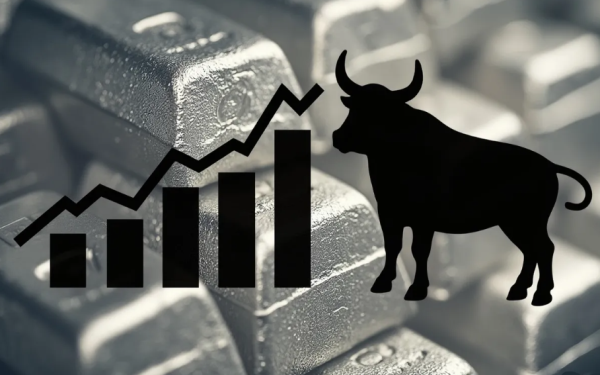
For silver investors, the faint hope of triple-digit prices that lingered at the end of the first quarter of 2026 was thoroughly shattered in the second quarter. Spot silver fell from its closing price of US$75.36 per ounce on April 1 to US$58.59 on June 30, a decline of more than 22% over the period. Just on January 29, the metal had hit an all-time high of US$121.62. Behind this rout lies a convergence of shifting monetary policy expectations, a strengthening US dollar, and the compounding effect of silver’s dual nature.
Policy Expectation Reversal Triggers Selloff
The turning point for silver’s Q2 trajectory came with a fundamental reversal in expectations for Federal Reserve monetary policy. In mid-April, negotiations over a US-Iran peace deal briefly fueled market hopes that the war might end early and the Fed could cut rates sooner, sending silver temporarily back above US$80. But the stalemate soon re-emerged, and with the Fed deciding to hold rates steady, silver fell to a monthly low of US$71.86 on April 29.
An even bigger shock came in May. The nomination of hawkish Kevin Warsh as a candidate for Fed Chair fundamentally altered market expectations for the interest rate path. CME Group’s FedWatch tool showed that by June 30, analysts had priced in a 67% probability of a rate hike as early as the September 15–16 meeting. A strong US dollar and rising Treasury yields became the twin mountains weighing on silver prices. Kelvin Wong, senior market analyst at OANDA, noted that silver underperformed gold in the second quarter—down 13.3% versus gold’s 10.5% decline—with the root cause being a firmer dollar and higher global sovereign bond yields.
Dual Nature Amplifies Volatility
Silver’s “dual identity” was fully exposed in this adjustment. As a precious metal, it followed gold under pressure; as an industrial metal, it suffered a technical breakdown after the sharp tech stock selloff on June 23, breaching the critical US$60 support level for the first time since December 2025.
Joshua Rotbart, founder of J. Rotbart & Co., told INN: “Silver continues to attract both monetary and industrial demand, but it moves more sharply than gold because it serves two roles.” Gold benefited more directly from central bank buying, geopolitical uncertainty, and ETF demand, while silver’s performance was deeply shaped by its industrial uses in electronics, automotive applications, and renewables.
Industrial Demand Outlook Divided
Silver’s industrial demand is not entirely lost. The World Silver Survey projects that industrial consumption will fall 3% in 2026 to 639.6 million ounces, mainly due to solar panel manufacturers responding to higher prices with thrifting and substitution strategies. However, demand related to AI electronics, data centers, and EV charging infrastructure continues to grow, providing a structural hedge.
On the supply side, a solid floor of support remains. Silver is on track for a sixth consecutive annual market deficit in 2026, with a shortfall of 46.3 million ounces. Rhona O’Connell, StoneX’s head of market analysis for EMEA and Asia, emphasized that only 21% of global silver supply is price-elastic—the majority is produced as a by-product of copper, lead, zinc, and gold. Unless base metals mining expands rapidly, “there is going to be a substantial shortage of silver, which means you’re going to see higher prices in order to rebalance the markets.”
Outlook: Institutions Downgrade Price Forecasts
Major institutions have sharply cut their silver price expectations. ING downgraded its Q3 2026 forecast from US$79 to US$68, and Q4 from US$84 to US$74, though it still believes that “market deficits and broader electrification trends will support silver modestly outperforming gold.” Macquarie expects silver to trade in a range around US$70 in Q4 2026, potentially trending lower to US$65 by the end of 2027 as possible Fed rate hikes come into play.
Wong’s technical analysis is more cautious. He believes that the break below the 200-day moving average indicates that the major uptrend from April 2025 has been damaged, and silver could see further corrective declines toward US$54.50 and even US$45.55.
In conclusion, silver’s long-term structural deficit and near-term macro headwinds are engaged in a fierce tug-of-war. The possibility of silver returning to triple-digit territory in 2026 has all but vanished, yet the downside is not limitless given the support from supply deficits. A wide-ranging, volatile consolidation pattern is likely to define the silver market for the remainder of the year.