While Wall Street remains fixated on Elon Musk’s latest timeline for Tesla (NASDAQ: TSLA) to roll out unsupervised Full Self-Driving, the real action in autonomous ride-hailing is unfolding elsewhere — and it is being measured in half a million rides a week.
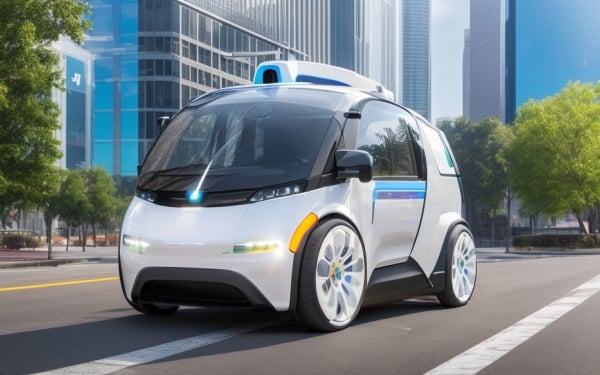
Waymo, the self-driving unit of Alphabet (NASDAQ: GOOGL), has quietly passed 500,000 fully driverless paid trips per week, a milestone disclosed during Alphabet’s first-quarter 2026 earnings call. That figure, which covers rides with no human behind the wheel at all, has doubled in less than twelve months. Waymo now operates across 11 major U.S. cities, having added six new markets in 2026 alone. By contrast, Tesla’s FSD still requires a human driver ready to take over at any moment, and the company’s long-awaited “driverless” version is not expected to begin rolling out until the fourth quarter of this year.
In the race to turn autonomy into a real business, Alphabet’s subsidiary is already miles ahead — and investors may be underestimating just how valuable that lead could be.
The gulf between promise and reality is becoming impossible to ignore. Waymo is not just running a large-scale pilot; it is building a standalone consumer brand. The company recently ended a nearly three-year pilot with Uber (NYSE: UBER) in Phoenix, folding the vehicles that had been available through the Uber app back into its own fleet. Riders in Phoenix can now access those cars only through the Waymo app, its transit partnership with Via, or delivery work with DoorDash.
Uber and Waymo will continue to cooperate in Austin and Atlanta, but the Phoenix split exposes a central tension in the robotaxi economy: Uber wants to be the universal aggregator for any autonomous vehicle, while Waymo wants customers to know — and book — a Waymo. The decision to go it alone in its most mature market signals that Waymo believes it has the local scale and brand recognition to capture demand without leaning on a third-party platform.
Goldman Sachs Research projects that the global robotaxi market could reach roughly $415 billion by 2035. In a contest of that magnitude, the players that control both the fleet and the customer relationship are likely to capture the richest slice of the pie. Waymo is already positioning itself accordingly.
What makes this opportunity especially compelling is that Alphabet’s autonomous-driving leadership comes wrapped in a stock that looks surprisingly modest. The parent company is far more than a bet on robotaxis. It sits at the frontier of artificial intelligence with its Gemini large language model, competing head-to-head with OpenAI’s ChatGPT and Anthropic’s Claude. And it funds these ambitions with two of the most formidable cash engines in tech: in the first quarter of 2026, Google Search and YouTube advertising delivered 70% of total revenue, while Google Cloud accounted for another 18%. That profit stream gives Waymo and the AI division a luxury that many peers lack — the ability to pursue long-term, capital-intensive projects without constantly rattling the tin cup.
Yet Alphabet’s valuation hardly reflects a business that leads in autonomous driving, AI, and cloud infrastructure. The shares trade at a trailing price-to-earnings ratio of roughly 30 times, right in line with the company’s ten-year average and about 16% below the highs reached in late 2025. In a market where far less diversified tech names command steep premiums, Alphabet’s multiple suggests that neither the pace of Waymo’s commercial rollout nor the monetization potential of its AI portfolio is being fully priced in.
For years, the investing narrative around autonomous vehicles has revolved around Tesla’s audacious deadlines and Musk’s showmanship. That narrative still commands attention, but it is increasingly being overtaken by raw operational data. Half a million paid driverless rides a week are not a concept, a demo, or a promise. They are a business. And right now, that business belongs to Alphabet — a company whose investors are paying for a search-and-cloud giant while quietly accumulating a dominant stake in the future of transportation.