
District Metals Corp. (TSXV:V.DMX. Nasdaq: DMXSE SDB)
Advancing the Largest Undeveloped Uranium Deposit in the World
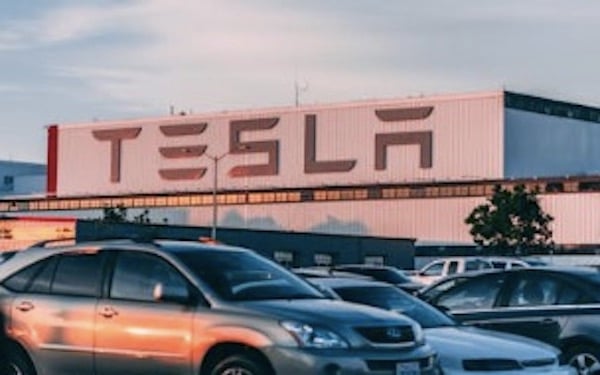
In recent years, automakers such as BYD (BYDDY), NIO (NIO), and Xiaomi Group (XIACY)have continued to launch cost-effective intelligent electric vehicles, and Tesla’s vehicle deliveries have declined for multiple consecutive years. At the same time, Musk’s political remarks and his cooperation with the Trump administration have also triggered boycott sentiment among some consumers. However, rising gasoline prices resulting from the conflict between the United States and Iran have stimulated demand for electric vehicles in the first half of this year to a certain extent, and sales in the European market have shown some improvement.
Tesla (TSLA) recently released its financial results for the second quarter of 2026, with data showing that the company’s revenue performance exceeded market expectations. However, net income, earnings per share, and gross margin all fell short of Wall Street analysts’ forecasts, while free cash flow turned negative, reflecting the pressure on profitability from the company’s continued increases in investment in cutting-edge fields such as artificial intelligence and robotics. Affected by the earnings report, Tesla’s stock price fell more than 4% in after-hours trading on Wednesday.
Looking at core financial metrics, Tesla’s adjusted earnings per share for the second quarter came in at $0.33, below the market consensus estimate of $0.51. Revenue for the period reached $28.24 billion, up 26% year-over-year and exceeding analysts’ expectations of $25.71 billion. However, net income fell 5% year-over-year to $1.11 billion, or $0.32 per share, compared with $1.17 billion and $0.33 per share in the same period last year, showing a clear weakening in profitability.
Breaking down by business segment, automotive revenue increased 23% year-over-year to $20.52 billion. Energy business revenue, which includes solar and energy storage systems, grew 13% to $3.14 billion. Services and other business revenue surged 50% to $4.58 billion. Although automotive revenue came in better than expected, the company’s overall gross margin fell to 16.8% from 17.2% in the same period last year, due to a decline in average selling price per vehicle and a reduction in regulatory credit revenue, significantly below the market expectation of 19.4%. The earnings report disclosed that during the quarter, the company discontinued sales of the higher-priced Model S and Model X and began selling lower-priced versions of the Model 3 and Model Y, and this product mix shift weighed on profitability.
Tesla is currently gradually shifting its strategic focus from automotive sales to artificial intelligence and autonomous driving businesses. Musk is accelerating the rollout of the Robotaxi driverless ride-hailing service and the Cybercab autonomous vehicle production plan, while retooling the production line at its Fremont, California plant in preparation for the production launch of the Optimus humanoid robot. The company stated in its earnings report that the first-generation production line for Optimus has begun installation and will soon start production, with the initial batch of robots primarily used for training data collection and feature development. At the same time, the FSD advanced driver-assistance system subscription business continues to grow, with active FSD subscribers in the second quarter increasing 56% year-over-year, bringing total subscribers to 1.48 million.