
SLAM Exploration Ltd. (TSXV: SXL)
‘Exploring for critical elements and precious metals in New Brunswick, Canada.’
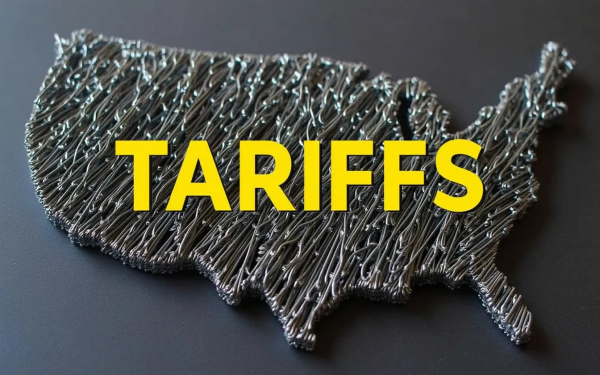
The U.S.-Canada trade conflict intensified this week as Ontario Premier Doug Ford warned that the province would halt exports of critical minerals to the United States if Washington continues to raise tariffs. Nickel and uranium—both vital to defense and clean-energy supply chains—have emerged as key leverage in Canada’s retaliation strategy.
Over the weekend, President Donald Trump imposed 50% tariffs on roughly US$20 billion worth of Canadian goods, including autos, auto parts, steel, textiles, toiletries, and toys. On Monday, he escalated further, threatening to raise tariffs on Canadian vehicles, auto parts, and steel to 50% starting January 1. Prime Minister Mark Carney has pledged dollar-for-dollar retaliatory measures by September 8.
Ford laid out his position in an interview with The Associated Press. Data from Natural Resources Canada show that Canadian critical mineral exports to the United States reached US$28.8 billion in 2025, accounting for approximately 57% of Canada’s total critical mineral exports. The Sudbury Basin in Ontario, one of the world’s largest nickel-producing regions, supplies nickel used in stainless steel, electric-vehicle batteries, and defense applications such as military aircraft and naval vessels. “Without the high-grade nickel we ship to the U.S., what would they do?” Ford said.
Uranium adds another layer of pressure. Cameco’s Blind River refinery in northern Ontario is the world’s largest commercial uranium refining facility. Ontario’s Ring of Fire region also holds chromite, cobalt, copper, titanium, and platinum group elements. With Washington seeking to reduce reliance on China for critical minerals, losing access to Canadian nickel and uranium would pose a significant challenge.
Critical minerals are not Canada’s only threat. Ford also reiterated that Ontario could cut electricity exports that power 1.5 million American homes and businesses. “Everything is on the table,” he said. “I’ll do whatever it takes.” In March 2025, Ontario imposed a 25% surcharge on electricity exported to Michigan, Minnesota, and New York; Trump then threatened to double tariffs on Canadian steel and aluminum, and both sides backed down. In October, Ford told the Financial Post that Canada’s constitution gives provinces jurisdiction over critical minerals, adding that Canada “has the right to make sure that the people that buy our critical minerals are friends.”
Despite the tough rhetoric, Ford said Canada should not walk away from negotiations. “I never believe in leaving the table,” he said. “Continue negotiating and see where we go.” Prime Minister Carney walked away from trade talks last Friday and announced retaliatory tariffs would begin September 8.
Markets absorbed the news with relative calm. The S&P/TSX composite index rose 93.89 points to close at 36,714.12 on Monday. Industrial and auto stocks struggled, while gold lifted materials shares. Adam Ludwick, director of asset allocation at NEI Investments, said the market digested the new tariffs reasonably well, with most stocks not seeing the same drawdown unless directly tied to targeted sectors.