
Prismo Metals Inc. (CSE:PRIZ)
A leadership team with a proven ability to explore, operate and develop precious metal discoveries.
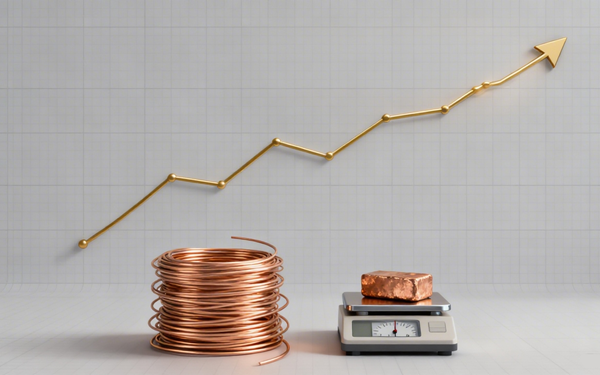
Copped held steady Wednesday and was on track for a third consecutive monthly gain, supported by strengthening Chinese factory activity and a tightening physical market.
Benchmark three-month copper on the London Metal Exchange was down 0.1% at $14,416.50 per metric ton as of 1600 GMT, but remains up 0.9% for the month. The metal has rallied 7.9% so far in the third quarter, notching a record high of $14,875 on September 10.
China’s copper-intensive manufacturing sector expanded in September, with the official purchasing managers’ index rising to 50.1 from 49.8 in August, back above the 50-point line that separates growth from contraction. Copper stocks at Shanghai Futures Exchange warehouses slumped 17.8% from the previous week to 38,744 tons, the lowest level since January 2024. The exchange was set to close on Thursday for China’s National Day holiday and reopen on October 8.
“Copper is finding support from expectations of a relatively tight market balance over the coming quarters,” said Ewa Manthey, commodities strategist at ING. “While uncertainty around global growth and trade policy remains a consideration, structural demand trends and constrained supply growth should help keep prices well supported through Q4.”
The rally is being driven not merely by technical momentum, but by a tangible physical shortage — declining mine production is colliding with relentless Chinese demand, geopolitical stockpiling and acute strike risks in South America.
Chile, the world’s top copper producer, is feeling the strain. Workers at Antofagasta’s Centinela mine have rejected the final contract offer, triggering a mandatory arbitration phase that carries an immediate risk of strike. Meanwhile, wage negotiations at Escondida, operated by BHP — the world’s largest copper mine — have been postponed following an accident.
Data from the International Copper Study Group (ICSG) for July underscores the widening gap between supply and demand. Global mine production fell 4% month-on-month to an annualized 23 million metric tons. Refined copper supply declined 1% year-on-year to 28.4 million metric tons, while refined copper demand climbed 3% over the same period to an annualized 29 million metric tons.
Geopolitical factors are compounding the shortfall. Traders are hoarding large volumes of refined copper in U.S. warehouses over concerns about potential import tariffs, locking material away from the rest of the global market. China is bearing the brunt: the Yangshan import premium, the most closely watched gauge of Chinese demand for foreign copper, is trading near its highest level since 2022 despite broader economic concerns.
Deutsche Bank forecasts that fierce competition for scarce physical supplies could drive copper as high as $22,000 per metric ton by the second quarter of 2027, citing a toxic mix of potential production shortfalls, artificial scarcity and strong demand.
In the near term, the market is likely to remain highly sensitive to any further disruptions to global supply chains. Manthey cautioned that the global growth outlook and trade policy uncertainty remain factors to watch.