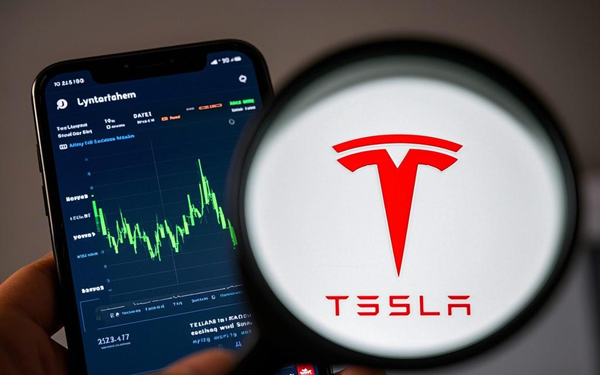
Stanley Druckenmiller, one of the most respected figures in modern investing, has taken a contrarian position in Tesla (TSLA), buying call options that bet on a rebound even as the stock has fallen more than 20% this year and still trades at valuations far above traditional automakers.
Druckenmiller helped orchestrate the 1992 short of the British pound while at George Soros’s Quantum Fund, a trade that earned $1 billion. He later turned Duquesne Capital into an investment machine with average annual returns near 30% and no down years before closing the fund in 2010. His record of spotting market inflection points early makes the Tesla options position particularly notable.
Tesla has a market capitalization of nearly $1.4 trillion, a trailing price-to-earnings ratio above 300, a forward earnings multiple around 190, and a price-to-sales ratio near 11. By comparison, General Motors and Ford trade at single-digit forward earnings multiples and price-to-sales ratios below 1. Even BYD, a pure-play electric-vehicle rival, trades at less than 20 times forward earnings. Tesla’s valuation premium is entirely tied to investor expectations for two early-stage artificial intelligence businesses: the Optimus humanoid robot and the Robotaxi autonomous driving network.
Optimus remains in the prototype phase and generates no commercial revenue. Robotaxi has moved beyond demonstrations, with cumulative paid miles above 2.4 million, but growth has flattened recently. Quarterly additions have stalled near 900,000 miles, and much of the active fleet still operates with safety monitors. The million-vehicle autonomous fleet that Elon Musk once promised now looks more like a carefully controlled pilot whose adoption has not accelerated in line with the optimistic rhetoric.
Still, Druckenmiller’s call options could pay off. The 13F filing does not specify which contracts he bought, but the market interpretation is that his logic probably rests not on Robotaxi, but on Tesla’s full self-driving software.
In the second quarter, active FSD users reached 1.48 million, up 56% year over year. More than 55% of new deliveries in North America now include the FSD feature, which requires a subscription. That recurring revenue gives Tesla software-like margins, helping offset capital-intensive initiatives such as Optimus and Robotaxi. More importantly, the expanding FSD user base feeds Tesla’s proprietary driving data. The accumulation of real-world miles at a scale competitors cannot yet match positions Tesla as a potential first mover in autonomous driving with a durable advantage.
Tesla shares may remain volatile in the near term. But as FSD subscriptions drive services revenue higher, more investors are likely to recognize that Tesla is gradually evolving from an electric-vehicle manufacturer into the technology platform Musk has long promised.