
Americore Resources (TSXV: AMCO)
Drilling Value in the Silver State
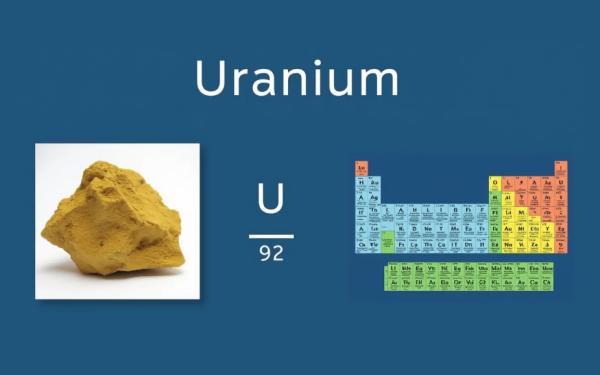
Uranium prices regained momentum in August, approaching $89 per pound, the highest level since early February. The move follows five months of rangebound trading between $84 and $87, after the Bloomberg continuous front-month uranium futures contract briefly surged above $100 in late January before pulling back.
The renewed strength is being driven by the long-term demand picture shaped by artificial intelligence and nuclear power expansion.
A single hyperscale data center can consume as much electricity as 50,000 homes. U.S. data centers already accounted for more than 4% of the country’s total electricity consumption in 2023, a share that could rise to 9% by 2030. As hyperscalers accelerate data center construction, electricity availability has become a critical bottleneck. Nuclear power is the only scalable, low-carbon energy source capable of delivering around-the-clock baseload power, making the nuclear renaissance a multi-year demand story rather than a short-term theme.
China is firmly leading global nuclear expansion and is expected to become the world’s largest nuclear power market by the end of the decade. Utilities are also accelerating procurement. UBS analyst George Eadie said earlier this month that continued strength in term pricing and signs of faster utility purchasing provide further evidence that the uranium market is tightening structurally.
On the supply side, years of underinvestment have limited mine output growth. New uranium projects typically take a decade from exploration to production, leaving producers unable to respond quickly to higher prices. Global output is concentrated among a handful of miners. Charts repeatedly highlighted by Goldman Sachs analysts show the uranium market has entered a deficit that will widen as new reactor demand comes online.
The AI boom is also accelerating investment in next-generation nuclear technology, reinforcing expectations for long-term uranium demand. Large technology companies and private equity firms are deploying significant capital. According to Axios, global investment in nuclear fission and fusion startups has already exceeded $4.5 billion across 81 companies in 2026, on track to surpass the previous annual record of $6.2 billion set by 93 companies in 2025. While this capital influx does not directly consume uranium, it underscores nuclear power’s central role in the AI electricity era.
Small modular reactors are another focus. These units are smaller, cheaper and faster to build, potentially lowering the barriers to nuclear expansion. By contrast, the newest traditional U.S. nuclear plant, Georgia’s Plant Vogtle, came online only in 2024 after years of delays and billions in cost overruns, discouraging many investors from large-scale projects. If SMRs reach commercialization, they could offer a more flexible path for reactor construction and further boost long-term uranium demand.
Taken together, the rebound in uranium prices is not a short-term fluctuation. AI data centers’ hunger for stable baseload power is converging with reactor construction in China and elsewhere. Supply remains constrained by decade-long development timelines and past underinvestment. Utilities accelerating term purchases confirm that the market is undergoing a structural shift. The long-term case for higher uranium prices is becoming clearer.