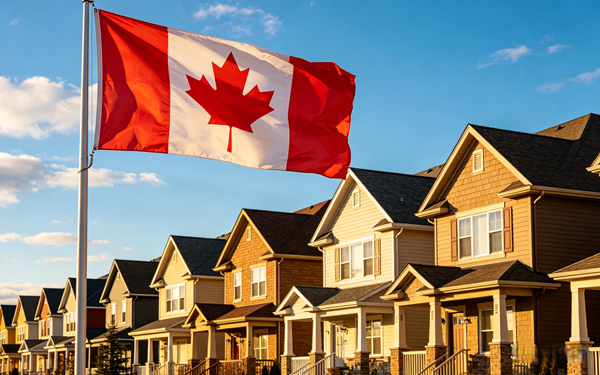
Canada’s housing market is beginning to show signs of life after a prolonged downturn, with a more visible recovery likely to take hold in 2027, according to a new report from RBC Economics. Home resales have risen steadily since April, inventory levels are flattening, and prices are showing early signs of stabilization. Improved affordability and a brighter employment outlook are helping to restore buyer confidence, creating room for gradual progress in the months ahead.
A central question in the outlook is how quickly sidelined buyers return to the market. RBC assistant chief economist Robert Hogue estimates that hundreds of thousands of Canadians postponed home purchases over the past several years as ownership costs surged. Many have remained in rental housing longer than intended or delayed moving to a larger or smaller home. The report also points to suppressed household formation, with more than 400,000 fewer households created since 2019 than past trends would suggest. With savings rates near a 25-year high and employment among 25-to-34-year-olds above historical norms, many potential buyers are financially positioned to act.
The recovery is expected to be uneven across the country. Ontario and British Columbia are still working through a prolonged correction that has weighed heavily on sentiment. In contrast, regions that proved more resilient have less upside as interest rates stabilize and population growth slows. The condominium segment faces a slower turnaround, with elevated inventory in Toronto and Vancouver and weak investor interest likely to keep downward pressure on prices potentially into 2027.
Annual figures for 2026 still point to declines. RBC projects home resales will fall 3.6% to 453,200 units this year, while the benchmark price index drops 2.3% to CAD 794,200, largely reflecting weakness in late winter and early spring. By 2027, the picture improves, with resales forecast to rise 6.7% to 483,600 units and the benchmark price edging up 0.8% to CAD 800,700. Even so, the report cautions that the upturn, while welcome, will not be transformative. Resale activity is expected to remain far below pre-pandemic levels, and prices will sit only slightly above their cyclical low.
Interest rates offer little additional relief. RBC Economics sees borrowing costs near the bottom of the current cycle, with long-term rates already drifting higher. The Bank of Canada is expected to hold its policy rate through the end of this year before potentially raising it in 2027 as economic momentum builds.
A broad recovery is not guaranteed. Hogue notes the market has experienced four false starts since 2023, with external shocks such as trade disputes or energy price spikes repeatedly interrupting what appeared to be durable improvement. On August 22, the United States imposed 50% tariffs on roughly 5% of Canadian exports, and Canada plans retaliatory measures beginning September 8. President Donald Trump has also threatened steeper levies on autos and auto parts starting January 1, 2027. Escalating conflict in the Middle East could further undermine confidence.
Regionally, RBC expects resales and prices to rise in all provinces in 2027. Ontario and British Columbia are forecast to post transaction gains of 8.2% and 7.8%, respectively, with home values up 0.7% and 0.5%—the first increases in two years. Saskatchewan, Manitoba, Quebec, and parts of Atlantic Canada are likely to see more moderate rebounds as rising inventory eases supply constraints and slows price appreciation. Nova Scotia and Prince Edward Island are expected to return to positive price growth, while Alberta stands out with a projected 7.1% increase in transactions and a 1.8% rise in prices, supported by comparatively strong economic and demographic conditions.
Even in the best-case scenario, the report concludes, the recovery is likely to be irregular—two steps forward and one step back—with different regions progressing and regressing at the same time.