The Trump administration calls USA Rare Earth Inc. a cornerstone of its plan to break China’s grip on the minerals that power missiles, EVs and data centers. Less than a year after the Commerce Department committed $1.6 billion, the company has hit no milestones, its flagship mine has never produced a thing, and the deal is at the center of a congressional probe into conflicts of interest.
The financing, announced in January, gave the government a 10% stake in exchange for a $277 million equity check and a $1.3 billion loan. It came with conditions: USA Rare Earth had to hit technical and financial targets first. As of the end of June, it had met none, and not a dollar of the loan had been disbursed — even though the company confirmed the government already held the shares and warrants.
A week before the announcement, bankers at Cantor Fitzgerald — the firm Commerce Secretary Howard Lutnick once ran, now led by his sons — were finishing a $1.5 billion private placement for USA Rare Earth, collecting $50 million in fees. The PIPE was capped at about 40% of the company’s market value at the time, an unusually large dilution.
Democratic lawmakers, led by Senator Elizabeth Warren, accused Lutnick and his family of potential conflicts of interest and opened a probe. They wrote to Cantor Chairman Brandon Lutnick saying the terms raise “serious questions” about exposure to bribery laws.
Cantor says its relationship with USA Rare Earth predates Lutnick’s cabinet post and that it played no role in the government negotiations. The Commerce Department says Lutnick has never discussed the rare earth industry with the firm.
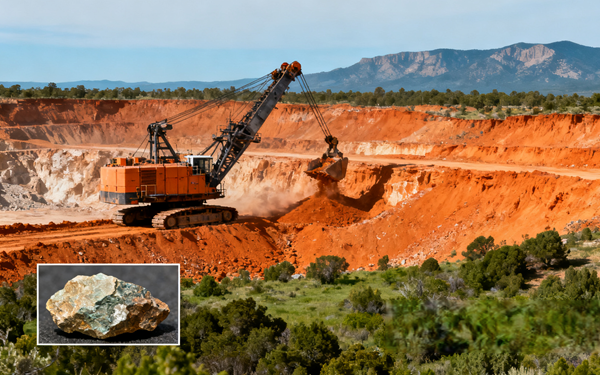
The deeper problem is geological. USA Rare Earth’s centerpiece, the Round Top Mountain deposit in West Texas, is billed as America’s largest rare earth resource. It has never produced a ton of ore.
“It’s laughably bad,” said Jon Hykawy, president of Stormcrow Capital, a critical-minerals research firm. “Round Top is basically a lot of dirt. We don’t mine dirt, we mine ore.”
The Center for Strategic and International Studies put numbers to the skepticism in a February note: Round Top’s ore grade is so low that the company would have to move 100 to 150 times more rock than a top-tier Australian deposit to get the same amount of rare earths.
The Pentagon has known that for decades, according to two former Defense Department officials. The military concluded in the 1990s that the deposit lacked economically recoverable grades and reached the same conclusion when it revisited the site more recently. The Pentagon didn’t respond to a request for comment.
Round Top also comes with baggage: a former operator claimed the deposit was worth more than $100 billion, then told the SEC in 2012 those claims may have broken securities laws.
With Round Top not scheduled to start commercial production until 2028, USA Rare Earth has used the PIPE cash to buy its way into the game elsewhere. It acquired Britain’s Less Common Metals, took a stake in France’s Carester SAS for processing know-how, and agreed to buy Brazil’s Serra Verde Group for $2.8 billion in stock and cash.
Serra Verde generated just $2.5 million in revenue last year and lost money. Investors who reviewed the mine said its processing plant still can’t reliably separate clay from rare earth rock.
CEO Barbara Humpton steps down in October. Her replacement: Serra Verde’s own chief, Thras Moraitis. The company’s latest press release drops the “domestic supply chain” language entirely and talks about building a “global mine-to-magnet value chain.”
The fear among investors, analysts and officials interviewed for this story is that Washington’s aggressive bets on private miners — equity stakes, golden shares, loan guarantees — could produce the Obama-era Solyndra moment all over again: a $500 million solar loan that ended in bankruptcy within two years.