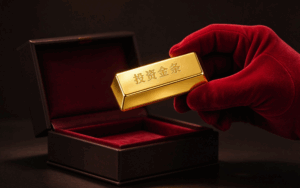

Earlier this month, after a six-month hiatus, the People’s Bank of China (PBoC) resumed its gold purchases. Previously, the PBoC had increased its gold reserves for 18 consecutive months, becoming a significant driver of rising gold prices. With the Trump administration soon to begin, some experts believe that a likely escalation in the trade war between China and the U.S. could prompt the central bank to enter another aggressive phase of gold buying.
Gold Reserve Update:
As of the end of November, official reserve asset data released by the PBoC showed that its gold reserves had risen to 72.96 million ounces, up by 160,000 ounces from October’s 72.80 million ounces. This marked the PBoC’s first gold reserve increase in six months.
Market Perspective:
According to FX Empire market analyst Vladimir Zernov, China’s recent gold purchase signals a potential continuation of reserve increases amidst the risks posed by possible trade conflicts under Trump’s leadership. Zernov emphasized that Trump’s victory in the U.S. election may have greatly influenced China’s decision-making. Trump’s hawkish stance on China, characterized by a hardline policy approach, is seen as a key factor pushing the PBoC to resume gold acquisitions. Zernov also predicts that this new buying spree could stretch over several months.
Reasons for the Pause:
Experts agree that one reason for the hiatus in gold purchases earlier this year was the soaring international gold prices. Zernov explained that since April, the PBoC had waited for a significant price pullback to increase its reserves, but that pullback never materialized. The recent purchase in November suggests that gold prices retreating to the $2,600 level was sufficient to entice the central bank back into the market.
Gold prices surged significantly this year, hitting an all-time high of $2,790.07 per ounce at the end of October. Over 30 new all-time highs were set in 2024, with prices increasing by over 32% at their peak. However, gold prices have shown weakness in recent weeks, a result of several factors such as stronger U.S. economic data, hawkish remarks from Federal Reserve officials, a sharp rebound in U.S. Treasury yields, and a stronger dollar.
Strategic Importance of Gold for China:
In the long term, China’s gold reserves remain relatively low as a proportion of its total international reserves. Increasing gold holdings aligns with the strategic goal of optimizing the reserve structure. Gold, recognized globally as a secure payment instrument, strengthens sovereign currency credibility and supports the internationalization of the renminbi (RMB). Furthermore, in the context of escalating U.S.-China tensions, the PBoC is driven to diversify its reserves further and reduce reliance on U.S. dollar assets.
Recently, intensifying U.S. sanctions policies have been a primary catalyst for global central banks to reduce their dependence on U.S. government debt. Notably, not just emerging markets but even some developed nations—such as Singapore, the Czech Republic, and Poland—have joined the trend of increasing gold holdings.
Globally, central banks’ decisions to buy gold are founded on strategic considerations for foreign exchange reserve management. Once these purchases are initiated, these decisions are usually not affected by short-term gold price fluctuations. The fact that central banks view gold as a long-term strategic investment ensures their buying trend persists regardless of momentary price corrections.
Gold Market Outlook:
Although gold prices have not rebounded to their historical highs following China’s renewed purchases, this may reflect traders locking in profits ahead of key U.S. Federal Reserve decisions. Moreover, the recent rise in U.S. Treasury yields has generated bearish sentiment for gold in the short term. Yet in the long term, central banks’ consistent gold purchases will remain a key bullish factor in the gold market. China’s return to gold buying, in particular, will undoubtedly provide additional support for gold prices moving forward.