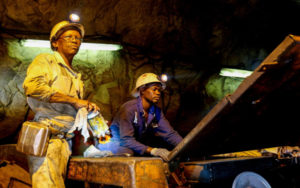
Fragility masquerades as strength when a country bets its resilience on a single hole in the ground. The push to advance a $10 billion copper mine a mile beneath Arizona, now backed by a friendlier hand in Washington, is being sold as insurance against geopolitics, inflation, and electrification bottlenecks. Yet the very scale that makes Resolution Copper compelling also makes it fragile. Investors see a security blanket; system designers should see a single point of failure with long-lived externalities. Markets repeatedly confuse volume with safety, speed with progress, and proximity with control.
Fragility of concentrated supply is not just a theory lesson. Copper demand is tied to the grid buildout, EVs, and defense manufacturing. Domestic production has lagged, while permitting timelines have stretched into decades. No wonder the project’s supporters tout it as a strategic win. The question is whether aggregating strategic risk beneath one desert town improves national resilience or creates a narrow Achilles’ heel. If this mine eventually supplies a large share of US copper, any legal injunction, geotechnical interruption, or water dispute becomes macro-relevant. A country cannot claim redundancy while tying a critical input to a single shaft, a single tailings system, and a single set of permits exposed to shifting political winds. In power markets, overreliance on a single baseload unit guarantees brownouts when it trips. Minerals are no different.
Engineering and hydrology do not care about slogans. Resolution’s geology favors block-cave mining, a method that excels at scale but invites complex failure modes: subsidence bowls at the surface, rock bursts at depth, and a perpetual dance with groundwater. The orebody sits beneath fragile hydrology and culturally significant lands. The legal and social battle over Oak Flat is not a news-cycle headline; it is a durable constraint that persists across administrations. Add water to the calculus and the risk thickens. Aquifers are balance sheets with long feedback loops. Once contaminated, the liability tail is measured in decades. Tailings management has improved since high-profile disasters abroad, but risk is not binary. It compounds. Even in a highly regulated jurisdiction, probabilities may be low but consequences are heavy-tailed. In risk math, that combination—low probability, catastrophic downside—demands an option-like approach, not a bet-the-ranch commitment.
Permitting is a prisoner’s dilemma played in slow motion. The federal government wants domestic supply; local communities and tribes want control over land and water; operators want predictability. Each party optimizes against different time horizons, creating the hold-up problem classic to resource projects. A supportive administration can accelerate paperwork, but political cycles outpace mine lives. What is granted by one agency can be re-litigated by another through NEPA reviews, cultural heritage consultations, or water adjudication. The 2014 land exchange authorization created a legal path, not a guarantee of permanence. If the project is structured as an all-or-nothing investment—upfront billions sunk into a deep cave with long lead times—the option to pause becomes very costly. That inversion is critical: capital intensity reduces optionality just as political risk remains path-dependent. Investors running net present value models may discount for delay, but they often misprice the asymmetry of stoppages. Cash flow can vanish with an injunction; litigation costs do not.
The macro copper story is tidy on the whiteboard and messy in the field. The case for tight markets is well rehearsed: grid spending, EV penetration, defense modernization, and limited greenfield projects. Meanwhile, large suppliers in Chile and Peru face water scarcity, political volatility, and community opposition; the Congo grows, but with its own governance risk; Indonesia toggles export policy; recycling is underdeveloped. So Resolution looks like a national hedge. But copper cycles do not care about borders. Even if a US mega-mine comes online, global prices will be set by marginal tons, inventory buffers, China’s industrial stock cycle, and the pace of housing drag versus electrification. History offers reminders. Ghost towns were not built on the wrong geology; they were built on the wrong assumption that the cycle had changed. When the price signal flips, scale becomes an anchor. An overshoot in supply or a policy-driven demand pause has a habit of arriving right as megaprojects crest their capex. A domestic supply bump will alter trade flows and procurement strategies, but it will not immunize US buyers from volatility. It redistributes risk; it does not eliminate it.
Company risk is not market risk, and conflating the two is how shareholders get whipsawed. Rio Tinto and BHP have balance sheets that can absorb a $10 billion bill, but capital resilience is not the same as social license or reputational buffer. Investors with long memories recall cost overruns and disputes at other deep copper projects. They also remember cultural heritage controversies that cratered trust with impacted communities and regulators. That history is not a footnote; it is a live input to the probability of delay, scope change, and oversight intensification. Every quarter of slippage compounds. The accounting is straightforward: capex creeps, commissioning dates move right, interest capitalizes, and NPV erodes at today’s higher discount rates. The legal liability stack is less straightforward. Environmental remediation and long-tail water obligations are not linear functions of ore processed; they are step functions triggered by low-probability events. A mine can be profitable and still destroy shareholder value via headline risk, fines, and impaired optionality across other permits.
The system-level error shows up in the policy architecture. If the objective is national resilience in copper, putting policy chips on one giant project misses the antifragility playbook. Antifragile systems prefer modularity, redundancy, and reversible steps. In copper terms, that means a portfolio approach: incremental brownfield expansions at existing US sites with proven hydrology, accelerated permitting for mid-sized operations, investment tax credits for recycling and scrap recovery, grid designs that reduce copper intensity at the margin, and domestic refining upgrades. The national security lens is not wrong about supply risk, but its centralization bias is counterproductive. An ecosystem with a dozen resilient nodes is harder to disrupt than a single cathedral that promises volume and delivers recurring downtime. In nature, monocultures attract pests. In engineering, single-beam bridges fail catastrophically. In finance, concentrated bets produce blowups. The pattern repeats because complexity punishes hubris.
Market psychology is miscalibrated at both ends. Retail commentary swings between triumphalism—this will secure America’s future metal—and fatalism—this is an ecological time bomb. Both miss the structural point. The first underprices legal, hydrological, and geotechnical tail risks and overstates the immunity of domestic projects from global price cycles. The second understates the capacity of engineering and modern regulation to mitigate risk incrementally and disregards the societal cost of supply shortfalls. Serious analysis requires a probabilistic lens. Model a wide distribution of start dates, capex outcomes, and production ramps. Attach non-trivial probabilities to injunctions and redesigns. Recognize that fat tails dominate project NPV for single-site ventures. Then ask whether the same dollars, spread across diversified supply pathways, deliver better resilience per unit of environmental and political risk. The answer is usually yes, and that is before you assign value to the option to pause or pivot as technology changes.
The headline reads as if policy momentum has finally aligned with geology. The investment case is more conditional. There is a path where Resolution Copper operates safely, earns acceptable returns, and strengthens domestic supply in a world that remains geopolitically tense and copper-hungry. There is also a path where sunk costs collide with legal reversals, water stress hardens, and the mine becomes a contested symbol that drags on corporate and national agendas. The difference is not rhetoric; it is design. Systems that get stronger with stress diversify, modularize, and retain options. Those that grow brittle concentrate exposure and declare victory prematurely. A nation hungry for copper should resist the temptation to convert supply risk into concentration risk. The smarter bet is redundancy, not bravado. The mine may or may not be built. The strategic question is whether we build a supply system that can survive being wrong.