
SLAM Exploration Ltd. (TSXV: SXL)
‘Exploring for critical elements and precious metals in New Brunswick, Canada.’
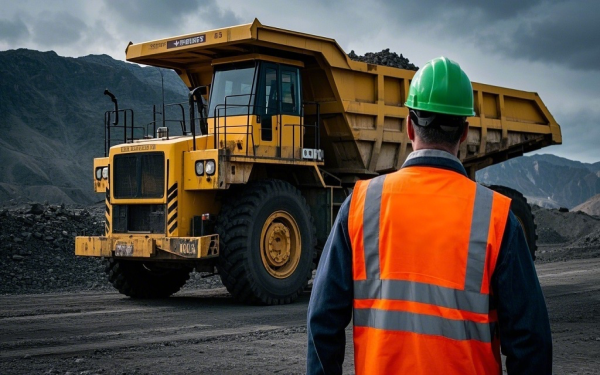
Artificial intelligence is reshaping the global mining landscape, serving both as a powerful engine driving demand for critical metals and as a competitor for resources such as electricity and labor. However, from an overall trend perspective, the incremental demand brought by AI is opening up unprecedented growth opportunities for the mining sector.
Copper and Lithium Demand Surge, Computing Infrastructure Becomes New Engine
The International Energy Agency projects that global data-center electricity consumption will roughly double to about 950 terawatt-hours by 2030, approaching 3% of global demand. Data centers, transmission lines, and backup power systems require substantial amounts of copper, aluminum, and battery metals.
S&P Global forecasts that global copper demand will rise by half to 42 million tonnes in 2040 from 28 million tonnes in 2025. Without significant investment in mine expansion, the supply gap could reach 10 million tonnes. Vale Base Metals’ Chief Technical Officer stated that artificial intelligence has emerged as a new structural source of copper demand.
Chinese market data confirms this trend. According to the National Bureau of Statistics, the non-ferrous metals industry’s profits surged 117.1% year-on-year in the first five months of this year, while mining industry profits grew 33.5%. Prices of base metals such as copper and aluminum remained elevated, with average copper prices breaching the 100,000 yuan per tonne mark in the first half of the year.
From Bulk to Minor Metals, Demand Map Expands Across the Board
The AI wave is not only driving demand for bulk metals like copper and aluminum but has also reinvigorated previously niche strategic minerals.
Indium, germanium, gallium, and other rare-dispersed metals have become critical materials for the computing industry — indium phosphide is used in high-end semiconductors, germanium in fiber-optic communications, and gallium nitride and gallium arsenide are widely applied in high-end communication chips. The China Enfei Mining Economics Research Institute noted that surging downstream demand for high-purity metals and low-impurity raw materials is forcing upstream producers to shift from “selling raw ore” to “customized raw material production.”
In the first half of the year, average tungsten concentrate prices surged approximately 359% year-on-year, molybdenum concentrate rose 29%, praseodymium-neodymium oxide gained 71%, cobalt metal climbed 111%, and lithium carbonate jumped 128%. AI data-center copper demand has transformed from conceptual to tangible consumption, with Morgan Stanley estimating annual copper demand in this sector at approximately 740,000 tonnes.
Electricity and Public Trust Become Double-Edged Swords
AI’s challenges to the mining industry are equally significant. Data centers compete with mines for electricity, skilled labor, and public support. Alberta’s grid operator has imposed an interim 1,200-megawatt cap on new large-user connections. British Columbia has explicitly mandated that AI projects must compete within a 400-megawatt allocation, while mining and manufacturing are exempt from this restriction.
Community relations represent another invisible barrier. The CEO of E3 Lithium noted that some data centers’ lack of community engagement is damaging the reputation of industrial development as a whole. The company spent a year and a half communicating with landowners to advance its lithium project, but the hasty arrival of data centers may cause the public to resist all large-scale projects.
Structural Opportunities Outweigh Short-Term Rivalry
Overall, AI-driven metal demand growth provides long-term momentum for the mining sector. From copper and aluminum to rare-dispersed metals, from mine extraction to smelting and processing, the entire industry chain is undergoing demand restructuring. While electricity competition and community relations pose challenges, in the face of the immense demand from AI computing infrastructure, mining is seizing a historic opportunity to shift from a traditional cyclical industry to a growth-oriented trajectory.
The core logic of this cycle is no longer simple supply-demand fluctuations, but a systematic revaluation of metal value driven by new quality productive forces.