Lithium’s August rally pushed Chinese carbonate to 153,000 yuan a tonne on Friday, with mining ETFs flashing bullish technical signals. Yet BMI, a unit of Fitch Solutions, is warning that the rebound has already run ahead of fundamentals and predicts prices will grind lower for years.
China’s push to double EV charging capacity to 180 gigawatts by 2027 and local government support for storage projects tied to renewables continue to underpin demand. The Sprott Lithium Miners ETF rebounded from long-term support between $9 and $11 and closed above $11, pointing toward $14. The Global X Lithium & Battery Tech ETF bounced from $68, and the iShares Lithium Miners and Producers ETF recovered from $12.50.
BMI lifted its 2026 average forecast for Chinese lithium carbonate to $20,100 a tonne, nearly double last year’s $10,502, and its hydroxide forecast to $19,600, citing supply disruptions and resilient energy-storage demand. But the research firm stressed the upgrade is not a bullish call. With Chinese spot carbonate averaging $22,941 so far this year, BMI’s full-year number implies a pronounced slide in coming months, with quarterly averages of $17,200 and $16,800 for the third and fourth quarters. “We continue to view current price levels as already extending beyond what underlying fundamentals alone would justify,” BMI said.
The correction extends well beyond December in BMI’s outlook. Carbonate averages drop to $16,500 a tonne in 2027, bottom at $14,500 in 2028, then recover to $17,500 in 2029 and $18,500 in 2030. The market remains in surplus through the end of the decade, only tipping into deficit from 2031 to 2035 as underinvestment and project delays from the 2024-2025 slump finally constrain supply.
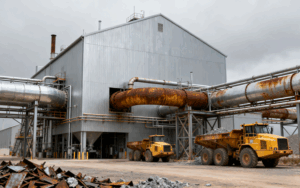
On the supply side, BMI expects global lithium production to grow 13.2% this year, led by Australia and China. Higher prices are coaxing back higher-cost, previously mothballed operations, with Mineral Resources restarting Bald Hill and Core Lithium bringing Finniss back. Jianxiawo alone would restore about 3% of global supply. But whether Jianxiawo actually returns is the market’s biggest swing factor. Local ecology officials confirmed no ore loading or crushing was under way in early August, with the environmental assessment still pending. Benchmark Mineral Intelligence has warned that a prolonged delay affecting an estimated 4% of global supply could wipe out this year’s surplus entirely. Winter in South America has added disruptions: a severe late-July snowstorm in Argentina’s Catamarca province hit Rio Tinto’s 32,000-tonne Fenix operation.
Energy storage is the floor under the market. China’s output of power and energy-storage batteries reached 191.7 gigawatt-hours in May, up 55% from a year earlier. BMI’s power and renewables team sees global battery storage capacity nearly quadrupling from about 325 gigawatts this year to 1,270 gigawatts by 2035, with China and the US accounting for more than three-quarters of current installations. Lithium iron phosphate chemistry, which the International Energy Agency says powers more than half of EV batteries and over 90% of storage batteries worldwide, keeps carbonate at a premium to hydroxide. LFP took a record 83.3% of Chinese battery installations in June.
Demand growth is slowing sharply. BMI sees global lithium demand rising 5.8% this year, down from 18.5% in 2025, with global EV sales growth cooling to 3.9%. China’s EV market is undergoing structural deceleration even as new energy vehicles hit 58.5% of new car sales and monthly exports topped 500,000 units for the first time in June. Elevated fuel prices from the Middle East conflict could nudge consumers back toward electrified powertrains faster than expected, but the longer-term threat comes from battery chemistry. CATL’s Naxtra sodium-ion battery already matches LFP cells on energy density, Changan plans a sodium-powered passenger car, and CATL expects up to 20,000 EVs to carry its sodium batteries this year. Faster-than-anticipated advances in battery recycling add to the downside risk.
For now, lithium’s rebound has momentum. But BMI’s numbers serve as a reminder that supply recovery, cooling demand and alternative chemistries may make current prices difficult to sustain.