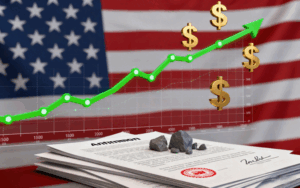
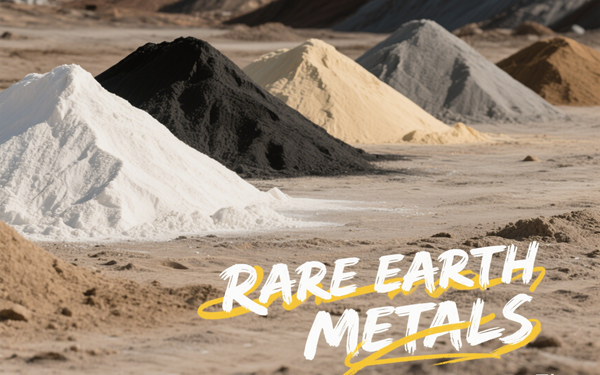
According to media reports, the Group of Seven (G7) and the European Union are discussing the implementation of a price floor mechanism for rare earths, aiming to reduce their reliance on China’s supply chain dominance. If adopted, the measure would significantly incentivize rare earth producers within the G7 bloc, which have depended on Chinese supplies for decades.
The discussion comes months after G7 leaders drafted an “action plan” to diversify sources of critical minerals, reflecting growing concerns over the security of supplies for resources such as rare earths, gallium, germanium, graphite, and antimony.
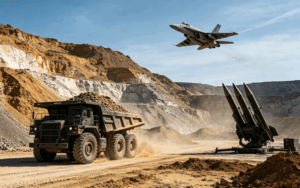
Rare earths, essential for high-tech applications including smartphones, electric vehicles, and defense systems, are difficult to extract and costly to process. China currently controls over 90% of global rare earth mining and refining capacity, leaving most G7 nations—with the exception of Japan—almost entirely dependent on Chinese supplies of rare earths and derived products like permanent magnets.
G7 leaders recently convened in Chicago to address overreliance on Chinese supply chains. One source revealed that a key topic was whether to raise regulatory thresholds for foreign investment in critical materials, preventing companies from shifting operations to China. Another proposal involved imposing geographical restrictions on sourcing from specific countries, including China, though it did not gain unanimous support.
During the talks, the U.S. proposed a government-subsidized price floor mechanism, which Canada and Australia have responded to positively. The group also explored imposing tariffs or a carbon tax on Chinese rare earth exports, linked to the proportion of renewable energy used in production. These moves underscore deepening unease among G7 nations regarding strategic supply chain risks.
The latest discussions follow China’s export controls on rare earths and related magnets during the peak of global trade tensions. Although exports have rebounded as trade friction eased, Western nations remain wary of supply disruptions. Multiple downstream manufacturers in the EU, for instance, still face operational risks due to potential shortages.
As the world’s largest producer and supplier of rare earths, China’s near-monopoly continues to drive G7 efforts to rebalance global supply chains—through incentives, trade measures, and greener standards. Whether these steps signify a coordinated countermeasure or an admission of dependency, however, remains a point of strategic debate.