Electric Metals (USA) Limited (TSXV: EML; OTCQB: EMUS)
Securing America’s Manganese Supply Chain
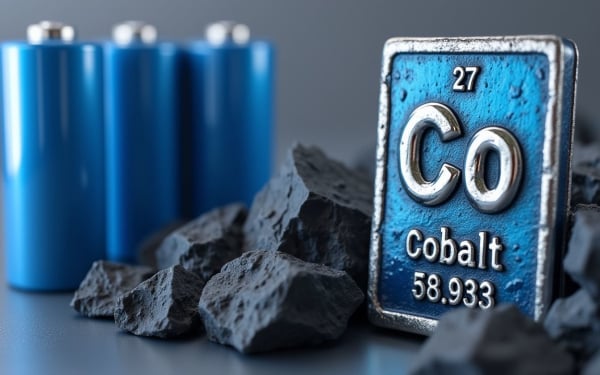
After years of the global electric vehicle industry championing “cobalt reduction,” the total spending on cobalt for power batteries has defied expectations, surging by 43% year-on-year. This seemingly contradictory scenario is rapidly unfolding as the Democratic Republic of Congo implements export quotas. With the price of cobalt sulfate doubling this year, cost pressures across the supply chain have intensified abruptly.
In the midst of this “use less, pay more” paradox, multinational automakers heavily reliant on high-end NCM batteries are bearing the brunt of the impact, while BYD, having fully committed to cobalt-free LFP technology, is fortifying its cost competitiveness.
The price surge marks a sharp reversal from the start of the year when cobalt hit historic lows due to increased supply from the DRC—which accounts for about 80% of global production—and cooling EV demand. The turnaround was ignited by the DRC government. Last week, it began implementing an export quota system, setting an annual allowance of 87,000 tonnes to replace an export ban announced in February. This quota represents only about half of the country’s total exports in 2024.
The policy impact was immediate. The price of cobalt sulfate entering China’s EV battery supply chain has soared over 120% since January, reaching an average of $7,775 per tonne in September. While steep, this remains well below the all-time peak of $19,000 per tonne seen in 2022.
In September alone, the global cobalt market for EV batteries was estimated at $227.7 million, the highest since December 2022, surging nearly 111% year-on-year. With quotas set for 2026 and 2027, prices are expected to remain high or climb further. However, the CEO of China’s CMOC Group, the world’s largest cobalt producer, recently warned that sustained high prices risk “demand destruction and material substitution.”
This cobalt crunch unfolds against a backdrop of the auto industry’s multi-year “cobalt reduction” strategy and the rapid ascent of LFP batteries. LFP-powered models now constitute over 40% of global EV sales. Excluding hybrid vehicles, the share of EVs without nickel, cobalt, or manganese has risen to 55% this year.
This technological split is starkly visible in automakers’ cobalt spending:
BYD, the world’s leading EV maker, is conspicuously absent from the high-spenders list. Its full shift to LFP technology since the 2020 launch of its Blade Battery has granted it a formidable cost moat, crucial for its dominance in China and global expansion. However, this advantage could be tested in the coming months if lithium prices, which are also showing signs of recovery, begin to climb significantly.