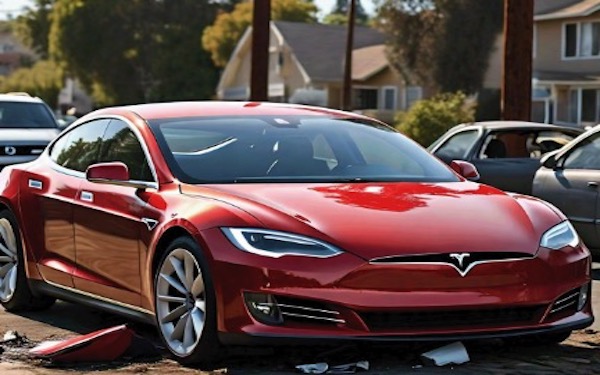
Tesla (TSLA) has taken a significant step toward the commercial application of autonomous driving technology. The company has officially received approval from the state of Arizona to offer autonomous ride-hailing services with human safety drivers in the state. This approval clears regulatory hurdles for the expansion of its robotaxi business into new markets. According to the plan, Tesla will launch the service in the Phoenix area, aligning with the goal set by its CEO Elon Musk to expand ride-hailing services to multiple states, including Arizona, Nevada, and Florida, by the end of the year. Previously, Tesla had already launched driverless taxi services in Austin, Texas, and offered limited ride-hailing services in the San Francisco Bay Area. The pace of its business expansion is being closely watched by investors.
As a pioneer in long-range electric vehicles, Tesla’s core profitability still relies on vehicle sales. Its business scope includes the design, manufacturing, and sale of a range of electric vehicles such as the Model S, Model 3, Model X, Model Y, and Cybertruck, as well as involvement in energy production and storage systems. Additionally, the sale of its supervised Full Self-Driving (FSD) software is becoming an increasingly important revenue stream. However, the company currently faces a series of challenges, including intensifying market competition leading to vehicle price reductions, which in turn squeeze profit margins. Although the sale of regulatory credits has previously contributed significant revenue, this income may decline in the future as more traditional manufacturers launch their own electric vehicles.
The latest financial data shows that Tesla achieved $28.1 billion in revenue in the third quarter of 2025, a year-on-year increase of approximately 12%. Vehicle deliveries reached 497,000 units, exceeding market expectations, with particularly strong performance in Europe and some Asian markets. The company’s free cash flow hit a new high of nearly $4 billion, reflecting a robust cash reserve. However, net profit saw a significant year-on-year decline of 37%, marking the fourth consecutive quarter of profit decline. This is primarily attributed to price reduction strategies aimed at stimulating demand, as well as continuously increasing operational expenditures on future projects such as artificial intelligence and robotics.
Tesla is betting its long-term success on cutting-edge technologies such as autonomous driving and robotics. The company is heavily investing in the development of driverless taxis and the humanoid robot named Optimus, with plans to commence mass production of the Cybercab model, specifically designed for autonomous driving, in 2026. Although these technologies are viewed by management as future growth engines, they are still in their early stages and have not yet generated significant revenue. At the same time, the company must also navigate changes in the market environment, such as the expiration of the U.S. federal electric vehicle tax credit, which is expected to impact future sales to some extent. Tesla is in a critical transition period, needing to balance maintaining its current position in the electric vehicle market with investing in future technologies.