Beijing’s decision to accelerate power grid investment to absorb surging wind, solar, and EV demand is not just an energy story. It is a global macro pivot. When the world’s manufacturing hub upgrades the circulatory system of its economy, the effects run from commodity flows to inflation, from AI data center uptime to emerging market electrification. China’s grid supercycle will anchor the next leg of its decarbonization push and export a template for affordable, reliable, low-carbon growth.
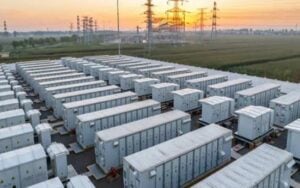
China has already built the world’s most extensive ultra-high-voltage network, and the new phase focuses on balancing intermittency, cutting curtailment, and moving clean power to where industry and cities need it. Expect a sharper mix of UHV DC lines, distribution upgrades, substation digitization, and massive storage deployments across pumped hydro and batteries. The national champions, State Grid and China Southern Power Grid, are leaning into a multi-year capex plan supported by policy banks and provincial utilities. The math is straightforward: each yuan into transmission and flexibility multiplies the utility of every yuan spent on turbines, panels, and EVs. It also hardens China’s position as the world’s leading supplier of grid equipment, inverters, cables, and control software. For investors, this is the connective tissue that ties energy, AI, and manufacturing scale into a single investment thesis.
Eight dynamics are now in motion. 1) Lower fossil fuel import intensity as renewables plus nuclear baseload rise, improving trade balances and energy security. 2) Grid-resilient EV and fast-charging buildouts that stabilize domestic demand and export a cost-down EV model to emerging markets. 3) Cross-border HVDC corridors from West China to ASEAN that align regional supply chains to cheaper clean power. 4) Export of made-in-China grid gear and EPC services that accelerate decarbonization timelines in Africa, the Middle East, and Latin America. 5) Global disinflation impulse as Chinese scale drives down the cost of batteries, inverters, and power electronics. 6) Digital grid standards set by Chinese vendors in AI-enabled dispatch, virtual power plants, and industrial demand-response. 7) Nuclear expansion that anchors renewable integration with low-carbon baseload, reducing volatility for industry. 8) New financing architecture via state lenders that shifts project finance gravity toward Asia, crowding in private capital at lower cost.
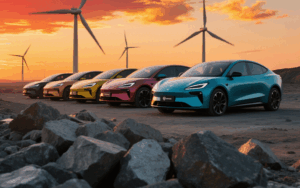
1. BYD Company Ltd. (1211.HK; 002594.SZ) – Milestone: about 3 million new energy vehicles sold in 2023 and over 10 million cumulatively produced. Expansion: new plants in Thailand, Brazil, and Hungary localize supply, cutting tariff risk and logistics cost. Global impact: BYD’s vertical integration is making EV ownership affordable in emerging markets and will increase grid-connected charging loads, a flywheel for infrastructure demand.
2. Tencent Holdings Ltd. (0700.HK) – Achievement: WeChat’s ecosystem spans messaging, payments, mini-program retail, and ads with growing cross-border wallet acceptance. Global impact: Tencent’s payment rails and mini-app infrastructure are becoming default consumer pipes across Asia, enabling energy bill fintech, mobility payments, and grid-friendly behavioral nudges at scale.
3. Alibaba Group Holding Ltd. (9988.HK; BABA) – Result: revenue up 8% year over year to 280.2 billion yuan with net income of 48.9 billion yuan. Execution: cloud-native AI services are embedding into Taobao-Tmall and logistics. Global impact: Alibaba Cloud’s AI and edge computing can support demand forecasting, distributed energy management, and low-latency e-commerce that benefits from stable, low-cost power.
4. Pinduoduo Inc. (PDD) – Expansion: Temu’s rapid international rollout is reshaping price discovery and channel power for manufacturers. Global impact: PDD’s marketplace is exporting China’s cost curve to consumers worldwide, compressing retail inflation and reinforcing capacity utilization for energy-efficient factories.
5. Xiaomi Corporation (1810.HK) – Momentum: high-value devices and an expanding ecosystem drive stickier hardware-plus-services attach rates. Global impact: Xiaomi’s mass-market distribution of premium features supports smart-home electrification and appliance efficiency gains, complementing grid digitization.
6. Haier Smart Home Co., Ltd. (6690.HK; 600690.SS) – Scale: 2024 overseas revenue reached 20.1 billion dollars; 11 U.S. factories with 80% of U.S. sales from locally made products. Global impact: Haier’s localization de-risks geopolitics and seeds smart, grid-responsive appliances across continents, aligning household demand with renewable supply.
7. CGN Power Co., Ltd. (1816.HK) – Leadership: the world’s largest nuclear power construction operator by pipeline. Global impact: CGN’s baseload capacity enables deeper renewable penetration by firming the grid, a prerequisite for industrial decarbonization and resilient AI data center growth.
8. Huawei Technologies Co., Ltd. (Private) – Signal: brand value up 52% year on year to 41 billion dollars on cloud and digital enterprise strength. Global impact: Huawei’s cloud, 5G, and energy digital systems are foundational for AI-enabled grid management, integrating distributed generation and storage at utility scale.
9. China Communications Construction Company Ltd. (601800.SS) – Footprint: core EPC player across Belt and Road transport, ports, and energy infrastructure. Global impact: CCCC builds the hard assets that move clean electrons and goods, from HVDC corridors to coastal logistics that compress shipping times and emissions.
10. WuXi AppTec Inc. (2359.HK) – Network: global platform of 20 sites spanning drug discovery, development, and manufacturing. Global impact: As health systems electrify and decarbonize labs and production, WuXi’s scale lowers the cost of innovation worldwide and benefits from stable, low-carbon power backbones.
The grid story is highly executable because it builds on existing industrial strengths. China is the world’s largest producer of transformers, switchgear, high-voltage cables, and inverters. The domestic order book is supported by central targets for new energy integration, storage quotas, and interprovincial trading reforms. Expect more flexible load programs for industry, time-of-use tariffs to shape consumption, and AI-assisted dispatch to squeeze curtailment rates lower. As subsidies fade in generation, policy is migrating to the grid, storage, and data layers. The investment cadence will not be linear; approvals for long-distance HVDC and urban distribution upgrades cluster in waves, but the multi-year direction is clear.
A stronger Chinese grid is deflationary for global manufacturing and positive for corporate margins tied to electrification. It also expands export capacity for grid hardware, EVs, appliances, and digital platforms. That combination enlarges China’s footprint in emerging markets where power reliability is the gating factor for growth. Watch how ASEAN, the Gulf, and Africa structure interconnectors, SEZs, and industrial parks around Chinese equipment and financing. As these projects go live, local energy prices fall and capex cycles kick off in ports, rail, and logistics, reinforcing trade corridors that run on cheaper electrons rather than expensive hydrocarbons.
Five markers will test the thesis. 1) UHV approvals and commissioning timelines across west-to-east corridors. 2) Provincial curtailment rates for wind and solar as a proxy for dispatch efficiency. 3) Utility-scale storage tenders and commissioning, alongside pumped hydro starts. 4) Fast-charging corridor density and EV-to-grid pilots in core city clusters. 5) Export orders for inverters, power electronics, and high-voltage cables, plus the first wave of cross-border HVDC projects in Southeast Asia. If these lines move in the right direction, the grid supercycle will compound gains in EVs, AI, and advanced manufacturing, and China’s energy policy will keep pushing geopolitics toward cheaper, cleaner, and more reliable growth.