

Americore Resources (TSXV: AMCO)
Drilling Value in the Silver State
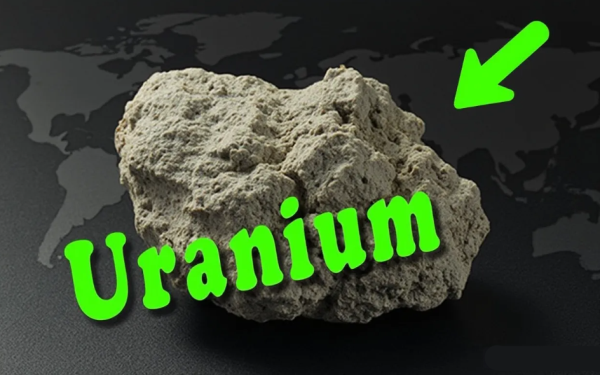
Ottawa’s nuclear energy strategy, unveiled in June, sets an explicit target of doubling uranium exports by 2035. As the world’s second-largest uranium producer, Canada holds formidable resource advantages, but industry warnings are coalescing around a single theme: success hinges on execution, not geology.
All Canadian uranium output comes from high-grade deposits in northern Saskatchewan, anchored by Cameco’s McArthur River and Cigar Lake mines. Orano Canada’s McClean Lake mill processes ore from Cigar Lake. The country produces yellowcake and uranium dioxide, yet operates no enrichment facilities because its flagship CANDU reactor fleet runs on natural, unenriched uranium.
“The challenge isn’t whether Canada can produce more uranium — it’s execution,” said Raul Munoz, managing director for mining and natural resources at Marsh Canada. In an interview, he stressed that advancing projects through permitting, financing and policy implementation at the required pace is the real test. Mine development cycles typically span 10 to 20 years, and sustaining uranium prices at levels that justify continued investment is equally critical. Geopolitical relationships, particularly with customers in Europe and the United States, add another layer of complexity.
The strategy is built on four pillars: enabling new nuclear builds across Canada, positioning the country as a global supplier and exporter of choice, expanding uranium production and nuclear fuel opportunities while advancing long-term waste management, and fostering nuclear innovation.
On the build-out front, the government aims to enable construction of up to ten large-scale reactors, with two under construction by 2035 and five more planned or under development by 2040. At least one small modular reactor deployment is to be operational or under construction outside Ontario by 2035, and a Canadian microreactor is slated for demonstration by 2035 before deployment to remote communities in the late 2030s. A draft policy on federal financing of new nuclear power projects, incorporating instruments such as green bonds and loan guarantees, is expected by April 2027. The framework also seeks to increase Indigenous equity participation.
Externally, Ottawa is adopting a unified “Team Canada” approach, prioritizing Romania’s CANDU new-build and refurbishment programs. The objectives include winning at least four new international markets for CANDU technology by 2040, engaging six to ten new nuclear entrant countries over a 15-year horizon, establishing a dedicated nuclear export strategy, and securing significant Canadian supply chain participation in at least five international non-CANDU large reactor and SMR projects by 2040.
The uranium expansion plank acknowledges that geopolitical volatility has exposed fragilities in nuclear fuel supply chains, with the United States and Europe specifically moving away from a “hostile aggressor” in favor of reliable suppliers. The strategy aims to secure fuel supply chains for all reactors in Canada by 2032 and to double exports within a decade, supported by new mine production entering service by 2035. Policies on uranium mining investment will be reviewed and updated as necessary by 2027.
A gap is emerging around enrichment. While CANDU units do not require enriched uranium, many SMR designs — and any future light-water reactors — will generate a “modest need” for enrichment services Canada currently does not provide domestically. The strategy proposes meeting this demand primarily through alliances and contracts but does not rule out developing domestic enrichment capability if the non-CANDU fleet expands significantly. Munoz noted that the enrichment question warrants closer examination as SMR deployment grows, although he sees little technology risk with SMRs themselves.
On a longer horizon, the prospect of sustained demand growth could eventually make decommissioned uranium mines economically viable again. The strategy also weaves in Indigenous rights, sustainability and innovation, setting targets that include more than doubling annual private-sector nuclear R&D investment by 2032 and expanding Canada’s share of the global medical isotope market by at least 10 percent.
Industry response has been swift. Cameco welcomed the strategy, emphasizing its tier-one uranium assets and strategic investments across the nuclear fuel cycle as fundamental to the plan. Fred Dermarkar, president and CEO of Atomic Energy of Canada Ltd, described the moment as “pivotal,” while Ian Edwards, CEO of CANDU licensee AtkinsRéalis, said the strategy reflects the ambition Canada’s nuclear industry deserves.