

Americore Resources (TSXV: AMCO)
Drilling Value in the Silver State
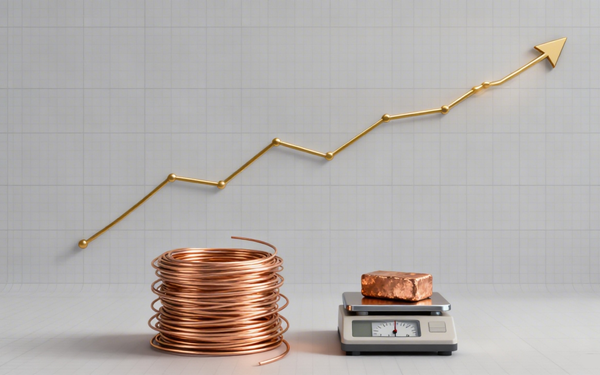
On the final trading day of 2025, the three-month copper contract on the London Metal Exchange (LME) closed at $12,558.50 per ton. Despite a slight 1% pullback on the last trading day, the metal achieved a cumulative annual increase of over 40%, marking its strongest annual performance since the recovery from the global financial crisis in 2009. Earlier this week, copper prices briefly surged to a historic high of $12,960 per ton.
As 2025 drew to a close, the copper market’s focus centered on short-term supply disruptions and policy arbitrage. Expectations that the United States may reassess import tariffs on refined copper in 2026 triggered a large-scale inventory shift. According to Natalie Scott-Gray, a senior metals analyst at StoneX Financial Ltd., more than 650,000 tons of copper have been preemptively moved into the United States, leading to significant tightness in markets outside the U.S. Currently, two-thirds of global visible stocks are concentrated within the COMEX system.
At the same time, a series of unexpected supply incidents further intensified market anxiety: a fatal accident at the Grasberg mine in Indonesia—the world’s second-largest copper mine—an underground flood at a mine in the Democratic Republic of Congo, and a deadly rock blast at a mine in Chile. These events severely impacted an already fragile supply chain in the short term.
Long-Term Narrative: Green Transition and AI Demand Form a Solid Foundation
Although short-term factors dominated the price volatility at year-end, the core driver behind copper’s strong performance throughout the year stemmed from firm expectations of long-term structural shortages. The energy transition—including renewable energy generation, the widespread adoption of electric vehicles, and grid expansion—continues to consume vast amounts of copper resources. In 2025, a new demand engine emerged powerfully: the power infrastructure and cooling systems required for artificial intelligence data center construction are widely regarded as the “super incremental” driver of copper demand over the next decade.
Ian Roper, a commodity strategist at Astris Advisory Japan KK, noted, “The story for copper in recent years has been green energy. Despite the downturn in China’s property sector impacting demand for materials like steel, it hasn’t significantly affected copper. Copper has greatly benefited from the build-out of renewable energy and electric vehicles, and now, data centers are undoubtedly the biggest growth story.”
Outlook for 2026: Consensus Amid Divergence
Regarding where copper prices are headed after reaching record highs, institutional views show cautious divergence. JPMorgan believes that the combination of imbalanced inventory distribution and severe supply disruptions has created a bullish environment for copper. The bank expects prices to remain above $12,000 per ton in the first half of 2026, with an average price potentially reaching $12,500 per ton in the second quarter. It particularly emphasizes that data center demand growth represents an “extremely topical” upside risk.
In contrast, Goldman Sachs Research anticipates that copper prices will retreat from current highs, though the long-term upward trend remains intact. Goldman Sachs forecasts an average LME copper price of $10,710 per ton in the first half of 2026, with prices likely fluctuating within a range of $10,000 to $11,000 per ton for the full year. The firm believes that robust demand from grid and power infrastructure—especially supported by investments in strategic sectors like AI and defense—will form a price floor.
In 2025, the copper market perfectly demonstrated historic market dynamics: a bull market foundation laid by the “long-term green transition + emerging AI narrative,” and price surges driven by “short-term supply crises + policy arbitrage.” As the old year concludes and a new one begins, the supply crisis is just heating up, and the story of future demand is far from over.