
SLAM Exploration Ltd. (TSXV: SXL)
‘Exploring for critical elements and precious metals in New Brunswick, Canada.’
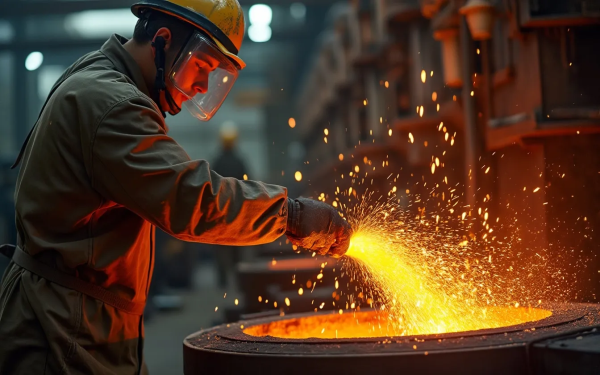
The global commodity market is heading into 2026 marked by a clear divergence: traditional energy faces oversupply and price pressures, while metals tied to the green transition are poised for structural demand growth. Against a backdrop of economic volatility, geopolitical tensions, and an accelerating energy shift, different commodity sectors are charting distinctly separate paths.
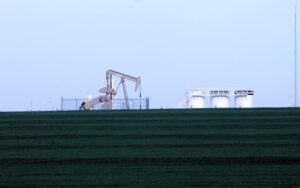
The International Energy Agency (IEA) forecasts a global oil surplus of 3.84 million barrels per day in 2026, nearly 4% of world demand. This oversupply, attributed to increased production from OPEC+, the U.S., and other producers, poses a tangible downside risk to prices, notes Reid I’Anson, an economist at Kpler.
In stark contrast, investment is flooding into the energy transition. IEA data indicates that roughly two-thirds of the record global energy investment in 2025 is directed toward renewables, power grids, storage, and low-carbon fuels—double the investment in fossil fuel supply. Solar power alone attracts approximately $450 billion annually, leading all energy technologies. Electric vehicle adoption continues its meteoric rise, with global sales expected to surpass 20 million units in 2025, accounting for over one-quarter of all new car sales.
While electrifying transport dampens long-term oil demand growth, it creates robust opportunities for industrial metals. Copper, aluminum, lithium, nickel, and cobalt are seeing sustained demand from EVs, batteries, solar panels, wind turbines, and grid upgrades. The World Bank observes that resilient economic activity coupled with strong green investment has already boosted base metal prices in 2025.
I’Anson highlights copper’s particularly bullish outlook, driven by AI data center energy needs and global electrification, with supply-side constraints expected to support prices through the decade. He also notes that the Trump administration’s use of tariff threats to build U.S. copper inventories may continue into next year.
The October 2025 “METALS 100” interview reveals that FireFly Metals Ltd (ASX: FFM, TSX :FFM) is an emerging copper-gold company focused on advancing the high-grade Green Bay Copper-Gold project in Newfoundland, Canada. The Green Bay Copper-Gold Project currently hosts a mineral resource prepared in accordance with the JORC Code (2012 Edition) and NI 43-101 of 24.4Mt of measured and indicated resources at 1.9% for 460Kt CuEq and 34.5Mt of inferred resources at 2% for 690Kt CuEq. The Company has a clear strategy to rapidly grow the copper-gold resource to demonstrate a globally significant copper-gold asset. FireFly has commenced a 130,000m diamond drilling program.
The uranium market presents a unique case. Despite growing global interest in nuclear power, I’Anson cautions about its low liquidity and high volatility. Demand is inextricably linked to long-term reactor planning cycles, requiring investors to have a horizon of five years or more.
Gold and silver have been standout performers, reaching record highs recently. This strength is underpinned by three factors: central bank purchases (more than double pre-2020 averages since 2022), falling real interest rates, and persistent geopolitical risks. Demand from both institutional and retail investors for these havens is expected to continue as long as inflation worries and conflicts persist.
China remains a pivotal force in commodity markets. I’Anson points out that the country has returned to its investment-led growth model. Its global dominance in key clean energy sectors—EVs, solar panels, wind turbines—and its control over critical mineral supply chains (like rare earths and lithium-ion battery processing) continue to shape global demand dynamics.
In summary, the commodity landscape for 2026 will be defined by a structural divide. Traditional fossil fuels will grapple with finding a new balance in a well-supplied market, while metals and materials essential for the green transition will ride a wave of policy support and investment-driven demand. The trajectory of China’s economy, the execution of global climate policies, and the evolving geopolitical landscape will remain critical variables influencing the performance of each sector.