

Kirkland Lake Discoveries Corp (TSXV:KLDC, OTC:KLKLF)
District-Scale Exploration in World-Famous Gold Camp
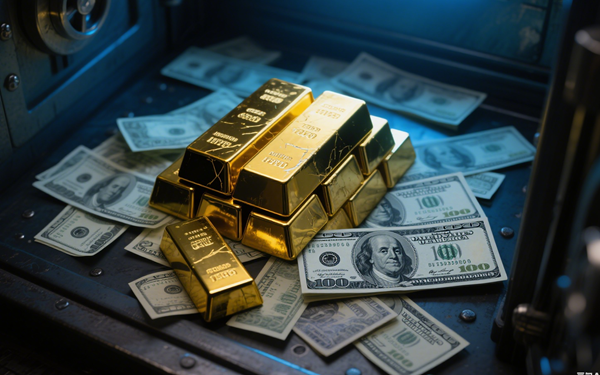
Gold prices are once again testing historic highs near $4,600 an ounce, fueled by speculative flows. However, leading analysts argue that beneath the short-term volatility lies a powerful structural shift: a sustained bull market fundamentally driven by the erosion of the U.S. dollar’s global dominance.
The conversation is moving beyond inflation hedges and rate cuts. The core thesis, as outlined by major institutional investors, positions gold primarily as a monetary alternative in a world reassessing the unipolar reserve currency system.
“The long-term trajectory for gold is firmly higher, and it’s driven not by speculative excess but by deep structural changes in the global monetary order,” said David Miller, Chief Investment Officer at Catalyst Funds, in a recent interview.
Miller identifies a pivotal turning point in 2022, when the weaponization of the dollar-based financial system through sanctions accelerated a pre-existing trend. “If you’re a central banker outside the U.S., why would you want your reserves in dollars when we’ve shown we’re willing to take those dollars away?” he questioned.
This geopolitical incentive is compounded by domestic U.S. fiscal policy. “The U.S. is deliberately debasing its currency by running very significant deficits, with no indication of intent to pay down that debt,” Miller stated. He estimates this deficit spending alone implies an annual erosion of roughly 5% in the dollar’s purchasing power.
In this environment, relentless central bank gold buying—seen as a strategic de-dollarization of reserves—provides a persistent floor for prices. “They don’t care about the short-term price. They simply don’t want dollars as their primary reserve asset,” Miller noted, adding that this official-sector demand is unlikely to reverse.
This structural backdrop has profound portfolio implications. Miller criticizes traditional fixed income in a world of negative real yields, arguing it “makes no sense unless you’re okay with permanently losing purchasing power.” Instead, he sees gold increasingly replacing bonds as the defensive, real-asset anchor in portfolios.
The bullish outlook is echoed and quantified by global banks. Dominic Schnider, Head of Commodities & APAC Forex at UBS Wealth Management, forecasts gold reaching $5,000 per ounce by the end of the first quarter of 2026, supported by central bank demand, large fiscal deficits, lower U.S. real rates, and geopolitical risks.
UBS strategists have formally raised their price target, now expecting gold to average $5,000/oz through the first three quarters of 2026 before a modest pullback to $4,800 by year-end. They warn that escalated political or financial turmoil, particularly around U.S. midterm elections and fiscal pressures, could drive prices as high as $5,400.
While gold captures headlines, analysts see a broader commodities rally ahead. Schnider points to structural supply-demand imbalances and the energy transition driving opportunities in metals like copper and aluminum. However, gold’s unique role is cemented by its monetary heritage.
The consensus is clear: the current gold market is not merely a cyclical spike. It is viewed as the early phase of a protracted revaluation, rooted in a slow but seismic shift away from dollar-centric finance—a structural bull market with fundamentally different drivers than those of the past.