Meta Platforms (META) made waves last week with a series of massive nuclear power purchase agreements, painting a picture of strategic ambition shadowed by financial anxiety. The company is securing a zero-carbon energy foundation for its next-decade AI ambitions, even as its stock continues to be pressured by staggering capital expenditure plans.
This tech giant is placing an unprecedented bet on the future. The question for investors is whether they should join the wager.
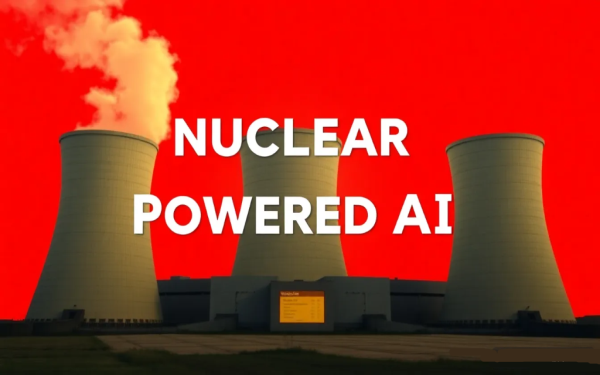
Meta’s deals with Vistra, TerraPower, and Oklo lock in up to 6.6 gigawatts of nuclear capacity—enough electricity to power roughly 6 million U.S. homes by 2035. This energy will primarily feed Meta’s global data centers, especially its massive “Prometheus” AI server cluster in Ohio.
This marks Meta’s second major nuclear move in just seven months, following a 20-year agreement with Constellation Energy last summer. The series of deals cements Meta’s position as one of the largest corporate buyers of nuclear power in U.S. history. Joel Kaplan, Meta’s Vice President of Global Affairs, stated that cutting-edge data centers and AI infrastructure are “essential to securing America’s position as a global leader in AI.”
In stark contrast to this green energy narrative is deep market concern over Meta’s spending velocity. Concerns peaked after the Q3 2025 earnings report. While the core advertising business remained strong—with revenue up 26% year-over-year and ads comprising 97.5% of total revenue—all positives were overshadowed by one number: capital expenditure.
The company guided for 2025 CapEx to soar to $70-$72 billion, nearly doubling from $39.4 billion in 2024. More startling was management’s warning that “capital expenditure growth will be notably larger in 2026 than in 2025.” Analysts widely interpret this to mean 2026 spending will easily surpass the $100 billion mark, almost entirely dedicated to building out AI data center infrastructure.
The market has voted with its feet. Despite a ~13% stock rise for 2025 overall, shares have languished since the earnings report, down about 16% from their peak and significantly underperforming the S&P 500’s 16% gain. Investor skepticism is straightforward: are these vast, near-term profit-light investments a bottomless pit? It’s a fear reminiscent of Meta’s massive, yet unfulfilled, bets on the metaverse.
Meta’s power push coincides with a global nuclear renaissance, driven in part by exploding AI energy demand. Goldman Sachs Research predicts data center power consumption will surge 175% from 2023 levels by 2030. This trend is also heating up the upstream uranium market, with funds like the Sprott Physical Uranium Trust aggressively accumulating the commodity, now holding over $6.17 billion worth.
However, the inherent risks of nuclear construction mirror the long-term uncertainties in Meta’s investments. Industry studies note that new nuclear plants routinely face delays and cost overruns, with Small Modular Reactor (SMR) projects already being canceled due to spiraling costs. As noted in a Pembina Institute report, building new plants is fundamentally different and more complex than refurbishing old ones, meaning “the likelihood of a delay and cost overruns… ultimately [falls on] ratepayers”—and investors.
So, is Meta stock a risk or an opportunity?
Bears argue the market’s fear is rational. Multi-billion-dollar CapEx severely erodes future free cash flow, and the payoff cycle for AI investments is long and uncertain. In a potentially enduring higher-rate environment, this “burn cash for the future” model carries extreme risk.
Long-term bulls, however, see Meta doing the hard but necessary work. It’s not merely “burning cash” but deploying massive capital to build a full-stack AI moat encompassing both energy and compute. Its advertising engine remains a prolific cash cow, funding this strategic gamble. If the AI wave materializes as predicted, today’s aggressive infrastructure investments may look prescient and cost-effective tomorrow. The recent stock pullback, they argue, presents a window for believers in this long-term narrative.
Meta’s nuclear deals are a clear footnote to its AI ambition, demonstrating a resolve to control key components from energy to compute. Yet, the capital market perpetually swings between short-term profits and long-term vision. Investing in Meta today is, at its core, a bet on a belief: that the transformative value of AI will ultimately dwarf today’s enormous capital outlays. For investors, the question finally boils down to this: Are you willing, and able, to take a seat at Mark Zuckerberg’s high-stakes table?